60+ Years of Power Engineering  ·  ISO 9001:2015 & ISO 13485 Certified Manufacturing
0%

Three-phase power systems keep factories, data centers, pumps, and processing lines running. Yet switching drives and power converters can send unwanted electrical noise along supply cables. A filter may look like a small metal enclosure. Its effect can reach across an entire control cabinet.

The International Energy Agency’s Electricity 2024 report says global electricity demand grew by 2.2% in 2023 and projects average annual growth of 3.4% from 2024 to 2026. More electrified equipment means more attention to power quality and electromagnetic compatibility. That matters. Three Phase Delta EMI Filters are designed for delta-connected systems, but a catalog rating alone cannot confirm suitability. Buyers need to check rated voltage, current, attenuation curves, leakage current, terminal style, temperature limits, and installation guidance. A filter that performs well in a laboratory may behave differently when cable routing or grounding changes.

This Top 10 guide compares options for global buyers using practical selection criteria, published specifications, and manufacturer documentation. It also draws on IEC 61800-3, which addresses EMC requirements for adjustable-speed power drive systems. The comparison is not a universal ranking: operating conditions vary, and product data can be incomplete. That is worth admitting. Before purchase, verify the exact model’s test conditions and confirm that its performance fits the equipment and installation. A few minutes with a datasheet can prevent a costly mismatch.
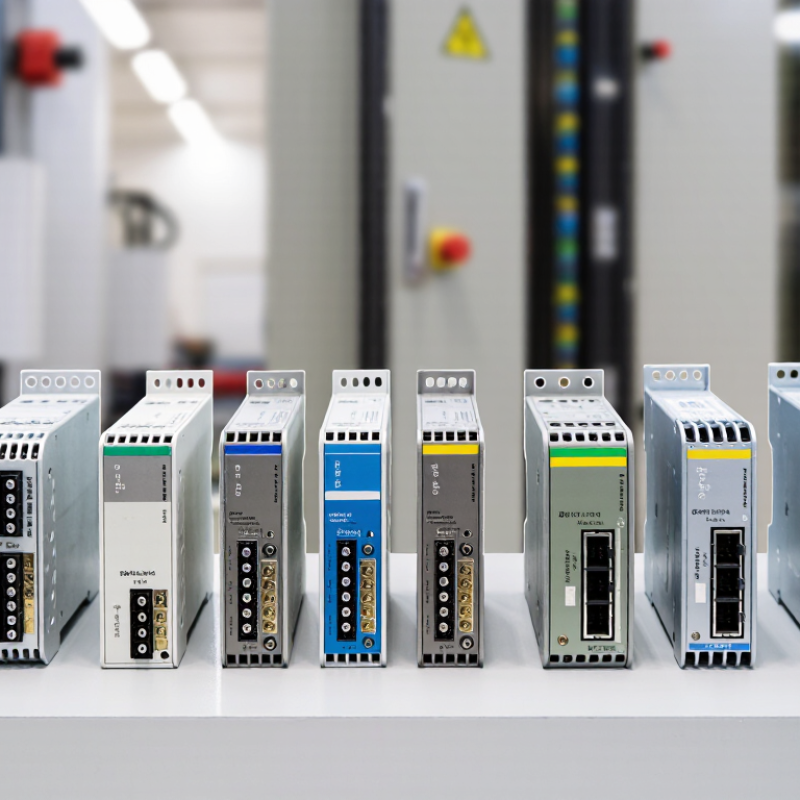
Top 10 Three Phase Delta EMI Filters for Global Buyers

What Three-Phase Delta EMI Filters Do in Industrial Power Systems

Three-phase delta EMI filters reduce conducted electrical noise traveling along industrial power lines. In a delta system, the three phases connect in a closed loop, with no neutral conductor. Filter components are arranged to suppress noise between phases and, where the design allows, noise coupled to ground. This helps variable-speed drives, CNC machines, and automated production lines operate with fewer interference-related disruptions.

A filter often combines series inductors with capacitors selected for the system voltage and frequency. The inductors resist rapid current changes, while the capacitors provide noise with a lower-impedance path. Placement matters: mounting the filter near a drive’s power entry can limit the length of unfiltered wiring. Short, direct connections to the specified protective earth also matter. Small details, big effects.

For global buyers, check the rated line voltage, continuous current, temperature range, and applicable safety approvals for the installation market. Confirm leakage current and grounding requirements against the equipment design. A filter that performs well in a test setup may work less effectively with long cables or poor bonding. In practice, cabinet layouts change during installation. That detail is easy to miss. Measuring conducted emissions before and after installation can show whether the selected filter addresses the actual noise path.

How Delta-Connected Filters Reduce Conducted Electromagnetic Interference

Top 10 Three Phase Delta EMI Filters for Global Buyers

In a three-phase delta system, power flows between three line conductors without a neutral. Switching drives and converters can send high-frequency noise back along these lines. A properly selected EMI filter gives that noise a controlled path and reduces interference reaching the supply.

Inside the filter, inductors resist rapid changes in current, while capacitors provide paths for unwanted high-frequency energy. Line-to-line components mainly address differential-mode noise. Common-mode chokes and, where the installation allows, phase-to-earth capacitors help limit noise shared across the conductors. Noise travels both ways. A filter can also reduce disturbances entering sensitive equipment from the supply.

Installation details matter. Keep filter input and output wires apart, and connect the enclosure to a low-impedance protective earth. Long, coiled leads can weaken performance. That detail is easy to miss.

When comparing filters, buyers should check operating voltage, current rating, frequency range, attenuation data, and compatibility with the equipment’s grounding arrangement. Test results depend on wiring and load conditions, so published attenuation figures may not match every cabinet. A site measurement can reveal what paper specifications cannot.

Key Specifications for Comparing Filters Across Global Markets

Comparing three-phase delta EMI filters across global markets starts with matching electrical conditions, not just a catalog headline. Check rated line-to-line voltage, frequency range, continuous current per phase, and overload limits against the equipment nameplate. A 50/60 Hz rating may appear universal, yet switching noise extends far beyond mains frequency. Review insertion-loss curves and confirm whether they cover common-mode, differential-mode, or both. Test conditions matter: source and load impedance can noticeably change reported attenuation.

Compare terminal style, conductor range, enclosure dimensions, temperature limits, and environmental protection with the intended installation. Check leakage current and grounding requirements, especially where multiple filters share a cabinet. Ask for test reports that state the setup and measurement method; a single attenuation figure is hard to interpret. A bench result can still disappoint in the finished machine. Cable routing, cabinet bonding, and nearby drives can shift performance, so verify the selected filter in the actual system when possible. I would not rely on a familiar rating alone.

Tips: Keep the filter close to the noise source. Separate input and output cables. Measure twice; cabinet space is easy to underestimate. Confirm destination-market certification and documentation before purchase.

Top 10 Three-Phase Delta EMI Filter Configurations for Global Buyers Representative comparison profiles and key specifications for evaluating filters across global markets
No. Representative Filter Class Typical Delta Supply Illustrative Current Rating Typical Frequency Common Application Key Comparison Points Global Checks Before Purchase
1 Compact low-current, general-purpose 200–250 V AC, line-to-line 6 A 50/60 Hz Small control panels, instruments, and light-duty equipment Insertion-loss curves, terminal style, dimensions, and available space Confirm rated voltage, applicable safety approvals, and installation instructions for the destination market.
2 Compact low-current, enhanced attenuation 200–250 V AC, line-to-line 10 A 50/60 Hz Control electronics and equipment with sensitive measurement or communication circuits Attenuation across the relevant frequency range; filter performance depends on source and load impedance. Compare test conditions and curves rather than relying on a single attenuation figure.
3 Mid-current, general-purpose 380–440 V AC, line-to-line 16 A 50/60 Hz Industrial control cabinets and small three-phase machines Rated current, temperature derating, conductor size, and enclosure temperature Check the system’s actual line-to-line voltage and verify the filter’s voltage rating at that supply.
4 Mid-current, higher-noise environment 380–440 V AC, line-to-line 25 A 50/60 Hz Machine tools, industrial power supplies, and motor-drive panels Attenuation data, overload conditions, mounting method, and heat dissipation For variable-speed drives, review the drive manufacturer’s filter and installation guidance.
5 General-purpose, higher-current 400–480 V AC, line-to-line 32 A 50/60 Hz Production equipment and larger industrial control panels Terminal capacity, conductor routing, protective-earth connection, and thermal rating Confirm that the filter is designed for a three-wire delta supply and the intended grounding arrangement.
6 High-current, cabinet-mounted 400–480 V AC, line-to-line 50 A 50/60 Hz Industrial machinery, automation systems, and power-conversion equipment Installation clearances, busbar or cable connections, and performance under actual load Check ambient-temperature derating, enclosure conditions, and required overcurrent protection.
7 High-current, heavy-duty 400–480 V AC, line-to-line 63 A 50/60 Hz Large machines and industrial distribution assemblies Short-circuit coordination, terminal temperature limits, and mechanical mounting strength Verify ratings and approvals for the complete installation, not just the filter component.
8 High-current, large-panel installation 400–480 V AC, line-to-line 80 A 50/60 Hz Large motor-drive systems and high-power industrial equipment Filter losses, cooling requirements, connection layout, and specified test configuration Assess protective-earth bonding and keep input and output wiring separated as instructed.
9 Very-high-current, industrial 400–480 V AC, line-to-line 100 A 50/60 Hz High-power converters, process machinery, and industrial power systems Busbar compatibility, thermal rise, fault-current limits, and documented attenuation curves Check the applicable product standards and certification scope for the target country.
10 Very-high-current, engineered installation 400–480 V AC, line-to-line 150 A 50/60 Hz Large industrial installations requiring system-level EMC design System impedance, filter interaction, heat management, and installation-specific EMC testing Use the manufacturer’s engineering data and obtain a design review for the actual supply and load.
Comparison notes: These are representative filter classes, not named product listings or a verified product ranking. Current ratings shown are illustrative selection classes; actual ratings, voltage limits, attenuation, leakage current, temperature derating, and approvals vary by filter design. Three-phase delta supplies are generally specified by line-to-line voltage and have no neutral conductor. Review the manufacturer’s datasheet for the exact wiring diagram and allowable grounding arrangement. Where relevant, verify applicable requirements such as IEC 60939 and UL 1283, along with the destination market’s certification and installation rules. Leakage current and protective-earth requirements should be assessed for the complete equipment installation.

Top 10 Three-Phase Delta EMI Filters for Global Buyers

Top 10 Three-Phase Delta EMI Filters for Global Buyers

Choosing a three-phase delta EMI filter starts with the electrical system, not the product label. Verify rated voltage, continuous current, frequency, and expected temperature rise. A filter rated for the wrong current may overheat inside a crowded cabinet. Small details matter. Check terminal size, mounting clearance, enclosure rating, and whether the connection diagram matches your delta supply.

For a useful comparison, examine ten points: voltage, current, frequency, attenuation data, test conditions, leakage current, thermal limits, terminals, enclosure, and documentation. Insertion-loss figures need context; results depend on the test setup and frequency range. Ask for curves, not just a headline number. Also check how the filter handles line-to-line and line-to-ground noise, and confirm its grounding method suits the equipment. Not always obvious.

Global buyers should review region-specific conformity documents, translated installation guidance, and local technical support before ordering. A polished datasheet can still omit an important detail, such as performance under the buyer’s actual load. Where possible, measure conducted noise in the intended installation and validate the selected filter with qualified engineering staff. Allow space for wiring and airflow, too. That part is easy to overlook.

Installation, Safety, and International Compliance Considerations

For a three-phase delta EMI filter, verify the system voltage, current, frequency, and short-circuit conditions before choosing a unit. Confirm the filter’s terminal markings match L1, L2, and L3; delta systems may have no neutral. Mount the filter near the equipment entry point, bond its metal case directly to protective earth, and keep input and output cables physically separated. A few extra centimetres can matter. Follow the manufacturer’s torque values, and check leakage current against the site’s protective-device requirements. Isolate power and verify absence of voltage before installation. Small details matter.

International compliance requires more than a familiar approval mark. IEC 60939 covers passive filter units, but the applicable edition and national requirements depend on the product and destination market. IEC 61000-4-5:2014+A1:2017 specifies Class 3 surge test levels of 2 kV line-to-line and 1 kV line-to-earth for power ports. These are immunity test levels, not a filter’s guaranteed surge rating. Check the complete test report, operating-temperature limits, and safety certification for the exact model. An installation checklist helps, though it can still miss local wiring rules. Recheck them with a qualified electrical professional.

FAQS

What does a three-phase delta EMI filter do?

It reduces conducted electrical noise traveling along the three phase conductors. This can help drives and automated equipment run with fewer interference-related disruptions.

Does a delta system use a neutral conductor?

Typically, no. Power flows between three line conductors in a closed loop.

How does the filter reduce electrical noise?

Inductors resist rapid current changes, while capacitors provide unwanted high-frequency energy with another path. Line-to-line components mainly address differential-mode noise.

Where should the filter be installed?

Mount it near the equipment’s power entry point. Keep input and output wires apart, and avoid long, coiled leads. Small details matter.

What specifications should buyers check?

Check line voltage, continuous current, frequency range, temperature limits, attenuation data, and short-circuit conditions. Published results may differ from cabinet performance.

Why does protective earth connection matter?

Bond the filter’s metal case directly to a low-impedance protective earth. Also check leakage current against the site’s protective-device requirements.

What safety steps are needed during installation?

Isolate power and verify that voltage is absent before work begins. Follow terminal markings and specified torque values. Do not rely on memory alone.

Do compliance marks guarantee suitability everywhere?

No. Check the exact model’s safety certification, test report, and destination-market requirements. Local wiring rules may still need review.

How can users confirm the filter works in their installation?

Measure conducted emissions before and after installation. Long cables or poor bonding can change results. A tidy drawing is not enough.

Conclusion

This article explains how Three Phase Delta EMI Filters help industrial power systems limit conducted electromagnetic interference and support more stable equipment operation. It describes how delta-connected filtering components attenuate unwanted electrical noise across three-phase lines, and outlines the specifications buyers can compare, including voltage and current ratings, attenuation performance, frequency range, environmental conditions, and connection requirements. These factors help match a filter to an application rather than relying on a single headline rating.

The guide also presents practical considerations for selecting and installing filters across different markets. Buyers are encouraged to verify system compatibility, grounding and wiring needs, thermal limits, and relevant safety and electromagnetic compatibility requirements for the intended location. Careful evaluation and installation can improve filter performance, reduce avoidable interference, and support reliable operation in industrial environments.


Amelia

Amelia

Amelia is a dedicated marketing professional with a strong understanding of the company’s products, customers, and industry landscape. With a thoughtful, research-driven approach, she transforms complex product information into clear, practical, and engaging content that helps readers make informed......