60+ Years of Power Engineering  ·  ISO 9001:2015 & ISO 13485 Certified Manufacturing

Defense-Grade Electromagnetic Interference Solutions

MIL COTS EMI Filters: Precision Compliance for Defense & Aerospace Applications

Accelerate system qualification and eliminate NRE costs with pre-tested MIL-STD-461, MIL-STD-1275, and MIL-STD-704 Commercial Off-The-Shelf EMI filtering platforms. Engineered for harsh environment survivability, mission-critical signal integrity, and long-term program sustainability.

60+Years Power Expertise
MIL-STD461G, 1275E & 704F
100%Full Load EMI Tested
ISO 9001& ISO 13485 Manufacturing

Strategic Procurement & Technical Architecture

Why Defense OEMs and System Integrators Standardize on MIL COTS EMI Filters

In modern military and defense electronics design, managing Electromagnetic Interference (EMI) and ensuring Electromagnetic Compatibility (EMC) is no longer a secondary consideration. Modern battlefields rely heavily on high-frequency Gallium Nitride (GaN) radar amplifiers, high-density Silicon Carbide (SiC) power converters, tactical communication suites, directed energy systems, and dense avionics. These technologies generate aggressive conducted interference and common-mode noise that can compromise mission capability or cause catastrophic system aborts.

Historically, prime defense contractors relied on ground-up custom EMI filters. However, custom filter engineering carries massive Non-Recurring Engineering (NRE) costs, unpredictable 12-to-18-month qualification cycles, and severe supply chain risks. **MIL COTS EMI Filters (Commercial Off-The-Shelf)** represent a strategic evolution in defense procurement. By utilizing pre-engineered, highly scalable filter topologies that have already undergone extensive electrical, environmental, and electromagnetic pre-qualification, system architects can guarantee compliance with **MIL-STD-461, MIL-STD-1275, MIL-STD-704, and DEF-STAN** while drastically reducing program time-to-market.

Astrodyne TDI brings over six decades of specialized magnetic, power conversion, and filter engineering to the global defense sector. Our MIL COTS EMI filter line combines high attenuation insertion loss profiles, low leakage current footprints, and heavy-duty transient voltage suppression (TVS) designed to withstand the violent electrical surges encountered in combat environments.


Inquire Now

Product Portfolio

Recommended MIL COTS EMI Filter Series for Mission-Critical Deployment

From single-phase tactical communications to multi-phase 400Hz naval and airborne microgrids, our catalog of defense COTS filters delivers unmatched conducted emissions suppression.

MIL-STD-461 DC EMI Filter Icon

MIL-STD-461 DC Power Line Filters

High-attenuation DC COTS filters optimized for 28V, 48V, 270V, and 600V DC military power buses. Designed to achieve strict compliance with CE101 and CE102 conducted emissions from 30 Hz to 10 MHz.

  • Current Ratings: 5A to 300A continuous
  • Attenuation: >70 dB from 150 kHz to 10 GHz
  • Integrated feed-through capacitors

Inquire Now

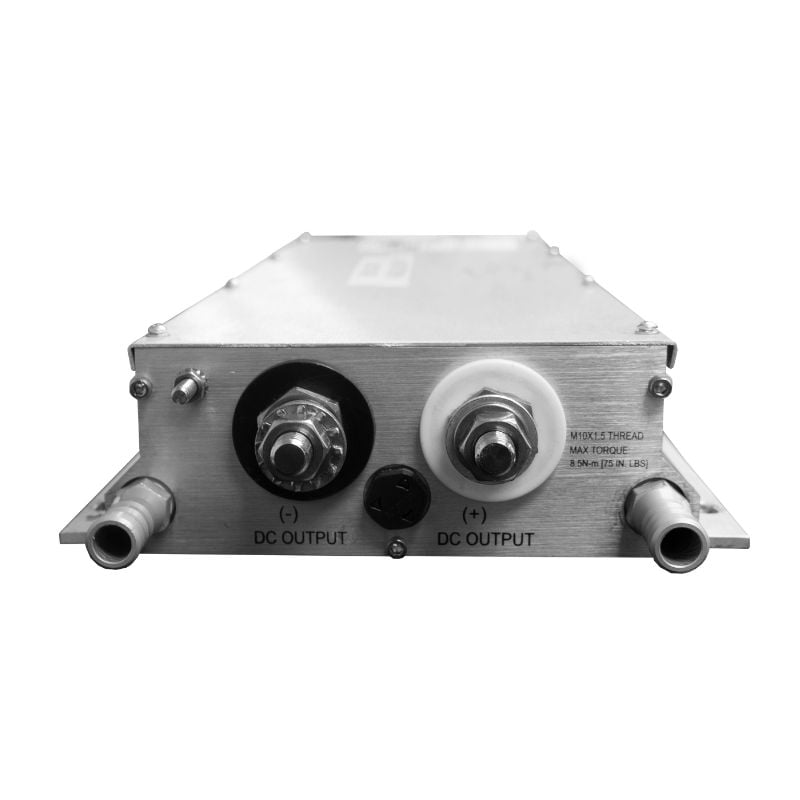
Astrodyne TDI MIL COTS DC EMI Filter
MIL-STD-1275 Tactical Surge EMI Filter Icon

MIL-STD-1275 Vehicle Surge & EMI Filters

Ruggedized COTS filters specifically designed for military ground vehicles (JLTV, Stryker, AMPV). Combines high-performance EMI attenuation with active transient surge clamping against 100V spikes and 250V surges.

  • Full MIL-STD-1275E & MIL-STD-461G compliance
  • Operating Temperature: -55°C to +125°C
  • Hermetic or epoxy encapsulated chassis

Inquire Now

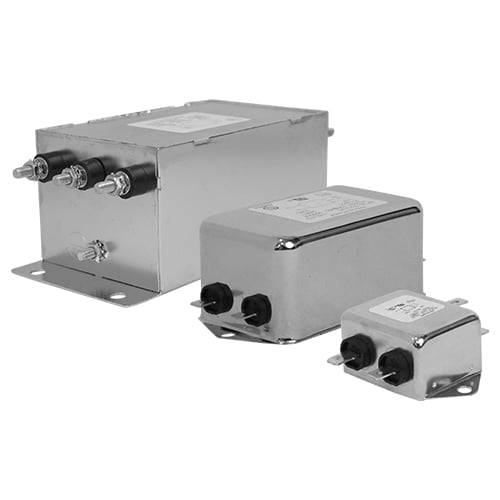
MIL-STD-1275 Heavy Duty Tactical EMI Filter
Three Phase 400Hz MIL COTS EMI Filter Icon

3-Phase 400Hz Airborne & Naval EMI Filters

Low-leakage, high-frequency 3-phase Delta and WYE COTS EMI filters for 115V/400Hz and 440V/60Hz naval and aerospace systems complying with MIL-STD-704 and MIL-STD-1399.

  • Current Ratings: Up to 500A per phase
  • Low Y-capacitance options for low ground leakage
  • Shock & Vibration qualified to MIL-STD-810

Inquire Now

High power 3-Phase Defense EMI Filter

Engineering Selection Matrix

Technical Benchmark: Key Military Standards vs. COTS Filter Topologies

Selecting the ideal MIL COTS EMI Filter requires evaluating operating voltage, harmonic spectrum, surge clamp requirements, and leakage current limitations. The following matrix outlines standard compliance mappings across major military platforms:

Military Standard Target Application Scope Primary EMI/EMC Test Protocols Key Filter Architecture Feature Astrodyne TDI COTS Solution
MIL-STD-461G (CE101 / CE102) Submarines, Surface Ships, Aircraft, Tactical Vehicles Conducted Emissions (30 Hz to 10 kHz & 10 kHz to 10 MHz) Multi-stage differential & common-mode choke topologies with custom core magnetic permeability. F1900 / F4000 COTS Series
MIL-STD-1275E 28V DC Military Ground Vehicles (JLTV, Tanks, Tactical Light Vehicles) Initial Engagement Surges, Voltage Spikes (+/- 250V), Reverse Polarity Integrated heavy-duty Metal Oxide Varistors (MOVs) and high-power Transient Voltage Suppressors (TVS). M1275 Tactical Surge-Filter Module
MIL-STD-704F Airborne Systems, Avionics, Unmanned Aerial Vehicles (UAVs) 400Hz & Variable Frequency AC Line Harmonics, Voltage Sags/Swells Ultra-low leakage Y-capacitance, lightweight aluminum chassis, potted high-density inductors. AV400 Aero COTS Series
MIL-STD-1399 (Sec 300B) Naval Shipboard Interface & Submarine Power Systems Common-mode noise isolation, low magnetic signature, voltage spikes Galvanically isolated feed-through filter structures, Delta/WYE 3-Phase balanced networks. NV300 Marine COTS Filter
DEF-STAN 59-411 UK & NATO Allied Defense Equipment Land, Sea, and Air Conducted & Radiated Immunity Broadband attenuation spanning 10 kHz to 40 GHz; high EMP/HEMP shielding integrity. NATO Allied COTS Series

Need a Modified COTS Specification for Your Payload Envelope?

If standard commercial-off-the-shelf physical envelopes do not fit your tight mechanical volume, Astrodyne TDI applications engineers can modify terminal orientations, mounting brackets, environmental potting, and connector types without compromising pre-qualified electrical performance.

Inquire Now

Industry Insights & Market Intelligence

Future Procurement Trends in Defense EMI/EMC Filtering

As defense forces globally modernize tactical hardware, procurement officers and defense engineers face unprecedented challenges. Here are the core technological and supply chain trends shaping the future of MIL COTS EMI filters over the next decade.

Defense Power & EMI Filter Engineering

Trend 1: High-Frequency GaN & SiC Switching EMI Challenges

Navigating the Electromagnetic Impact of Wide Bandgap Semiconductors

Modern military power converters are rapidly adopting Wide Bandgap (WBG) semiconductors—specifically Silicon Carbide (SiC) and Gallium Nitride (GaN). While WBG devices offer extreme efficiency and smaller physical footprints, their ultra-fast switching speeds (high dV/dt and dI/dt) generate aggressive high-frequency conducted noise up to several hundred megahertz.

Future MIL COTS EMI filter procurement mandates advanced filter topologies featuring custom nano-crystalline toroidal magnetic cores and low ESL/ESR ceramic capacitance networks capable of clamping fast rise-time transient spikes before they conduct into ground planes or weapon control buses.

Inquire Now
Tactical Vehicle Electronics EMI Mitigation

Trend 2: Modular Multi-Threat Surge & EMI Integration

Consolidation of EMI Filtering and Transient Voltage Suppression

Traditionally, defense engineers specified separate standalone boxes for EMI line filtering, lightning surge protection, and power distribution units. On modern tactical ground vehicles and autonomous combat drones, spatial footprint and weight (SWaP) constraints make multi-box architectures unsustainable.

Procurement preferences are shifting toward integrated MIL COTS filter modules that unite broadband MIL-STD-461 filtering with active MIL-STD-1275 surge suppression, HEMP (High-Altitude Electromagnetic Pulse) attenuation, and reverse-polarity protection inside a single ruggedized, liquid-cooled or conduction-cooled enclosure.

Inquire Now
Defense Supply Chain Resilience

Trend 3: Domestic Supply Chain Resiliency & Obsolescence Protection

Mitigating Geopolitical Supply Risks and Guaranteeing 15+ Year Lifecycles

Global defense procurement programs operate on multi-decade timelines. Component obsolescence or single-source dependency on foreign raw materials poses a severe risk to defense readiness. System integrators now require filter suppliers to demonstrate robust, onshore manufacturing capabilities, full raw material traceability, and strict adherence to ITAR/DFARS requirements.

Astrodyne TDI addresses this shift by maintaining domestic production facilities, manufacturing core magnetic components in-house, and providing guaranteed form-fit-function product availability across 15 to 20-year defense program cycles.

Inquire Now

Technological Evolution

The Engineering Roadmap of MIL COTS EMI Filters

From passive discrete networks to intelligent, thermal-optimized EMI subsystems—how Astrodyne TDI filter technology continues to evolve for next-generation defense payloads.

Historically, military EMI filters were heavy, bulky iron-core components encased in steel cans filled with polyurethane potting. While durable, these legacy designs severely compromised payload capacity in unmanned aerial vehicles (UAVs), tactical missile defense batteries, and wearable soldier power hubs.

Today, Astrodyne TDI is pioneering several key technological advancements in MIL COTS filter engineering:

  • Nanocrystalline Core Magnetics: Replacing traditional ferrite and iron powder cores with ultra-high permeability nanocrystalline alloys, achieving 3x to 5x higher common-mode attenuation per unit weight.
  • Direct Conduction and Liquid Cooling Interfaces: Integrating cold-plate liquid cooling channels directly into high-current (200A–600A) EMI filter housings to eliminate fan noise and thermal throttling in sealed vehicle bays.
  • Advanced Feed-Through Capacitance Engineering: Utilizing multi-layer ceramic feed-through capacitors with sub-nanosecond response times for electromagnetic pulse (EMP / HEMP) protection.
  • Simulated Pre-Compliance Modeling: Utilizing FEA magnetic modeling and 3D electromagnetic field solvers to predict conducted interference and insertion loss prior to physical hardware fabrication.

Inquire Now

Phase 1: Traditional COTS Filters

Heavy iron cores, bulky steel chassis, fixed terminal blocks, basic single-stage LC networks with standard frequency response.

Phase 2: High-Density Defense COTS

Nanocrystalline magnetics, aluminum enclosures, MIL-STD-1275 surge integration, IP67 environmental sealing.

Phase 3: Next-Gen Smart MIL COTS

Integrated thermal telemetry, liquid-cooled plates, SiC/GaN fast dV/dt damping, optimized SWaP envelope for hypersonic & satellite platforms.

Proven Defense Authority

Why Global Defense Prime Contractors Trust Astrodyne TDI

With over 60 years of specialized power conversion and electromagnetic compliance engineering, Astrodyne TDI stands as a premier design authority for defense systems worldwide.

In-House EMI Testing Icon

In-House Pre-Compliance Testing

We operate fully equipped in-house EMC laboratories capable of evaluating conducted emissions (CE101, CE102), conducted susceptibility (CS101, CS114, CS115, CS116), and transient surge performance. We validate performance before you submit to formal test houses.

Proprietary Magnetics Design Icon

Custom Magnetics Engineering

Unlike filter assemblers who purchase off-the-shelf chokes, Astrodyne TDI designs and winds custom common-mode and differential-mode chokes in-house. This gives us full control over magnetic saturation curves and thermal stability under heavy continuous loads.

ISO Quality Systems Icon

ISO 9001:2015 & ISO 13485 Quality

Our global manufacturing facilities strictly adhere to ISO certified quality systems, maintaining 100% functional electronic testing, full lot traceability, thermal burn-in protocols, and rigorous MIL-STD-810 environmental stress screening.

A History of Engineering Excellence in Critical Power

Founded in 1959, Astrodyne TDI has consistently led the power conversion industry in solving the toughest electrical noise, power quality, and environmental challenges. Our filters and power supplies are deployed on front-line aircraft carriers, stealth fighter jets, armored fighting vehicles, missile defense systems, mobile field hospitals, and orbital satellite ground control stations.

When you partner with Astrodyne TDI, you work directly with experienced senior applications engineers who understand the nuances of EMI mitigation, ground loop elimination, and military defense standards. We streamline your compliance journey from prototype concept to full-scale low-rate initial production (LRIP) and high-volume deployment.

Inquire Now

Defense Procurement & Technical FAQ

Frequently Asked Questions: MIL COTS EMI Filters

Detailed technical guidance written by senior applications engineers to address frequent military procurement, electrical specification, and compliance inquiries.

MIL COTS (Commercial Off-The-Shelf) EMI Filters are pre-engineered, defense-ready electromagnetic interference filter platforms designed to satisfy stringent military standards such as MIL-STD-461, MIL-STD-1275, and MIL-STD-704 without requiring multi-year development programs.

Defense contractors and prime OEMs are increasingly moving away from fully custom filter designs due to three main reasons:

  • Reduced Development Cycle: COTS filters eliminate 12 to 18 months of initial prototyping, laboratory testing, and qualification delays.
  • Zero NRE Costs: Eliminates steep non-recurring engineering fees associated with custom toolings, magnetic die fabrication, and initial test setups.
  • Pre-Validated Reliability: COTS platforms leverage proven topology baselines that have already demonstrated high MTBF (Mean Time Between Failures) and survival capability in combat environments.

Astrodyne TDI MIL COTS EMI Filters are engineered and tested to satisfy a broad suite of international military specifications:

  • MIL-STD-461 (Revisions E, F, G): Specifically addressing Conducted Emissions (CE101, CE102) and Conducted Susceptibility (CS101, CS114, CS115, CS116).
  • MIL-STD-1275 (Revisions D, E): Requirements for 28V DC electrical power inputs in armored ground vehicles, including 100V voltage spikes and 250V surge clamping.
  • MIL-STD-704 (Revisions A through F): Aircraft electric power characteristics across 28V DC, 115V/400Hz AC, and variable frequency power systems.
  • MIL-STD-1399 (Section 300B): Interface standard for shipboard systems on naval vessels and submarines.
  • MIL-STD-810 (Revisions G, H): Environmental engineering considerations including mechanical shock, sinusoidal and random vibration, salt fog, high humidity, thermal shock, and altitude.
  • DEF-STAN 59-411: Ministry of Defence (UK) electromagnetic compatibility requirements for land, sea, and air platforms.

High-power military systems such as active electronically scanned array (AESA) radar, pulse jamming systems, and electronic warfare suites generate two distinct forms of conducted electromagnetic interference:

1. Common Mode (CM) Noise: Noise currents that flow in the same direction on phase/line conductors and return through the common system chassis ground. Astrodyne TDI MIL COTS filters attenuate CM noise using high-inductance common-mode chokes featuring advanced toroidal ferrite or nanocrystalline cores paired with Y-capacitors tied to low-impedance ground studs.

2. Differential Mode (DM) Noise: Noise currents that flow out on the supply line and return on the neutral or DC return line. DM noise generated by fast switching power transistors (SiC/GaN) is attenuated using high-current differential inductors and heavy-duty X-capacitors placed directly across line-to-line terminals.

Our multi-stage LC filtering networks ensure smooth insertion loss curves across the entire spectrum from 30 Hz up to 10 GHz.

Yes. Astrodyne TDI specializes in Modified COTS Engineering. We recognize that defense applications frequently face unique physical enclosure constraints or unusual thermal routing requirements.

Under our modified COTS framework, we preserve the core, pre-qualified electrical circuit design and magnetic choke baseline, while customizing options such as:

  • Custom mechanical mounting flanges and overall enclosure dimensions.
  • MIL-DTL-38999 circular connectors, busbars, or custom terminal blocks.
  • Hermetic glass-to-metal sealing or military-grade silicone/epoxy potting for IP67/IP68 immersion protection.
  • Integrated transient voltage suppression (TVS) or active spike clipping circuitry.

This approach delivers a 100% custom-fit mechanical solution while maintaining the cost and time savings of a COTS platform.

Insertion loss (measured in decibels, dB) defines a filter's ability to attenuate unwanted noise signals. Astrodyne TDI MIL COTS EMI Filters deliver broad-spectrum attenuation profiles:

  • Low Frequency (10 kHz to 150 kHz): 30 dB to 60 dB attenuation, crucial for passing CE101 standards on naval and heavy vehicle microgrids.
  • Medium Frequency (150 kHz to 30 MHz): 60 dB to over 100 dB attenuation, suppressing primary switching harmonics generated by SMPS (Switched-Mode Power Supplies).
  • High Frequency (30 MHz to 10 GHz): 80 dB to >100 dB attenuation, preventing high-frequency noise from radiating into tactical communications, satellite links, and GPS receivers.

Defense acquisition programs operate across multi-decade operational lifespans. Component obsolescence can freeze production lines or force costly re-certification programs.

Astrodyne TDI protects prime contractors through continuous supply chain risk management:

  • In-House Magnetic Manufacturing: We wind and assemble our magnetic chokes internally, preventing third-party component discontinuation risks.
  • Strict Configuration Control: All defense platforms operate under formal change notification rules (PCN). No materials, potting compounds, or physical topologies are altered without advance written customer notification.
  • Form-Fit-Function Longevity: We guarantee support for long program life cycles, providing continuous production or direct legacy replacement drops for 15+ years.
Inquire Now

Technical Defense Resources

Engineering Notes & Compliance Whitepapers

Explore technical articles and whitepapers published by Astrodyne TDI senior filter designers.

Whitepaper | Technical Analysis

Passing MIL-STD-461G CE102: Strategies for High-Power Defense Inverters

Learn how multi-stage passive filter networks suppress conducted interference on 28V and 270V DC tactical power buses without inducing excessive thermal losses.

Design Note | Tactical Vehicles

Understanding MIL-STD-1275E Voltage Surges and Spike Protection

A detailed breakdown of 100V voltage spikes, 250V surge envelopes, and reverse polarity conditions encountered in ground combat vehicle power networks.

Guide | Naval & Avionics

3-Phase Military Power Systems: Delta vs. WYE EMI Filter Selection

Analyzing key structural differences in 400Hz and 60Hz 3-phase power distribution for naval vessels, radar stations, and airborne mission electronics.

Have a Critical MIL COTS EMI Filter Requirement?

Connect immediately with an Astrodyne TDI defense applications engineer to request datasheets, mechanical models, or pre-compliance engineering support.

Inquire Now Contact Engineering