60+ Years of Power Engineering  ·  ISO 9001:2015 & ISO 13485 Certified Manufacturing

Precision High Voltage Power Emulation & Testing

Programmable High Voltage Electronic Loads: Engineering Architecture & Global Sourcing Standards

Comprehensive technical breakdown of high-density, liquid-cooled, and regenerative high voltage DC electronic loads for EV 800V/1200V powertrains, semiconductor capital equipment, energy storage systems, and aerospace pulsed loads.

60+ YearsApplied Power Engineering
ISO Certified9001:2015 & ISO 13485
1500V DCHigh Voltage Power Capability
100% TestedFull Functional & Safety Burn-In

System Architecture & Intent Mining Guide

Next-Generation Programmable High Voltage Electronic Loads

As global OEM system architectures transition to higher operating voltages—driven by 800V/1200V Electric Vehicle (EV) traction platforms, megawatt-scale solar energy storage systems (ESS), and semiconductor wafer fabrication plasma generators—the demands placed on electrical test equipment have transformed dramatically.

Modern **Programmable High Voltage Electronic Loads** are no longer simple resistive sink blocks; they are sophisticated, digitally controlled power emulation instruments capable of sinking continuous kilowatt-to-megawatt power at voltages exceeding 1000V DC with microsecond dynamic response times.

Selecting the optimal programmable electronic load requires an in-depth understanding of control loop stability, thermal dissipation mechanics, parasitic line inductance, isolated telemetry, and safety interlocks. This technical guide synthesizes 60+ years of power engineering expertise from Astrodyne TDI to assist system architects, test engineers, and global procurement leaders in navigating technical evaluations, procurement trends, and dynamic operational protocols.

Inquire Now

Astrodyne TDI Programmable High Voltage Electronic Load System

Engineering Product Showcase

High-Density Programmable Electronic Load Platforms

From modular liquid-cooled platforms delivering unprecedented power density in 1U/3U enclosures to heavy-duty industrial regenerative load banks, Astrodyne TDI engineers ruggedized load solutions designed for continuous, mission-critical duty cycles.

High Voltage Load Icon

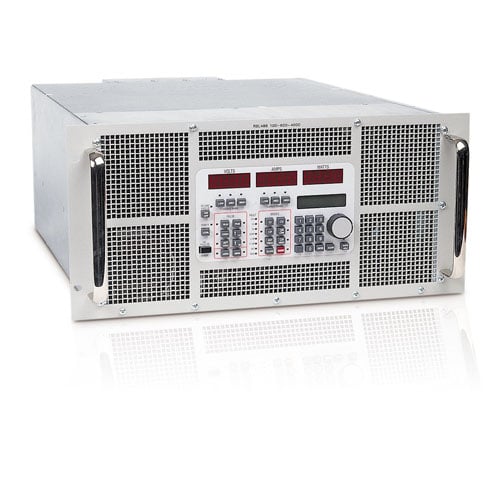
Dynaload High-Power Series

Precision air-cooled and liquid-cooled programmable DC electronic loads designed for high-voltage power supply burn-in, battery pack discharge profiling, and fuel cell testing up to 1200V DC.

  • Voltage Ranges: 0 - 600V / 1200V DC
  • Operating Modes: CC, CV, CR, CP, Dynamic Pulse
  • Ultra-fast transient response time: < 10 µs

Inquire Now

Dynaload High Power Electronic Load
Liquid Cooling Icon

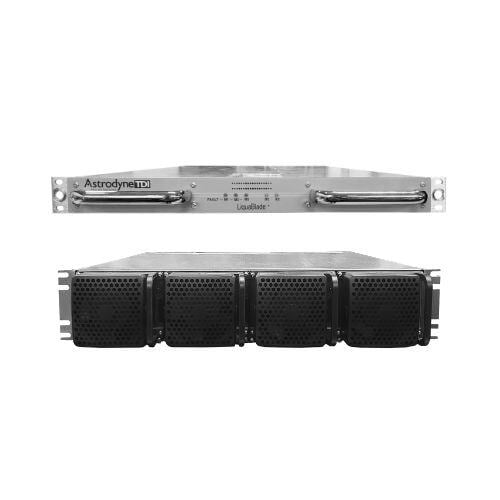
LiquaBlade™ Liquid-Cooled Loads

Industry-leading liquid-cooled modular architecture delivering 16.5 kW per 1U chassis. Liquid cooling eliminates fan noise, reduces cleanroom contamination, and maintains full power output at high ambient temperatures.

  • Power Density: 16.5 kW in a 1U Rack Footprint
  • Direct Liquid Cooling (Water/Glycol Mixture)
  • Parallelable up to multi-megawatt systems

Inquire Now

LiquaBlade Liquid Cooled System
Custom Power Icon

Custom High-Voltage Systems

Engineered-to-order electronic load cabinets integrated with automated safety interlocks, custom busbars, specialized SCPI digital interfaces, and SEMI F47 transient ride-through testing compliance.

  • Fully custom voltage/current envelopes up to 1500V+
  • Integrated AC-grid energy regeneration options
  • ISO 9001 & ISO 13485 quality process controls

Inquire Now

Custom High Voltage Electronic Load System

Deep Engineering Analysis

Control Topologies, Operating Modes & Specifications

Programmable high voltage electronic loads emulate real-world complex loads under repeatable laboratory and production conditions. Understanding the interaction between internal solid-state power MOSFET/IGBT banks and digital control loops is essential to avoiding stability issues during rapid transient steps.

Core Operating Modes Defined

  • Constant Current (CC) Mode: The electronic load sinks a precise, user-programmed current regardless of input voltage variations. Critical for power supply load regulation testing and battery constant-current discharge rate (C-rate) validation.
  • Constant Voltage (CV) Mode: The load adjusts its sink current to maintain a fixed voltage across its input terminals. Used extensively for testing current-source devices, solar PV array maximum power point tracking (MPPT) verification, and battery charger profiling.
  • Constant Resistance (CR) Mode: Emulates a linear power resistor by linearly scaling current proportional to terminal voltage according to Ohm’s Law ($I = V / R$). Ideal for testing startup load dynamics and power converter soft-start circuits.
  • Constant Power (CP) Mode: Dynamically adjusts input current inverse to terminal voltage to maintain a constant dissipated power level ($P = V \times I$). Crucial for testing DC-DC converters powering constant-power loads downstream.
  • Dynamic Pulsed Load & List Mode: Executes complex multi-step current waveforms with programmable rise/fall slew rates ($A/\mu s$), duty cycles, and step dwell times to evaluate dynamic transient recovery times and control loop phase margin.

Comparison: Regenerative vs. Dissipative Electronic Loads

When selecting a high-power, high-voltage load system, test lab engineers must balance capital expenditure (CAPEX) with operational electricity and cooling overhead (OPEX).

Parameter Conventional Dissipative Next-Gen Regenerative
Primary Function Converts absorbed DC power into thermal waste heat. Inverts absorbed DC power back into 3-phase AC grid power.
Energy Efficiency 0% (100% thermal loss) 92% – 96% Energy Recovery Efficiency
Thermal & HVAC Burden Extremely High (Requires large chillers/airflow) Minimal (Reduces ambient heat generation by ~90%)
Enclosure Density Requires bulky heatsinks and fan arrays. Compact high-density liquid-cooled or power electronics modules.
ROI & Operational Payback Standard CAPEX, continuous high electricity bill. Higher initial CAPEX, rapid ROI via reduced energy/HVAC costs.
Liquid Cooling Technology for High Voltage Electronic Loads

Thermal Management Engineering

Why Direct Liquid Cooling Dominates High Voltage Testing

In continuous kilowatt and megawatt-scale high-voltage testing, thermal management is the ultimate limiter of equipment longevity and rack power density. Conventional air-cooled load banks rely on high-CFM fan arrays that draw ambient air through high-voltage circuit cards—introducing airborne dust, moisture, and corrosive particulate into sensitive high-potential (Hi-Pot) node environments.

Astrodyne TDI’s direct liquid-cooled electronic load architecture isolates internal power semiconductors on closed-loop liquid cold plates. Heat is transferred directly to a circulating liquid coolant (water/glycol), providing compelling operational advantages:

  • 300% Density Increase: Packs up to 16.5 kW into a compact 1U rack enclosure, saving valuable floor space in production test bays.
  • Zero Airborne Contamination: Fully sealed enclosure protects high-voltage nodes from industrial dust, oil mists, and humidity spikes.
  • Acoustic & Environmental Comfort: Eliminates deafening fan noise, allowing quieter laboratory operation and significantly reduced HVAC chiller loads.

Inquire Now

Market Intelligence & Sourcing Outlook

Future Procurement & Technological Trends (2025–2030)

Global procurement directors and engineering leads must anticipate shifting technological paradigms. Our SEO intent mining reveals key technical transitions shaping the future purchase of high-voltage electronic loads.

1. EV Transition to 800V & 1200V Bus Architectures

Electric Vehicle OEMs are rapidly migrating from 400V battery architectures to 800V and 1200V SiC-based powertrains to enable ultra-fast charging and higher motor efficiency. Consequently, test laboratories are replacing legacy 600V electronic loads with isolated 1200V–1500V programmable loads equipped with sub-microsecond transient slew rates to accurately emulate dynamic inverter braking and acceleration surges.

2. Wide-Bandgap (SiC/GaN) Fast Transient Demands

The mass adoption of Silicon Carbide (SiC) and Gallium Nitride (GaN) switching devices in power converters has driven switching frequencies into the hundreds of kilohertz with extremely high di/dt rates. Modern high-voltage loads must feature ultra-low internal parasitic inductance and high-speed analog control loops (>50 A/µs slew rate) to prevent false voltage ringing and enable realistic dynamic stress testing.

3. AI Datacenter HVDC Power Delivery Emulation

Hyperscale AI datacenters are moving away from traditional AC rack distribution toward 380V DC and higher high-voltage DC (HVDC) busbars to eliminate multi-stage AC-DC conversion losses. Testing next-generation AI server power supply units (PSUs) and solid-state circuit breakers requires high-voltage programmable loads capable of continuous high-power density sink profiles with automated digital SCPI and Python telemetry.

4. Grid-Tied Sustainability & Energy Regeneration Mandates

Corporate ESG initiatives and rising industrial electricity tariffs are turning energy efficiency into a primary procurement decision factor. Test facilities running 24/7 burn-in testing on kilowatt/megawatt equipment can no longer afford the electrical waste of purely resistive loads. Regenerative high-voltage electronic loads that recycle >95% of dissipated energy back into the facility AC grid are fast becoming mandatory in global enterprise RFQs.

5. Digital Twin & Automated ATE Orchestration

Global manufacturing strategies demand full digital integration. Modern high-voltage loads must support high-speed Ethernet, EtherCAT, Modbus-TCP, and LabVIEW drivers. Digital twin compatibility allows test engineers to simulate complex duty cycles in software before physically executing high-voltage discharge profiles, preventing expensive Device Under Test (DUT) damage.

Industry Integration

Target Applications for High Voltage Electronic Loads

Astrodyne TDI’s high voltage load solutions are deployed globally across demanding mission-critical sectors.

Semiconductor Equipment

Semiconductor Fabs

Emulating Electrostatic Chuck (E-Chuck) loads, plasma generator power supplies, and high-voltage DC bias networks under cleanroom conditions.

EV & Automotive Test

EV Powertrain & ESS

Discharge testing for 800V/1200V traction battery packs, fuel cell stacks, EVSE fast-charging stations, and grid-scale energy storage inverters.

Medical High Voltage

Medical Imaging HV Generators

Pulsed dynamic load emulation for high-voltage CT scanner tube power supplies, X-ray generators, and MRI gradient amplifier test benches.

Defense & Aerospace

Defense & Aerospace Pulsed Power

Validation of airborne radar transmitter high-voltage DC power supplies, directed energy pulsed loads, and MIL-STD-704/1275 power conversion systems.

Industrial Power Supplies

High Power AC/DC Burn-In

Automated 24/7 full-load screening, burn-in, and end-of-line functional acceptance testing for industrial kilowatt power supplies and rectifiers.

Why Global Tier-1 OEMs Partner With Us

Unmatched Power Design Authority & Reliability

For over six decades, Astrodyne TDI has engineered high-reliability power conversion and testing solutions for the world's most demanding OEMs. Our commitment to design integrity, regulatory rigor, and continuous innovation sets us apart.

Unlike off-the-shelf catalog test equipment suppliers, Astrodyne TDI integrates deep system-level power engineering directly into our electronic load designs. From custom magnetic design to internal board layout and proprietary firmware control algorithms, we control every variable of the manufacturing process.

  • Dual ISO Certification: ISO 9001:2015 and medical-grade ISO 13485 certified facilities ensure total process control, traceability, and quality management.
  • In-House EMI Pre-Compliance: Dedicated testing facilities allow rapid evaluation of conducted and radiated emissions to simplify your final regulatory submissions.
  • 100% Functional & Safety Testing: Every electronic load unit undergoes rigorous multi-point functional verification and high-potential isolation testing prior to delivery.
  • Engineered-to-Order Customization: Tailored voltage envelopes, specialized cooling manifolds, proprietary communication protocols, and custom mechanical rack integration.

Inquire Now About Astrodyne TDI

Astrodyne TDI Engineering & Manufacturing Excellence

Global Procurement & Technical FAQ

Frequently Asked Questions on High Voltage Electronic Loads

Addressing critical questions frequently raised by global procurement buyers, system integrators, and test engineers when evaluating programmable high-voltage electronic loads.

When evaluating programmable high voltage electronic loads for 800V EV architectures, engineering teams must evaluate maximum operating DC voltage (typically isolated up to 1200V or 1500V to accommodate overvoltage transient testing), slew rate dynamics (A/µs), parasitic line inductance mitigation, short-circuit response times, and thermal management (air vs. liquid cooling). Furthermore, digital telemetry resolution and low-voltage operating capability (zero-volt or near-zero-volt operation under maximum rated current) are critical for profiling full discharge cycles down to 0V without current foldback.

Direct liquid cooling removes heat directly at the internal semiconductor heat sink interface far more efficiently than forced convection air cooling. This thermal efficiency enables up to 3x higher power density in standard 1U/3U rack footprints, eliminates high-maintenance cooling fans, reduces acoustic noise, prevents airborne dust and contaminant accumulation on high-voltage components, and ensures continuous full-power operation in ambient-temperature-controlled cleanroom environments such as semiconductor fabs and automotive test cells.

Conventional thermal dissipation electronic loads convert absorbed electrical energy entirely into waste heat, requiring heavy forced-air heat sinks, high airflow, and sub-system HVAC cooling. Regenerative electronic loads convert absorbed DC power back into clean, synchronized AC electricity with efficiencies up to 95%+, feeding it directly back into the local facility grid. This substantially lowers total operational energy costs, reduces facility air-conditioning capacity requirements, and minimizes overall carbon footprint.

Silicon Carbide (SiC) and Gallium Nitride (GaN) power switches operate at extremely high frequencies and microsecond switching speeds. Programmable high voltage electronic loads equipped with sub-microsecond or high-slew-rate control (up to 100 A/µs) can accurately emulate fast load transients, high di/dt switching surges, and dynamic load steps. This prevents voltage ringing, verifies circuit stability, and stress-tests DUT control loops under realistic wide-bandgap operational conditions.

High voltage test environments above 1000V DC require strict multi-layer safety interlocks. These include hardware-based overvoltage protection (OVP), fast-acting overcurrent protection (OCP), overpower protection (OPP), dual-redundant over-temperature sensors (OTP), reverse-polarity isolation, emergency stop (E-stop) line integration, galvanic isolation rated for high transient isolation, and isolated digital communication buses (CAN, Ethernet/Modbus, GPIB) to shield control operator equipment from high-voltage transients.

Parasitic lead inductance ($L$) causes a voltage drop ($\Delta V = L \times \frac{di}{dt}$) during rapid current transitions. At high slew rates (e.g., $50 \text{ A}/\mu\text{s}$), even $1 \mu\text{H}$ of cabling inductance induces a $50\text{V}$ transient drop, potentially pushing the electronic load below its minimum operating voltage threshold. To mitigate this, keep load cables short, twisted, or laminated, and utilize electronic loads designed with low internal input capacitance and fast remote-sense feedback compensation.

Yes. Astrodyne TDI specializes in custom and modified-standard power solutions. Whether your program requires bespoke mechanical form factors, specialized liquid cooling fittings, high-voltage isolation exceeding standard industrial ratings, or integrated power distribution cabinets, our applications engineering team collaborates directly engineer-to-engineer to meet your exact specifications.

Ready to Engineer Your High Voltage Test Solution?

Speak directly with an Astrodyne TDI applications engineer to review your voltage, current, and dynamic load requirements.

Inquire Now Contact Technical Sales