60+ Years of Power Engineering  ·  ISO 9001:2015 & ISO 13485 Certified Manufacturing

Astrodyne TDI · Medical Electromagnetic Compatibility

MRI Shielded Facility EMI Filters: Mastering RF Isolation & Zero-Artifact Power Integrity

Engineered for clinical 1.5T, 3T, and high-field 7T diagnostic MRI suites. Delivering >100 dB attenuation from 10 kHz to 10 GHz with ultra-low leakage current and IEEE-299 compliant Faraday cage penetration interfaces.

100 dBAttenuation (10kHz - 10GHz)
ISO 13485Medical Quality Certified
IEEE-299RF Shielding Compliance
UL 1283Safety Approved Platforms

Technical Insight & Intent Mining

Why Generic Power Filters Fail in MRI Enclosures — The Physics of RF Attenuation

Magnetic Resonance Imaging (MRI) relies on detecting ultra-weak radio frequency (RF) signals emitted by hydrogen nuclei during nuclear magnetic resonance precession. Any conducted electromagnetic interference (EMI) originating from external power grids, elevator variable frequency drives (VFDs), facility HVAC equipment, or nearby LED lighting can easily bypass standard copper shielding and corrupt image acquisition.

Standard industrial EMI filters fail in MRI facility installations because they lack uniform insertion loss across extended frequency spectrums, suffer from magnetic saturation near high fringe fields, or exceed allowable leakage current safety limits established for hospital personnel and patient safety. At Astrodyne TDI, our **MRI Shielded Facility EMI Filters** are ground-up custom platforms specifically optimized to isolate incoming AC/DC power, control signals, data buses, and emergency lighting circuits penetrating the RF Faraday cage boundary.

Contact Us

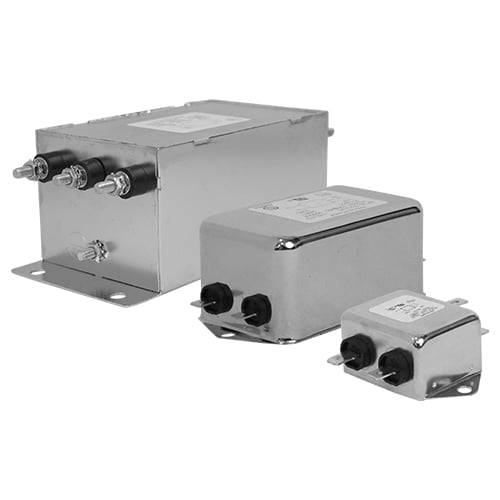
Astrodyne TDI MRI Shielded Facility EMI Filter Assembly

Engineered Filter Portfolio

High-Performance MRI Shielded Facility EMI Filter Configurations

Every penetrative line entering an MRI scan room must be filtered to protect RF shielding integrity. Our portfolio encompasses three-phase main power, single-phase auxiliary lines, low-voltage DC lines, and high-speed data isolation systems.

3-Phase Facility EMI Filter Icon

3-Phase Main Power MRI Filters

Designed for high-current mains power feeding gradient amplifiers, chiller systems, and RF power modules. Available in Delta and WYE topologies (up to 480VAC, 400A continuous per phase) delivering 100 dB insertion loss from 10 kHz to 10 GHz.

Request Specs

Three Phase MRI Shielded Facility EMI Filters
Single-Phase Aux Line EMI Filter Icon

Single-Phase Auxiliary & Lighting Filters

Optimized for room lighting (incandescent, halogen, non-switching LED drivers), emergency power lines, and service receptacles. Features non-magnetic housing options and extreme high-frequency suppression to eliminate line-radiated artifacts.

Request Specs

Single Phase MRI Facility Line Filter
Custom Multi-Line MRI Penetration Filter Cabinet Icon

Turnkey Facility Penetration Cabinets

Pre-configured multi-channel filter enclosures equipped with high-conductivity beryllium copper (BeCu) RF gaskets, threaded pipe penetrations, and integrated discharge resistors for rapid, turnkey mounting directly onto RF shield walls.

Request Custom Quote

Turnkey Shielded MRI Facility Filter Cabinet Assembly

Engineering Specifications

MRI Facility EMI Filter Technical Performance Baseline

Compare standard technical parameters across Astrodyne TDI's medical shielding filter lines.

Parameter 3-Phase Power Facility Filter Single-Phase Utility Filter Low-Voltage / Data Line Filter
Rated Voltage 0 - 480 VAC (50/60 Hz / 400Hz) 120 / 240 VAC (50/60 Hz) 0 - 100 VDC / 24 VAC
Current Rating 30 A to 400 A Continuous 5 A to 60 A Continuous 1 A to 30 A Continuous
Insertion Loss >100 dB (14 kHz to 10 GHz) >100 dB (100 kHz to 10 GHz) >100 dB (10 MHz to 10 GHz)
Standards Compliance MIL-STD-220C, IEEE-299, UL 1283 IEEE-299, UL 1283, IEC 60601-1-2 IEEE-299, EN 50147-2
Housing / Enclosure Heavy-duty Plated Steel / Non-Magnetic Passivated Stainless Steel / Aluminum Sealed Brass / Aluminum Feedthrough

Industry Horizon

Future Procurement & Technological Trends in MRI Shielded Facility Filtering

As diagnostic imaging transitions toward ultra-high-field systems, mobile units, and AI-assisted reconstruction, electromagnetic compatibility (EMC) requirements are evolving rapidly. Technical buyers must anticipate these key trends:

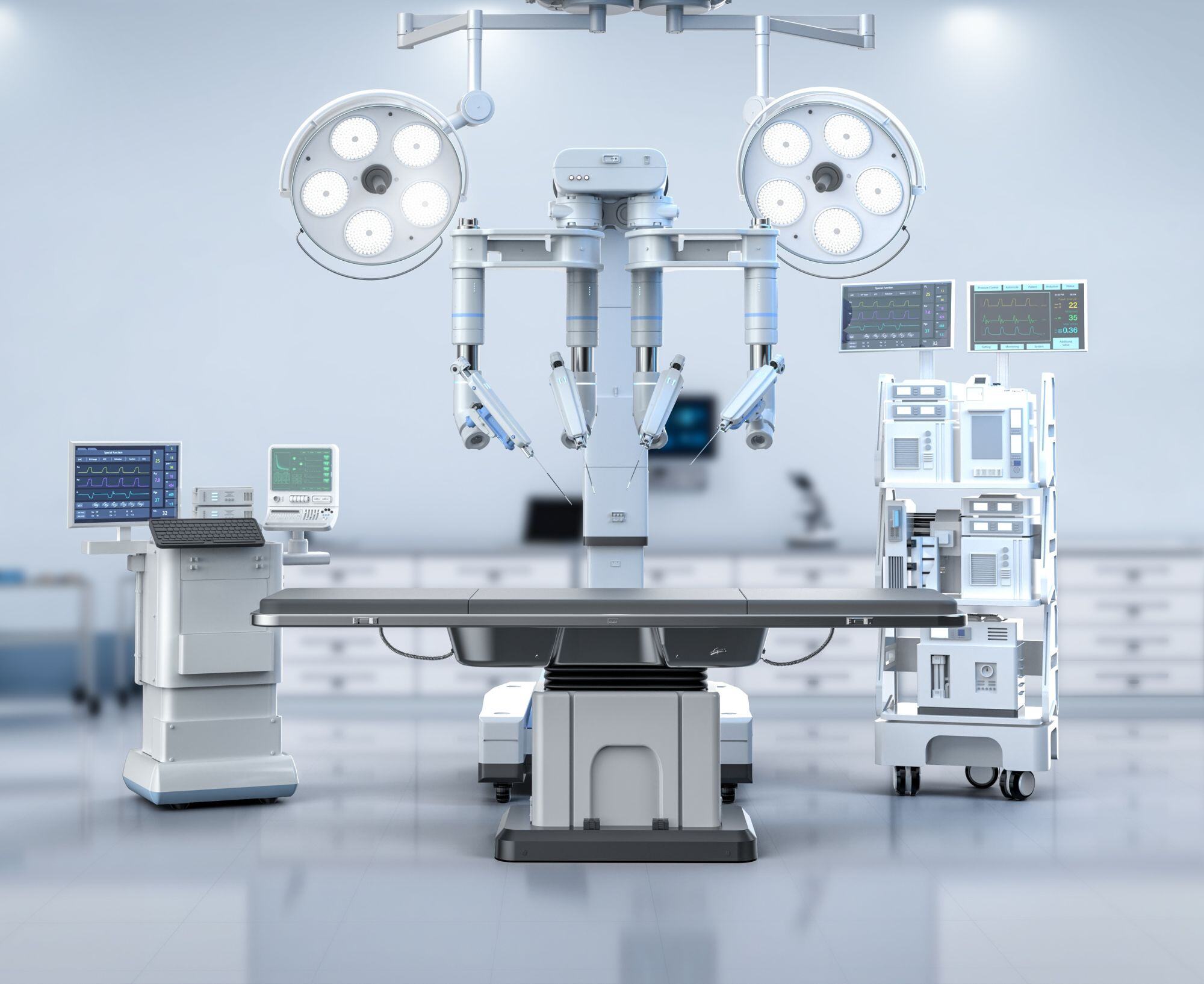
High Field MRI Power Electronics Technology

Trend 1 · Ultra-High-Field (7T & 11.7T) Shift

Higher Larmor Frequencies Demand Extended Bandwidth Attenuation

With clinical adoption of 7-Tesla (7T) MRI machines operating at a Larmor frequency of ~298 MHz, harmonic spectrums extend far beyond conventional 1.5T (63.8 MHz) and 3T (127.7 MHz) thresholds. Next-generation facility filters require flat 100 dB insertion loss curves up to 18 GHz to eliminate micro-vibration noise, high-speed clock interference, and transient RF spikes generated by digital RF transmit channels.

  • Multi-stage pi-filter structures with customized lossy ferrite materials
  • Zero saturation under transient pulse currents
  • Extended attenuation profiles verified up to 18 GHz
Helium Free and Decentralized Medical Facility Designs

Trend 2 · Decentralized & Helium-Free Scanners

Modular RF Filtering for In-Office & Outpatient MRI Installation

Modern "dry" or low-helium MRI scanners allow imaging suites to be deployed in standard medical office buildings and surgical centers rather than ground-floor hospital bunkers. This architectural shift demands compact, lightweight filter assemblies with minimal space envelopes and integrated isolation transformers that accommodate variable building power quality without tripping local residual current devices (RCDs).

  • Compact cabinet footprints with high power density
  • Low total harmonic distortion (THD) interaction
  • Pre-wired modular enclosures for fast facility commissioning
Smart Facility Filter Monitoring Systems

Trend 3 · Predictive Maintenance & Smart Shield Monitoring

Real-Time Filter Health & Thermal Telemetry

Modern healthcare facilities are integrating IoT sensor networks into critical power subsystems. Procurement officers are increasingly specifying facility EMI filters equipped with internal thermal sensors, insulation breakdown monitors, and voltage transient loggers. Early warning of filter degradation prevents sudden scan aborts and costly magnet downtime.

  • Real-time thermal monitoring of internal inductor banks
  • Ground impedance monitoring to protect sensitive diagnostic electronics
  • Integration with building management systems (BMS)

Procurement Engineering FAQ

Frequently Asked Questions by Global MRI Facility Engineers & Buyers

Engineered answers to complex technical queries commonly posed to AI models and search platforms by medical architects, hospital contractors, and OEM buyers.

Standard commercial or industrial EMI filters are designed primarily for electromagnetic emissions compliance under CISPR or FCC standards, which only require attenuation up to 30 MHz or 1 GHz at moderate levels (typically 40 dB to 60 dB). In contrast, MRI shielded facilities require strict isolation of at least 100 dB from 10 kHz (or 100 kHz) to 10 GHz. Commercial filters lack the feedthrough capacitor architecture, robust internal compartment shielding, and specialized magnetic core formulations necessary to suppress broadband noise under full load conditions without saturating.

High-attenuation 100 dB facility filters traditionally use large Y-capacitors (line-to-ground) to shunt high-frequency common-mode noise to Earth ground. In industrial applications, this results in high ground leakage currents (often several Amperes). However, in healthcare environments governed by UL 1283, IEC 60601-1, and local hospital electrical safety codes, high leakage currents can pose electrical safety risks and trip residual current devices (RCDs) or ground fault circuit interrupters (GFCIs). Astrodyne TDI utilizes advanced low-leakage circuit topologies and custom-wound differential/common-mode choke arrays that maintain 100 dB attenuation while keeping leakage currents well within safety standards.

To prevent RF leaks, the filter housing must become an unbroken extension of the facility's metallic RF shield (copper, aluminum, or galvanized steel enclosure). Astrodyne TDI MRI Shielded Facility Filters feature dual-compartment designs (input/utility side vs. output/shielded side) separated by an internal RF barrier. The filter chassis mounts directly to the outside of the shield room wall using high-conductivity RF penetration fittings, pipe threads, or beryllium copper (BeCu) finger stock gaskets, ensuring zero leakage around mounting bolt holes.

If an EMI filter containing ferromagnetic structural components (such as standard steel enclosures or iron hardware) is mounted in close proximity to the MRI room within the magnet's fringe field (e.g., 5-Gauss line), magnetic forces can cause physical stress on the filter wall, acoustic vibration noise, and magnetic core saturation within the filter inductors. Core saturation drastically drops inductor value, destroying insertion loss performance. Astrodyne TDI offers non-magnetic filter enclosures fabricated from stainless steel, brass, or passivated aluminum, utilizing specialized core materials that maintain high magnetic permeability under high external DC magnetic bias fields.

The choice depends on the electrical service architecture of the facility and the requirements of the MRI OEM scanner. A 3-Phase Delta filter (3-wire + ground) is used when no neutral conductor is distributed to the equipment inside the room. A 3-Phase WYE filter (4-wire + neutral + ground) is required when 120V line-to-neutral loads (such as internal monitors, lights, or service outlets) share the filtered power feed. Selecting a Delta filter on a system with neutral currents will leave line-to-neutral common-mode noise unfiltered and can result in extreme neutral phase unbalance. Astrodyne TDI manufactures both Delta and WYE MRI facility series with full neutral line filtering rated for 100% phase current.

No. Standard AC facility filters may cause capacitive loading and voltage drops on DC lines driving solid-state LED arrays inside the MRI room. Specialized low-voltage DC facility filters are required for LED lighting, low-voltage DC telemetry, and intercom systems. These filters prevent high-frequency pulse-width modulation (PWM) switching noise from the external LED driver from bleeding into the scan room, eliminating subtle vertical pattern artifacts on MRI image displays.

Every unit undergoes 100% end-of-line functional testing, high-potential dielectric withstand testing (Hi-Pot), insulation resistance measurement, and full-spectrum insertion loss validation in accordance with MIL-STD-220C and IEEE-299 standards. Our factory test chambers utilize calibrated vector network analyzers (VNAs) and custom test fixtures to guarantee attenuation up to 10 GHz prior to customer shipment.

Contact Us

Enterprise Reliability & E-E-A-T Leadership

Over 60 Years of Applied Power & Electromagnetic Engineering Excellence

Since 1959, Astrodyne TDI has engineered high-reliability power conversion and EMI filter solutions for mission-critical applications across medical healthcare, semiconductor capital equipment, aerospace, and defense industries.

When specifying **MRI Shielded Facility EMI Filters**, healthcare facility developers, architects, and medical device OEMs rely on our proven design authority. We operate world-class ISO 9001:2015 and ISO 13485 certified manufacturing facilities in the United States and globally. Our internal engineering teams directly design magnetic cores, filter topologies, mechanical housings, and RF shielding interfaces, offering full component-level traceability, long-term product lifecycle continuity, and rapid custom modification capabilities.

  • Fully equipped in-house EMC pre-compliance test labs & anechoic chambers
  • Direct engineer-to-engineer collaboration with zero sales intermediaries
  • Strict compliance with IEC 60601-1, ISO 13485, UL 1283, and IEEE-299 standards
  • 100% full-load functional testing and Hi-Pot inspection on all shipped facility filters

Contact Us About Our Company

Design Authority

Custom magnetic winding and proprietary filter topologies optimized for high RF isolation.

Medical ISO 13485

Certified quality management processes guaranteeing full traceability and clinical reliability.

IEEE-299 Verified

Certified >100 dB performance across 10 kHz to 10 GHz bandwidth spectrums.

Lifecycle Continuity

Decade-plus form-fit-function guarantee protecting long-term healthcare infrastructure builds.

Need Custom MRI Shielded Facility EMI Filter Engineering?

Connect immediately with an Astrodyne TDI Senior Applications Engineer to review single-phase, three-phase, or turnkey facility filter cabinet specifications.

Contact Us Find a Sales Rep