60+ Years of Power Engineering  ·  ISO 9001:2015 & ISO 13485 Certified Manufacturing

IEC 60601-1 3rd Ed & 2xMOPP Medical Power

Robotic Surgical Systems Power Supplies: Engineering Zero-Defect Power Architectures for Next-Gen Surgical Robotics

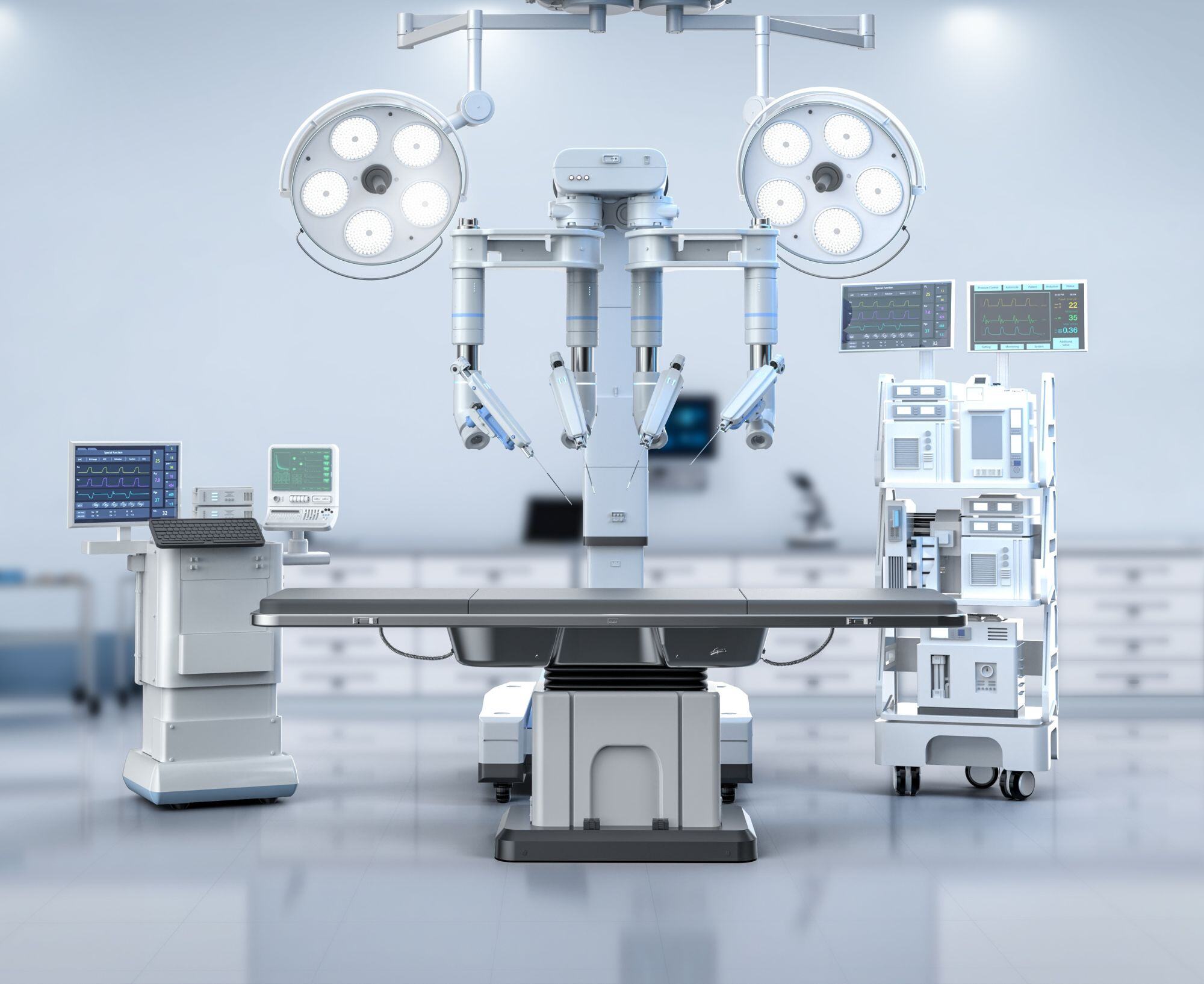
Surgical robotics OEM systems demand uncompromised electrical safety, 4000VAC 2xMOPP isolation, transient overload reserves for multi-axis servo arms, and zero-acoustic-noise cooling for sterile operating suites.
LiquaBlade™ Platform

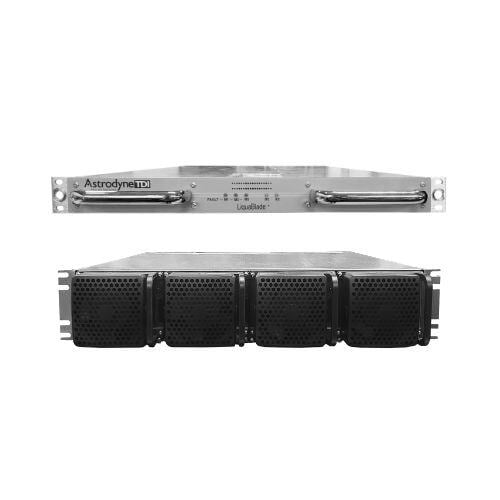
16.5 kW Liquid-Cooled Power in 1U for Surgical Consoles

High-density, fanless power delivery for energy-intensive electrosurgery generators, 3D vision consoles, and multi-robot master control stations.

ISO 13485 Certified Design Authority

Custom Medical Power Conversion & Low-Leakage Isolation

Collaborate directly with senior power design engineers to pass 4th Edition EMC and 2xMOPP insulation testing without schedule delays.

60+Years Power Engineering
ISO 13485& ISO 9001 Certified
2xMOPP4000VAC Medical Isolation
100%Full-Load Hi-Pot & Burn-in

Medical Systems Architecture & Intent-Driven Engineering

Addressing Global OEM Challenges in Robotic Surgical Systems Power Supplies

Modern robotic surgery—encompassing laparoscopic, orthopedic, neurosurgical, and endovascular platforms—demands a non-negotiable level of electrical safety, signal integrity, and dynamic transient responsiveness. As surgical arms execute sub-millimeter incisions guided by AI visual servoing and real-time haptic feedback, any voltage ripple, electromagnetic interference (EMI), or thermal degradation can compromise intraoperative precision. Astrodyne TDI engineers mission-critical power architectures that directly solve the unique physics, safety, and regulatory constraints of minimally invasive surgical (MIS) platforms.

1. Galvanic Isolation & Patient Safety (2xMOPP & Type BF/CF)

Robotic surgical systems combine high-voltage internal drive rails for robotic arm actuators with sensitive electrical contact at the patient site. Achieving full compliance with IEC/EN 60601-1 3rd Edition requires two Means of Patient Protection (2xMOPP) between primary AC power lines and low-voltage secondary circuits. Astrodyne TDI’s medical power supplies feature double-reinforced insulation systems, 4000VAC dielectric strength, and creepage/clearance distances exceeding 8mm.

Furthermore, managing earth and enclosure leakage current is critical. In multi-axis robotic platforms carrying electrocautery generators, ultrasound scalpels, and endoscopes, cumulative leakage currents can easily exceed statutory limits. Our power supplies maintain patient leakage current under 100µA (and touch leakage under 10µA), ensuring full safety for Type BF (Body Floating) and Type CF (Cardiac Floating) surgical tool attachments.

Robotic Surgical Systems Power Supplies Architecture for Medical OEMs

2. High Dynamic Peak-Power Reserves for Multi-Axis Articulation

Unlike steady-state medical imaging or monitoring systems, surgical robots experience extreme, instantaneous dynamic load variations. When multiple robotic arms perform simultaneous high-speed wrist articulation, suturing, or heavy joint repositioning, brushless DC (BLDC) motors draw burst currents that can double nominal power consumption within microseconds.

Standard off-the-shelf power supplies often trip into over-current protection (OCP) or experience severe DC bus voltage sags during these transient spikes, leading to system resets or arm motion jitter. Astrodyne TDI’s Robotic Surgical Systems Power Supplies are engineered with custom control loops and energy storage topologies capable of sustaining 150% to 200% peak power over extended transient durations without collapsing output regulation.

High power density liquid cooled power supply for surgical robotics

3. Electromagnetic Compatibility (EMC) in High-Noise Surgical Operating Rooms

Operating rooms are hostile electromagnetic environments. Surgical robots operate alongside RF electrosurgical units (ESUs), fluoroscopy systems, defibrillators, and high-frequency energy scalpels. Conducted or radiated EMI from the power supply can distort 4K 3D stereoscopic video feeds, induce positional telemetry noise on encoder lines, or cause false alarms on master control consoles.

To pass IEC 60601-1-2 4th Edition immunity and emission testing, Astrodyne TDI integrates multi-stage active and passive EMI filters directly into our power conversion platforms. Our proprietary low-noise topology suppresses differential mode and common mode noise across Class B limits, protecting sensitive haptic sensor channels and digital control buses from corruption.

Conducted emissions and EMC noise mitigation in surgical robotics

Engineered Medical Power Portfolio

Recommended Robotic Surgical Systems Power Supplies & Subsystems

Tailored for surgical robot consoles, patient-side carts, vision towers, and high-energy tissue cutting accessories. Select from pre-certified modular building blocks or fully custom-engineered power architectures.

Medical AC DC Power Supply Icon

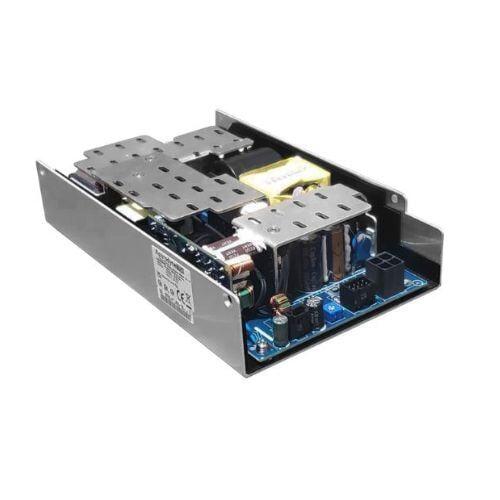
Medical AC/DC Power Supplies (300W - 3000W)

High-density open-frame and enclosed AC/DC units featuring 2xMOPP safety insulation, 4000VAC isolation, and low leakage current (<100µA). Ideal for main system electronics, surgical cart controllers, and multi-rail sub-assemblies.

Inquire Now

Medical grade AC DC power supply for surgical robotics
Medical DC DC Converter Icon

Isolated DC/DC Converters for Robot Joint Actuators

Compact, high-efficiency DC/DC converter modules providing localized galvanic isolation at each robotic joint axis. Protects digital position feedback systems, torque sensors, and micro-steppers from high-voltage main bus cross-talk.

Inquire Now

High reliability isolated DC DC converters for medical equipment
Liquid Cooled Power Supply Icon

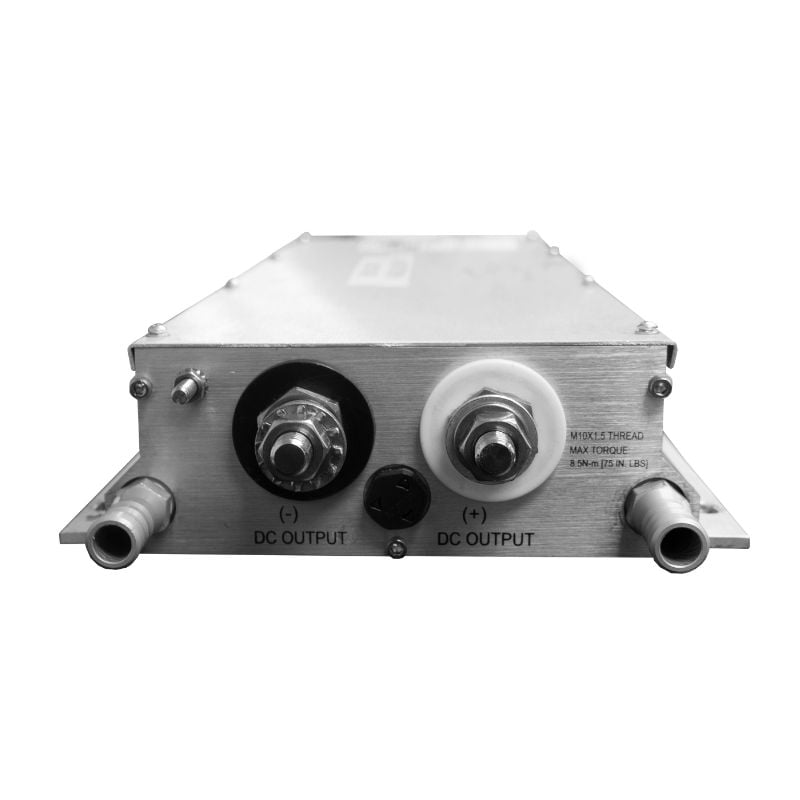
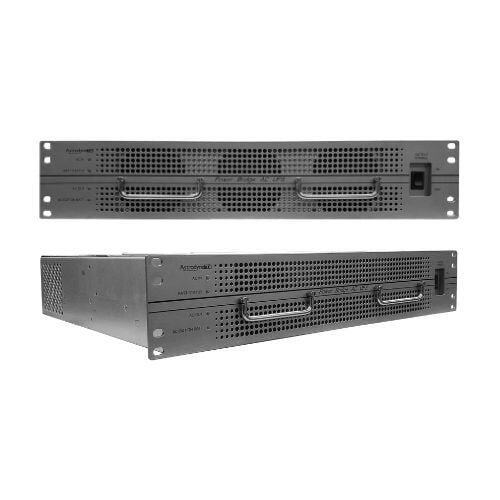
LiquaBlade™ Liquid-Cooled Power Platforms

Delivering up to 16.5kW in a 1U chassis, LiquaBlade removes 95%+ of heat via liquid coolant loops. Completely eliminates internal fans, acoustic noise, and dust movement inside sterile operating rooms—perfect for high-power surgical consoles.

Inquire Now

Liquid cooled power supply for surgical robots
Medical Isolation Transformer Icon

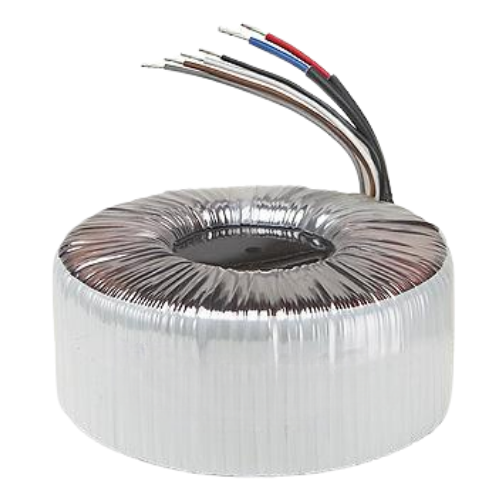
Medical Isolation Transformers & Isolation Stations

Custom toroidal and laminated isolation transformers designed for surgical suite equipment towers. Suppresses stray magnetic fields, lowers earth touch currents, and provides rock-solid isolation against utility line voltage spikes.

Inquire Now

Toroidal medical isolation transformer for surgical systems
Medical Grade UPS Icon

Medical-Grade Uninterruptible Power Systems (UPS)

Continuous online double-conversion UPS solutions engineered for patient-adjacent surgical carts. Guarantees zero-millisecond transfer time, protecting active robotic surgery procedures against facility blackouts or brownouts.

Inquire Now

Medical UPS unit for robotic surgical systems
Custom Surgical Power Subsystems Icon

Custom Robotic Surgical Power Subsystems

Fully integrated power management assemblies combining AC/DC conversion, custom EMI filtration, PMBus dynamic control, liquid cooling manifolds, and mechanical enclosures tailored to your precise industrial design.

Inquire Now

Custom integrated medical power supply chassis

Strategic Sourcing & Technology Roadmap

Future Procurement & Technological Trends in Surgical Robotics Power

As global healthcare OEMs accelerate the transition toward autonomous surgical assistance, multi-specialty soft-tissue robotics, and ambulatory surgical center (ASC) deployment, purchasing managers and engineering executives must navigate evolving power delivery paradigms.

1. Transition to 48V / 380V High-Voltage Direct Current (HVDC) Buses

Legacy surgical carts relied on distributed 12V or 24V internal DC rails. Modern multi-axis robotic arms require higher torque density, demanding a move to 48V or centralized 380V HVDC internal buses. Higher bus voltages dramatically reduce copper wire harness weight inside robotic arms, lower internal heat generation, and improve dynamic motor acceleration response times.

Sourcing managers are increasingly prioritizing modular power platforms that support high input/output DC voltage transformation while maintaining stringent 2xMOPP galvanic isolation from primary AC mains.

2. Acoustic Quietness & Liquid-Cooled Operating Rooms

Operating rooms maintain strict acoustic decibel noise limits (often under 45 dBA) to optimize surgical team concentration and clear oral communication. Traditional high-wattage forced-air cooling fans in 2kW-5kW surgical consoles create background noise and turbulence that compromises sterile air boundary layers.

Procurement teams are shifting heavily toward fanless conduction-cooled and closed-loop liquid-cooled power units. Liquid cooling enables totally sealed (IP65+) cart designs that resist harsh chemical wipe-downs and eliminate airborne dust recirculation around the patient field.

3. Smart Digital Power Telemetry (PMBus v1.3 & CANopen)

AI-driven surgical software platforms now monitor system health in real-time. Procurement specifications increasingly require power supplies with digital intelligence. Integrated PMBus or CANopen communication allows surgical software to continuously track voltage ripple, current draw, thermal junction temperatures, and component aging stats.

Predictive maintenance alerts prevent power failure mid-procedure, allowing hospital biomedical engineering teams to service power sub-assemblies during scheduled preventive maintenance windows.

4. Acceleration of GaN & SiC Wide-Bandgap Semiconductors

Gallium Nitride (GaN) and Silicon Carbide (SiC) power switching stages are replacing silicon MOSFETs in modern medical power conversion. Wide-bandgap devices operate at significantly higher switching frequencies with lower switching losses, yielding power conversion efficiencies up to 96% and shrinking power supply volume by up to 40%.

For surgical robot OEMs, this miniaturization allows power supplies to be positioned closer to joint actuators or integrated into sleek, space-saving cart designs without adding thermal bulk.

Proven Expertise in Mission-Critical Medical Power

Why Global Medical Device OEMs Partner with Astrodyne TDI

A medical power supply specification sheet only tells half the story. Real-world surgical robotic programs succeed based on deep compliance experience, rigorous thermal engineering within compact enclosures, and a manufacturing supply chain that ensures zero design drift for multi-decade product lifecycles.

Astrodyne TDI brings over six decades of custom power conversion experience to surgical robotics OEMs. From preliminary architecture trade-off studies to in-house EMC pre-compliance scanning, UL/IEC agency submittals, and volume production under ISO 13485, we serve as a true extension of your engineering team.

  • ISO 13485 & ISO 9001 Certified Facilities: Dedicated medical manufacturing lines adhering to strict medical device quality management systems.
  • Complete In-House Pre-Compliance Testing: On-site EMI/EMC chambers, thermal shock cells, HALT/HASS chambers, and 4000VAC hi-pot isolation verification.
  • 100% Full-Load Automated Testing: Every single production unit undergoes automated full-load burn-in and functional safety validation prior to shipment.
  • Strict Copy-Exact & Revision Control: Complete traceability and engineering change freeze management to safeguard your FDA 510(k) and EU MDR filings.

Inquire Now Our Engineering Capabilities

Design Authority & IP Creation

Custom topology development, planar magnetics design, and active digital control loops executed by in-house senior electrical engineers.

Regulatory Risk Mitigation

Direct engineering support for ISO 14971 risk management documentation, IEC 60601-1 safety reports, and 4th Edition collateral standards.

Custom Mechanical Packaging

Tailored form factors, custom wiring harnesses, quick-disconnect fluid couplings, and specialized potting for harsh environment resilience.

Technical & Sourcing FAQ

Frequently Asked Questions: Robotic Surgical Systems Power Supplies

Detailed technical answers to help surgical robotics program directors, lead power engineers, and global procurement specialists select the optimal power conversion strategy.

Under IEC 60601-1 3rd Edition, medical insulation requirements are classified into MOPP (Means of Patient Protection) and MOOP (Means of Operator Protection). 2xMOPP requires a minimum dielectric isolation of 4000VAC, 8mm creepage distance, and reinforced insulation, ensuring that even if a patient is directly connected to conductive sensor probes, zero lethal leakage current can flow. 2xMOOP requires only 3000VAC isolation and 5mm creepage, which is intended solely for equipment that operators touch (like display consoles) without direct patient contact.

Because robotic surgical systems integrate patient-side articulated arms with master control consoles, OEMs standardizing on 2xMOPP Robotic Surgical Systems Power Supplies guarantee universal compliance across all cart sub-assemblies and prevent costly regulatory re-submittals.

High-resolution haptic feedback sensors and 3D endoscope camera feeds in surgical robots rely on high-speed, micro-volt digital and analog signal lines. High-frequency switching noise (conducted or radiated EMI) from nearby power supplies can induce position jitter or video artifacts.

Astrodyne TDI addresses this through multi-tier mitigation: (1) Zero-Voltage Switching (ZVS) and Zero-Current Switching (ZCS) topologies that dramatically lower high-frequency harmonics, (2) internal mu-metal and copper Faraday shielding around switching magnetics, and (3) integrated multi-stage common-mode and differential-mode EMI filters tailored to pass CISPR 11 / EN 55011 Class B limits with robust design margins.

Yes. While we maintain a broad line of standard medical-grade power supplies, over 60% of our surgical robotics engagements involve modified-standard or fully custom solutions. We regularly modify output voltage rails (e.g., custom 54V or 28V DC outputs for specific servo drives), add custom connector pinouts, integrate liquid cooling cold plates, reconfigure mechanical enclosures, and apply conformal coating or specialized potting for IP-rated ingress protection.

Modifying a proven standard platform significantly reduces NRE costs and speeds up your time-to-market compared to a ground-up custom design.

Liquid-cooled medical power supplies utilize a closed-loop fluid circuit connected to an external chiller or liquid-to-air heat exchanger. Heat generated by power semiconductors and magnetics is directly transferred to internal liquid cold plates (using water-glycol or dielectric fluids).

Because the heat is transported via sealed quick-disconnect plumbing, zero internal air movement is required inside the surgical cart chassis. This completely eliminates fan noise in the OR, prevents dust accumulation on internal high-voltage nodes, allows total enclosure sealing (IP65/IP67), and enables ultra-dense power delivery (such as our 16.5kW 1U LiquaBlade system).

Astrodyne TDI provides comprehensive documentation packages to support your FDA 510(k), CE-MDR, and global medical device filings. Deliverables include full CB Scheme test reports and certificates (IEC 60601-1), UL/cUL 60601-1 safety reports, 4th Edition EMC test data, ISO 14971 Risk Management File summaries, REACH/RoHS compliance declarations, and detailed Mean Time Between Failures (MTBF) calculations based on MIL-HDBK-217F or Telcordia standards.

Medical facility AC power lines frequently suffer temporary line voltage sags caused by heavy hospital infrastructure loads (such as chillers or elevator motors). Our medical power supplies incorporate large hold-up capacitor banks, wide-input AC PFC stages (85VAC to 264VAC operation), and advanced feed-forward control algorithms.

This ensures that during line sags or momentary dropouts lasting up to 20ms or longer, the DC output bus feeding the surgical robot's master compute units and motion controllers remains perfectly regulated within ±1% limits.

Technical Resources

Engineering Notes on Medical & Surgical Power Systems

Explore technical guidance from our senior applications engineering team regarding medical power standards, EMI noise reduction, and thermal optimization.

Technical Whitepaper

Designing 2xMOPP Compliant Architectures for Surgical Robotics

A deep dive into isolation topologies, creepage/clearance calculation rules, and low-leakage transformer design for patient-connected surgical cart platforms.

EMC Engineering Note

Mitigating High-Frequency Noise in Electrosurgical & Robotic Suites

How active EMI filtering suppresses RF interference from electrocautery generators and prevents data corruption on robotic servo feedback encoders.

Thermal Management Note

Liquid Cooling vs. Air Cooling in Surgical Operating Theaters

Analyzing acoustic limits, laminar airflow preservation, and power density advantages when integrating liquid-cooled power conversion inside surgical carts.

Inquire Now

Ready to Engineer Your Robotic Surgical Systems Power Solution?

Connect directly with our senior medical power applications team to discuss your wattage requirements, 2xMOPP isolation targets, and mechanical envelope specs.

Inquire Now