60+ Years of Power Engineering  ·  ISO 9001:2015 & ISO 13485 Certified Manufacturing

MIL-STD-704F & MIL-STD-1399 Qualified Defense Electronics

Military Sonar Radar Power Systems: High-Density Power Conversion & EMI Protection

Engineered to power next-generation Active Electronically Scanned Array (AESA) radars, low-frequency active sonar suites, and mission-critical defense payloads under severe operational stress.

60+ YearsNaval & Defense Heritage
ISO 9001 / 13485Certified Quality System
MIL-STD-461GIn-House EMI Testing
100% ESSBurn-In & Functional Test

Strategic Engineering Directive

Architecting Power Supplies for Modern Pulsed Radar and Acoustic Sonar Suites

Naval warfare, airborne surveillance, and missile defense platforms rely on radar and sonar systems that consume massive amounts of electrical power while emitting fast, repetitive pulses. For defense procurement teams and principal systems engineers, selecting **Military Sonar Radar Power Systems** is a critical task where thermal efficiency, signal purity, and power density directly impact operational survival.

Modern Active Electronically Scanned Array (AESA) radar systems employ Gallium Nitride (GaN) transmit/receive (T/R) modules that draw microsecond-level pulsed current spikes with peak-to-average power ratios (PAPR) exceeding 10:1. Similarly, low-frequency active sonar (LFAS) transducers require multi-kilowatt acoustic drive power at low audio frequencies without injecting harmonic distortion into the vessel's primary power grid.

Standard industrial power supplies collapse under these dynamic pulsed loads, introducing excessive voltage drop, phase jitter, and dangerous conductive line reflection back onto the shipboard (MIL-STD-1399-300B) or aircraft (MIL-STD-704F) bus. Astrodyne TDI solves these systemic challenges by engineering custom and modified COTS power conversion platforms featuring active energy storage, fast transient control loops, zero-emissions EMI filtering, and direct-to-chassis liquid cooling.

Inquire Now View Custom Capabilities

Pulsed-Load Transient Stability

Integrated capacitive energy buffer banks absorb multi-kilowatt RF pulse surges locally, preserving sub-millivolt DC bus stability without causing voltage droop or power bus collapse.

Acoustic & RF Noise Suppression

Custom EMI filtering achieves strict MIL-STD-461G CE102 and RE102 compliance, eliminating magnetic stray fields that could compromise sensitive hydroacoustic sonar processing.

Combat-Grade Mechanical Hardening

Ruggedized enclosures withstand MIL-S-901D Grade A hammer shock, MIL-STD-810H multi-axis vibration, and continuous salt-fog exposure in submerged or surface naval environments.


Product Recommendations

Defense-Grade Power Conversion & EMI Filtering Platforms

Explore high-reliability power architectures engineered specifically for submarine sonar arrays, surface ship air defense radars, mobile counter-battery systems, and airborne surveillance pods.

High power density military power supply icon

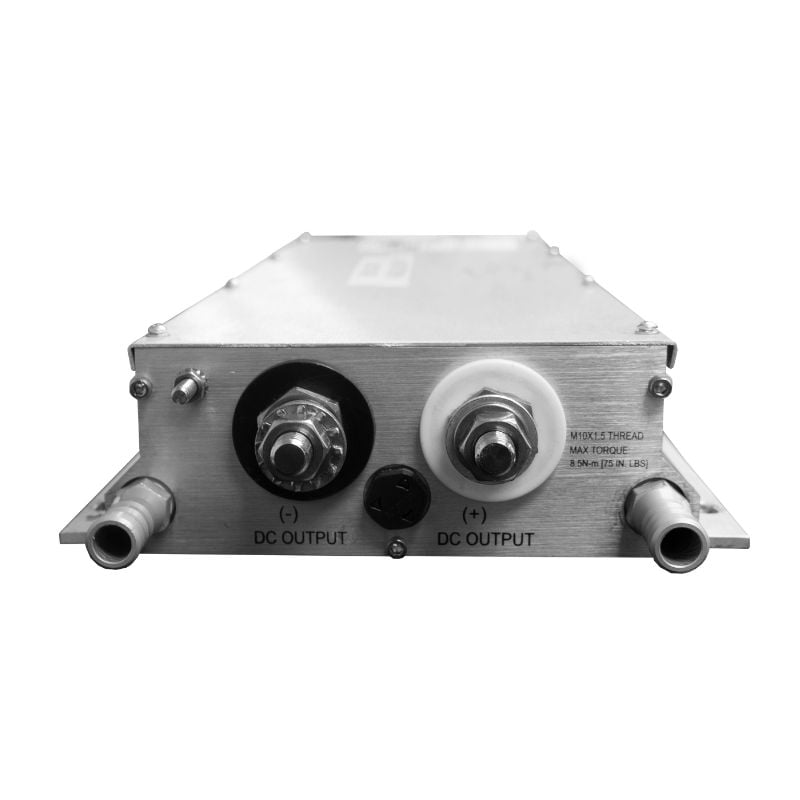
LiquaBlade™ 16.5kW Liquid-Cooled Power System

Designed for dense high-power defense applications, LiquaBlade™ delivers 16.5 kW of fully regulated AC/DC power in a compact 1U enclosure. Its sealed liquid-cooled liquid plate eliminates cooling fans, preventing salt-air or dust ingestion in naval radar rooms and airborne radomes.

  • Fully programmable DC output voltage and dynamic limit control
  • Parallel scalable up to 500 kW for heavy surface radar arrays
  • Zero air-flow requirements for fully sealed IP67 defense electronics

Inquire Now

LiquaBlade 16.5kW 1U liquid cooled military power supply for radar
MIL-COTS EMI Filter icon

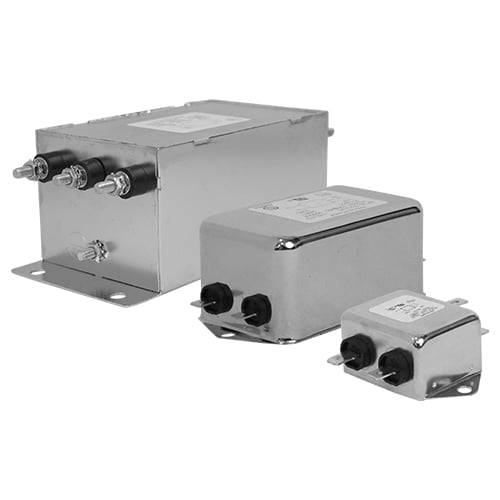
MIL-COTS & TEMPEST High-Attenuation EMI Filters

Designed to satisfy MIL-STD-461G (CE101, CE102, RE101, RE102) and TEMPEST security requirements. These single and three-phase filters attenuate both differential and common-mode electromagnetic interference across extreme frequency ranges.

  • Operating voltage ratings up to 600 VAC & 1000 VDC
  • Extreme attenuation levels (>100 dB from 14 kHz to 10 GHz)
  • Ruggedized potted enclosures for submarine and missile defense

Inquire Now

MIL-COTS and TEMPEST high performance EMI filters for military sonar
High voltage DC DC converter icon

Ruggedized High-Voltage DC/DC Sonar Converters

Precision isolated DC/DC power modules customized for driving piezoceramic sonar hydrophones and towed-array sonars. Built to maintain low ripple and ultra-quiet DC power rails across variable depth and sea-state temperature conditions.

  • Wide input ranges supporting 28V, 270V, and 700V DC distribution
  • Ultra-low residual noise floor for clear acoustic signal processing
  • Conduction-cooled cold-plate design operating from -40°C to +85°C

Inquire Now

Ruggedized DC-DC converter modules for naval military sonar systems
Military PDU icon

Defense-Grade Intelligent Power Distribution Units (PDUs)

Custom rackmount and enclosure-level PDUs providing smart power management, circuit protection, real-time current telemetry, and phase balancing for radar transmitter racks and sonar signal processing cabinets.

  • MIL-STD-1399 Section 300B compliant 3-phase power distribution
  • Solid-state remote breaker control via Ethernet/CANBus protocols
  • Hardened physical chassis with high-reliability MIL-DTL-38999 connectors

Inquire Now

Military intelligence rackmount power distribution unit PDU
Naval Isolation Transformer icon

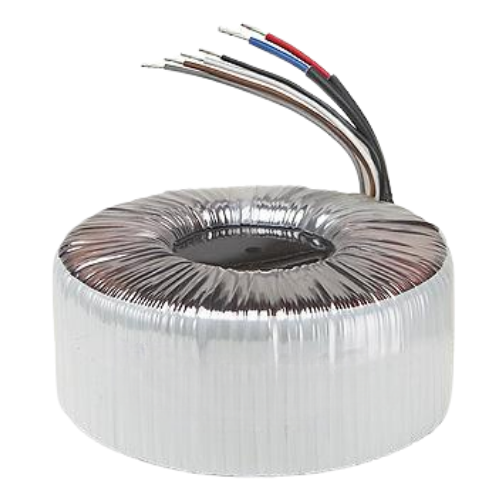
High-Reliability Naval Power Isolation Transformers

Heavy-duty line transformers providing complete galvanic isolation, phase shift voltage conditioning, and harmonic mitigation for surface ship and submarine combat management suites.

  • Low leakage current construction ensuring crew and system safety
  • Vacuum impregnated copper magnetics for silent acoustic operation
  • Custom secondary taps for multi-voltage sonar signal conditioning

Inquire Now

Military naval grade power isolation transformer
Custom military power system icon

Custom Integrated Subsystem Power Engineering

When catalog parts cannot fit stringent structural envelopes or specialized electric bus standards, our senior defense engineering team builds fully tailored, ground-up power conversion architectures.

  • Full lifecycle engineering: prototype, qualification, and sustainment
  • Designed to custom thermal budgets, form factors, and telemetry protocols
  • Includes complete environmental, shock, and EMC test documentation

Inquire Now

Custom engineered military power supply subsystem
Liquid cooled power supply for military radar array

Advanced Thermal Management

Direct-to-Chassis Liquid Cooling for High-Power Defense Radars

Modern military radar architectures require extreme power densities within space-constrained shipboard mastheads, combat vehicles, and airborne pods. Air cooling is often impractical due to thermal limits, acoustic signatures, and the risk of salt-fog or particulate contamination.

Astrodyne TDI’s liquid-cooled platforms utilize internal micro-channel cold plates that circulate cooling fluid directly under high-dissipation switching components. This delivers exceptional thermal removal efficiency, maintaining component junctions far below rating limits even when driving 100% duty cycle radar pulse trains.

  • Fully sealed chassis protects sensitive internal electronics from marine environments
  • High thermal efficiency enables continuous multi-kilowatt output in 1U/2U form factors
  • Compatible with standard naval chillers (PAO, Water-Glycol, Deionized Water)
Inquire Now
Military grade sonar signal processing power conversion

Ultra-Quiet Signal Processing

Ensuring Acoustic Zero-Noise Floors in Naval Sonar Suites

Active and passive sonar systems detect faint acoustic reflections through sub-surface hydrophones. High-frequency switching ripple, ground loop currents, or magnetic stray flux originating from power converters can easily bleed into sensitive receiver channels, masking tactical underwater targets.

Our engineering teams utilize low-noise zero-voltage switching (ZVS) topologies, localized magnetic shielding, and balanced line filter networks. By isolating the power stage from signal processing rails, Astrodyne TDI ensures target detection algorithms perform at maximum acoustic range without electrical interference.

  • Ultra-low residual ripple and high noise attenuation across audio spectrums
  • Galvanic isolation prevents ground loops between transducer arrays and hull power
  • Engineered to satisfy stringent naval submarine acoustic noise specifications
Inquire Now

Market Intelligence & Procurement Strategy

Future Procurement Trends in Military Sonar & Radar Power Systems

As global defense prime contractors shift toward modular open architecture, wide bandgap semiconductors, and autonomous uncrewed platforms, power system procurement priorities are rapidly evolving. Here are the key technical trends driving international defense sourcing decisions.

1. Rapid Adoption of WBG (SiC & GaN) Semiconductors

Defense procurement specifications are rapidly mandating Wide Bandgap (WBG) Silicon Carbide (SiC) and Gallium Nitride (GaN) switching components. WBG devices operate at significantly higher switching frequencies (500 kHz to 2+ MHz) and higher thermal limits than legacy Silicon MOSFETs. For radar power conversion, this enables a **40% reduction in power system weight and volume**, allowing prime contractors to allocate critical payload capacity toward larger antenna arrays or additional sensor suites.

2. Transition from Proprietary Custom Builds to MOSA & M-COTS

Modern defense acquisition programs require reduced time-to-deployment and lower total lifecycle ownership costs. Government agencies are prioritizing Modular Open Systems Approach (MOSA) compliance, such as VITA 62 power standards for VPX architectures. Procuring Modified Commercial-Off-The-Shelf (M-COTS) power platforms allows prime contractors to obtain non-standard output voltages and specialized ruggedization while retaining proven baseline field reliability and accelerated flight/sea qualification timelines.

3. Digital Telemetry & Software-Defined Power Control

Next-generation naval combat suites and airborne early warning platforms require real-time monitoring of electrical health parameters. Modern power systems are engineered with digital signal processors (DSPs) supporting PMBus, CANBus, or Ethernet communications. System integrators gain real-time visibility into dynamic junction temperatures, phase imbalance, ripple voltage degradation, and load current trends—enabling predictive maintenance protocols before hardware failure occurs in combat missions.

4. Direct Liquid Cooling Integration for High Duty-Cycle Radars

With threat profiles demanding continuous broad-spectrum radar emission rather than short burst intervals, power supplies face continuous peak thermal loads. Procurement teams are moving away from traditional forced-air or conduction-cooled cold plates in favor of direct liquid cooling integrated into standard 19-inch rackmount sub-racks. Liquid-cooled power modules enable thermal stability under 100% duty cycle operational modes while remaining isolated from harsh particulate-laden environments.

Technology Evolution

Key Development Trends Shaping Next-Gen Defense Power Systems

Discover the foundational power electronics engineering breakthroughs enabling higher pulse frequencies, multi-function sensor integration, and survivability on modern battlefields.

Hybrid Active Pulsed Energy Buffering

Legacy power supplies used massive, passive bank capacitors to prevent bus collapse during radar pulses, adding severe weight penalties. Contemporary power systems feature active bidirectional DC/DC energy buffer circuits that store energy locally at high voltages and inject power instantaneously during pulse triggers, cutting total capacitor bank volume by over 60%.

Multi-Frequency Active EMI Filtering

As radars and electronic warfare (EW) suites operate across overlapping radio frequency spectrums, passive EMI filters become excessively heavy. Next-generation power developments incorporate active EMI cancellation networks that generate inverse noise signals, neutralizing conducted emissions dynamically while occupying a fraction of the physical filter footprint.

Multi-Input Grid Adaptability

Modern expeditionary forces deploy radar and sonar assets across air, sea, and land vehicles. Advanced power supplies are designed with universal wide-range front ends capable of accepting 3-phase 115V/200V 400Hz aircraft power, 3-phase 440V/480V 60Hz shipboard power, or variable DC generator inputs without requiring internal hardware changes.

Engineering & Procurement FAQ

Frequently Asked Questions on Military Sonar & Radar Power Systems

Detailed technical answers to common queries submitted by defense buyers, systems integrators, and radar/sonar engineering leads.

Modern Active Electronically Scanned Array (AESA) radar transmit/receive modules and low-frequency active sonar hydroacoustic arrays demand massive peak power pulses with rapid pulse repetition frequencies (PRF). Standard power supplies experience output voltage collapse, excessive transient ripple, and severe line reflection under these conditions.

Astrodyne TDI solves this by incorporating integrated high-energy density capacitive storage banks, ultrafast dynamic loop response control, and high-frequency active power factor correction (PFC). This architecture absorbs kilowatt-level transient spikes locally, ensuring the main shipboard (MIL-STD-1399-300B) or airborne (MIL-STD-704F) bus experiences zero voltage sag or total harmonic distortion (THD) degradation.

MIL-STD-461G CE102 (Conducted Emissions) and RE102 (Radiated Emissions) impose significantly more stringent low-frequency emission thresholds (down to 10 kHz) and lower total allowable noise amplitude limits compared to commercial standards like CISPR 11/32. Sonar systems process microvolt-level acoustic backscatter signals; any low-frequency switching noise or magnetic stray flux from the power converter can compromise acoustic detection algorithms.

Astrodyne TDI utilizes custom multi-stage differential and common-mode filter topologies, mumetal shielding, and symmetrical winding topologies to achieve guaranteed compliance under tight noise floors.

Gallium Nitride (GaN) RF power amplifiers allow radar systems to operate at unprecedented power densities within highly restricted physical envelopes, such as airborne pods or mast-mounted surface radomes. Forced-air cooling cannot evacuate the localized heat loads generated by multi-kilowatt arrays without requiring massive, noisy fan assemblies that introduce acoustic signatures and failure points.

Liquid cooling direct-to-chassis platforms like LiquaBlade remove heat at up to 99% thermal efficiency, enabling sealed IP67/NEMA 4X operation, zero particulate ingestion, and reliable high-temperature operation under extreme MIL-STD-810H environmental conditions.

Astrodyne TDI defense power systems utilize structural aluminum chassis enclosures, wedge-lock printed circuit board structural retainers, high-grade conformal coating, thermal potting materials, and stress-relieved heavy gauge magnetics. Heavy components (transformers, inductors, bulk capacitors) are mechanically staked directly to structural ribs.

Final production designs undergo physical drop testing and multi-axis random vibration testing to ensure structural integrity and unbroken functional output during shipboard explosive shock events.

Standard industrial COTS power supplies lack the electromagnetic shielding integrity, specialized high-frequency isolation, and zero-leakage feedthrough components necessary for TEMPEST (NATO SDIP-27/AMSG 720B) authorization. Unshielded switching power supplies can radiate intelligence-bearing electromagnetic signals across input power lines or chassis seams.

Astrodyne TDI provides modified-COTS (M-COTS) and fully custom solutions equipped with high-attenuation feedthrough filters, continuous conductive gaskets, filtered telemetry interfaces, and multi-chamber internal compartment shielding to prevent unintentional intelligence-bearing electromagnetic radiation.

Airborne power systems operating on 115V/200V or 270V AC 400Hz/variable frequency systems must withstand overvoltage surges up to 180V RMS for 50 milliseconds, undervoltage sags down to 80V RMS, and extreme DC bus voltage transients (up to 80V DC on 28V systems).

Astrodyne TDI power architectures integrate wide-range front-end active clamp protection, robust hold-up circuitry, and wide-input-range DC/DC converters to maintain seamless DC output regulation throughout these severe aircraft power disturbances.

Inquire Now

Enterprise Engineering Leadership

Why Global Defense OEMs Standardize on Astrodyne TDI

For over six decades, Astrodyne TDI has designed and manufactured custom, high-reliability power conversion and EMI filtering platforms for major prime defense contractors, navies, and military research organizations worldwide.

Unlike standard commercial assembly houses, Astrodyne TDI controls every phase of design, magnetic synthesis, software control development, and environmental compliance testing under certified ISO 9001:2015 and ISO 13485 quality systems. Our deep familiarity with defense acquisition processes ensures your program transitions smoothly from early trade studies to full-rate production (FRP) with zero technical risk.

  • In-House Magnetics & Topology Engineering: Custom planar transformers and inductors optimized for minimal footprint and maximum thermal dissipation.
  • On-Site Compliance Laboratories: In-house pre-compliance testing capabilities for MIL-STD-461, MIL-STD-704, and MIL-STD-1399 reduce schedule risk.
  • Strict Configuration Control & Obsolescence Management: Long-term program support ensuring form-fit-function stability for 15+ year operational lifecycles.
  • 100% Production ESS Testing: Every military assembly undergoes automated functional testing, thermal stress screening (ESS), and high-pot isolation verification.
Inquire Now

Design Authority

Complete in-house ownership of control loops, power topologies, and structural packaging.

MIL-STD Compliance

Pre-qualified designs for MIL-STD-461, MIL-STD-704, MIL-STD-1399, and MIL-S-901D.

Quality Systems

ISO 9001:2015 and ISO 13485 facilities with full component traceability.

Lifecycle Support

15+ year availability with strict component obsolescence and change management control.

Require Technical Guidance for Your Military Sonar or Radar Program?

Connect directly with an experienced Astrodyne TDI defense application engineer to review your electrical, thermal, and EMI specifications.

Inquire Now