60+ Years of Power Engineering  ·  ISO 9001:2015 & ISO 13485 Certified Manufacturing

Next-Generation Liquid Cooling Architecture

Liquid Cooled AC DC Power Supplies: OEM Engineering & Strategic Procurement Guide

Empowering multi-kilowatt mission-critical systems with ultra-high power density, fanless acoustic isolation, zero cleanroom airflow disturbance, and SEMI F47 sag resilience.

LiquaBlade™ Platform Technology

16.5 kW Liquid-Cooled Power in a 1U Enclosure

Revolutionizing semiconductor fab equipment, AI data clusters, and heavy industrial automation with 95%+ conversion efficiency and sealed liquid cold plate integration.

SEMI F47 & Medical Grade Compliance

Custom Liquid-Cooled OEM Systems

Designed and manufactured under ISO 9001:2015 and ISO 13485 quality systems with 100% functional load testing for maximum reliability.

60+Years Power Engineering
ISO9001:2015 & 13485 Certified
16.5 kW1U Liquid-Cooled Power
100%Functional Load Tested

Strategic Thermal Management Guide

Why Global Procurement Leaders are Transitioning to Liquid Cooled AC DC Power Supplies

As artificial intelligence clusters, semiconductor fabs, medical imaging suites, and heavy industrial automation scale power requirements into multi-kilowatt and megawatt domains, traditional forced-air cooling methods reach severe physical limits. High-speed fans consume excess energy, recirculate dust and airborne particulates, generate intense acoustic noise, and introduce a prominent single-point mechanical failure mode.

Liquid Cooled AC DC Power Supplies overcome these physical bottlenecks by transferring waste heat directly from high-power active switches (GaN/SiC MOSFETs, IGBTs) and magnetic elements into closed-loop liquid cold plates. Water or liquid coolant possesses a volumetric heat capacity over 3,000 times greater than standard air, enabling system engineers to pack massive power capacities into compact 1U/2U form factors while operating completely fanless in totally sealed IP65/IP67 enclosures.

This comprehensive engineering and procurement guide explores liquid cooling dynamics, compares standard vs. liquid topologies, analyzes future market trajectories, details compliance criteria (SEMI F47, IEC 60601-1, MIL-STD-461), and highlights Astrodyne TDI’s 60-year heritage in custom OEM power design.

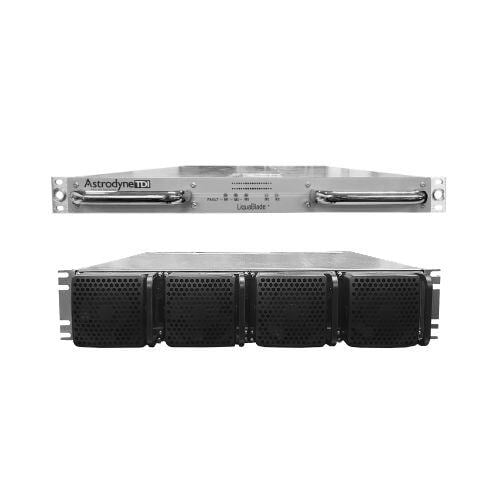
Astrodyne TDI 16.5kW 1U Liquid Cooled AC DC Power Supply LiquaBlade Platform

Recommended OEM Products

Industry-Leading Liquid Cooled AC DC Power Supply Platforms

From modular rack-mount units to fully custom liquid cold-plate sub-assemblies, Astrodyne TDI delivers high-density, reliable power conversion built to withstand harsh electrical and environmental operational demands.

Liquid Cooled Power Supply Icon

LiquaBlade™ 16.5 kW 1U Liquid-Cooled Series

Our flagship liquid-cooled platform delivering up to 16.5 kW of regulated DC power in a slim 1U rack-mount chassis. Supports 3-Phase Delta or WYE universal AC inputs, digital PMBus/CANBus control, hot-swappable modularity, and 95%+ conversion efficiency.

  • Power Density: >45 W/in³ in 1U envelope
  • Coolant Compatibility: WEG, WPG, DI Water
  • Applications: Semiconductor Fabs, AI Rack Power, Defense

Get a Quote

Astrodyne TDI LiquaBlade Liquid Cooled Power Supply
Semiconductor Grade Liquid Cooled Power Icon

SEMI F47 Compliant Semiconductor Liquid Power

Purpose-engineered liquid-cooled power supplies designed specifically for wafer etch, chemical vapor deposition (CVD), physical vapor deposition (PVD), and electrostatic chucks (E-Chucks). Features integrated voltage sag ride-through technology.

  • SEMI F47 Voltage Sag Ride-Through Immunity
  • Zero-Airflow Cleanroom Thermal Management
  • High-Voltage Pulsed & Regulated DC Outputs

Get a Quote

SEMI F47 Compliant Liquid Cooled Power Supply
Medical Liquid Cooled Isolation Power Icon

Medical & Rugged Custom Liquid Cooled Subsystems

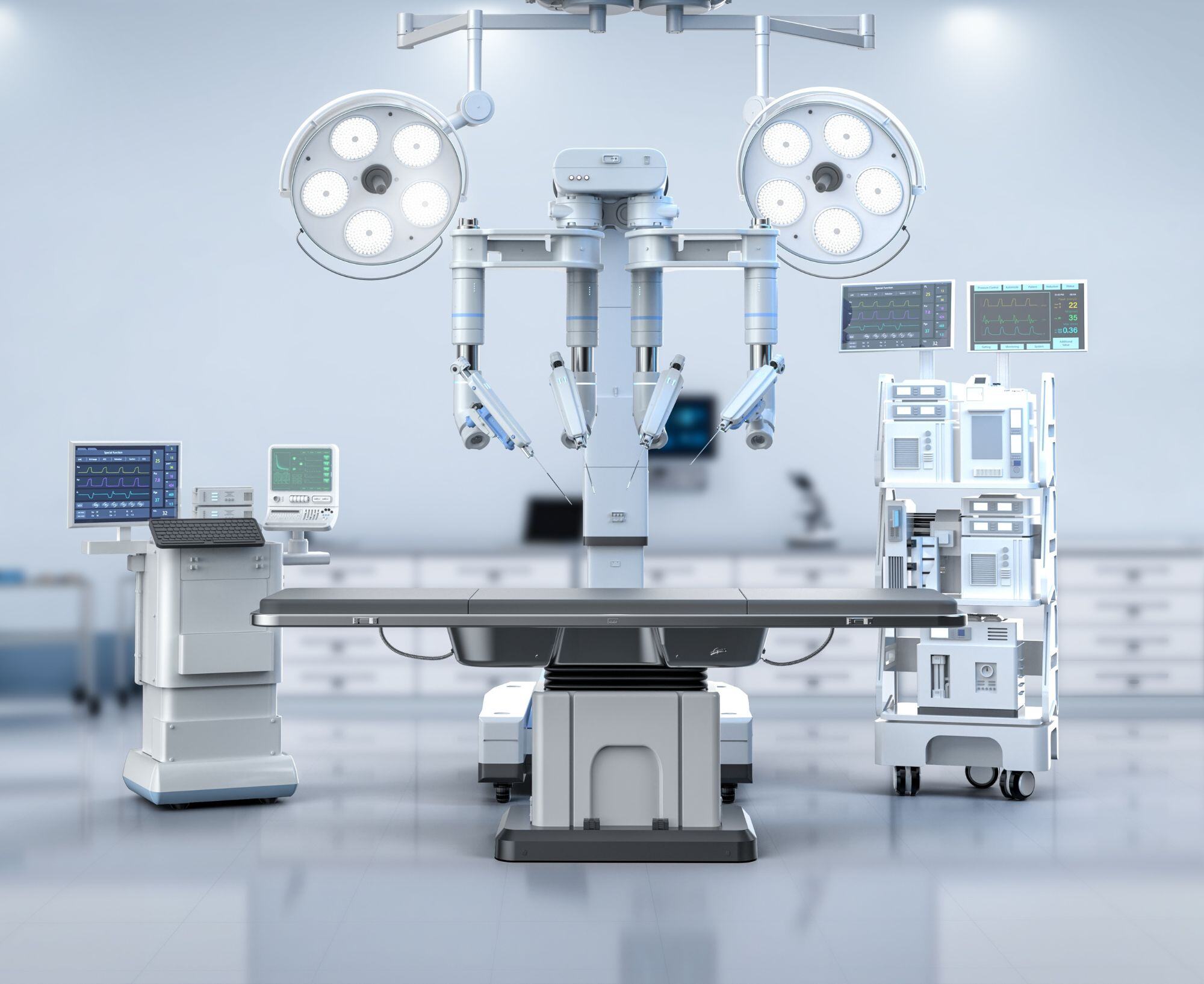
Direct liquid cold-plate integrated power supply systems incorporating 2×MOPP medical isolation, low leakage current filters, and heavy vibration resistance for robotic surgery, MRI facilities, and military radar installations.

  • IEC 60601-1 3rd/4th Edition Safety Isolation
  • 0 dBA Silent Operation for Surgical Operating Rooms
  • Ruggedized Sealed IP67 Hazardous Location Options

Get a Quote

Medical Grade Liquid Cooled Power Solution

Engineering Insight & Information Gain

The Physics of Liquid Cooling: Thermal Resistance, Coolants, and Fluid Dynamics

Understanding the thermal transfer mechanisms of Liquid Cooled AC DC Power Supplies empowers OEM engineers to optimize system efficiency, reduce coolant pump power, and prevent galvanic corrosion over multi-year operational lifecycles.

Thermal Resistance ($R_{th}$) Breakdown: Air vs. Liquid

In traditional forced-air power conversion, total thermal resistance from junction-to-ambient ($R_{th, j-a}$) is heavily constrained by the low specific heat capacity of air ($C_p \approx 1.005 \text{ kJ/kg}\cdot\text{K}$) and boundary layer air film resistance on aluminum heatsink fins. This creates high thermal gradients, forcing internal power MOSFETs and silicon carbide (SiC) diodes to run at elevated junction temperatures ($T_j > 125^\circ\text{C}$), which accelerates component degradation according to the Arrhenius rate law.

Liquid cooling drastically cuts thermal resistance by substituting air with liquid coolants possessing significantly higher thermal conductivity ($k$) and volumetric heat capacity ($C_v$). Waste heat generated by power switching devices passes through a high-conductivity dielectric pad directly into a vacuum-brazed copper or aluminum micro-channel cold plate.

  • Water-Ethylene-Glycol (WEG 50/50): Standard industrial choice offering excellent anti-freeze protection down to -35°C combined with high thermal capacity.
  • Deionized Water (DI Water): Ideal for ultra-clean semiconductor and high-voltage applications requiring low electrical conductivity and maximum thermal performance.
  • Dielectric Synthetic Fluids (3M Novec / Fluorinert / PAO): Employed in direct immersion or sensitive military applications where fluid leakage must cause zero risk of electrical short circuits.

Fluid Dynamics: Flow Rate (GPM) vs. Pressure Drop ($\Delta P$)

Optimizing liquid-cooled power supply integration requires a balanced trade-off between coolant flow rate measured in Gallons Per Minute (GPM) or Liters Per Minute (L/min) and internal hydraulic pressure drop ($\Delta P$).

Astrodyne TDI’s liquid cold plates engineer custom internal turbulators and micro-skived pin-fin arrays to promote turbulent fluid flow (Re > 4000) directly beneath high-heat-flux components while avoiding excessive hydraulic resistance that demands oversized external chillers or pumps.

Hydraulic & Thermal Performance Benchmarks

• Nominal Liquid Flow Rate: 1.5 GPM to 3.0 GPM per 10 kW module block.

• Maximum Pressure Drop: < 10 PSI across full rated flow spectrum.

• Coolant Inlet Temp Range: +10°C to +50°C without power derating.

Technical Decision Matrix

Comparing Cooling Methodologies in High-Power AC/DC Architectures

Evaluating volumetric density, acoustic emission, contamination vulnerability, and operational expenditure across primary cooling topologies.

Performance Characteristic Direct Liquid Cooling (Liquid Cooled) Forced-Air Cooling (Internal Fans) Conduction Cooling (Cold Baseplate)
Volumetric Power Density 45 – 65+ W/in³ (Industry Highest) 15 – 25 W/in³ 20 – 30 W/in³
Acoustic Noise Output 0 dBA (Completely Silent) 65 – 85+ dBA (High Fan Noise) 0 dBA (Silent)
Cleanroom & Airborne Particulate Risk Zero Airflow Movement (Fab-Safe) High Airflow Disturbance & Dust Accumulation Zero Airflow Movement
Enclosure Protection Class Sealed IP65 / IP67 / NEMA 4X Compatible Vented (IP20 / Open Frame) Sealed IP65 Compatible
High Ambient Temp Derating Full Output up to +50°C Liquid Inlet Rapid Power Derating above +40°C Ambient Dependent on External Heatsink Mass
System Reliability & MTBF > 100,000 Hours (No Fan Failure Point) 30,000 – 50,000 Hours (Fan Wear Point) > 80,000 Hours

Market Intelligence & Global Intent

Future Procurement Trends & Technical Trajectory for Liquid-Cooled Power (2025–2035)

Insights compiled by Astrodyne TDI market research and chief engineering officers regarding next-decade system demands.

1. AI Datacenter Infrastructure & High-Voltage Busbars

The explosive expansion of generative AI training clusters and high-density GPU nodes has driven rack power consumption from 10 kW toward 100 kW per rack cabinet. Traditional air-cooled power shelves cannot evacuate heat at this density. Procurement trends show a rapid transition to 48V / 400V liquid-cooled central power shelves fed by 3-Phase Delta or WYE utility grids.

2. Semiconductor Fab Automation & SEMI F47 Resilience

Next-generation sub-2nm semiconductor fabrication tools demand ultra-stable DC power in extreme cleanroom environments. Airflow from forced-air power supplies creates thermal turbulence and airborne micro-particulate movement that damages wafers. Fabs are standardizing on liquid-cooled AC/DC power supplies qualified to SEMI F47 voltage sag ride-through standards to protect high-aspect-ratio etch and EUV lithography tools.

3. EV Ultra-Fast Charging Megawatt Stations

Commercial fleet electrification and megawatt charging systems (MCS) require power conversion units exceeding 500 kW per station. Liquid-cooled power modules enable sealed, weatherproof enclosure designs that operate silently in urban areas while resisting rain, dust, and coastal saltwater exposure.

4. Rugged Tactical Defense, Radar & Directed Energy

Modern military sonar, active electronically scanned array (AESA) radar, and mobile defense shelters require lightweight, high-power DC systems capable of handling severe shock, vibration, and extreme ambient temperatures. Liquid cooling connected to vehicle or vessel central heat exchangers provides unmatched reliability under MIL-STD-810G and MIL-STD-461G frameworks.

Corporate Authority & Engineering Excellence

Why Global Tier-1 OEMs Standardize on Astrodyne TDI Liquid Cooling Solutions

With over 60 years of specialized power engineering experience, Astrodyne TDI combines deep vertical integration, stringent quality management systems, and engineer-to-engineer collaboration to eliminate design risk.

Unlike off-the-shelf power distributors, Astrodyne TDI owns the entire design, thermal simulation, magnetic winding, and manufacturing process. Our engineering teams work directly with your mechanical and electrical design leads from initial architecture definition through safety agency certifications and high-volume manufacturing.

  • ISO 9001:2015 & ISO 13485 Certified Manufacturing: State-of-the-art facilities compliant with medical device and aerospace quality frameworks.
  • In-House EMI/EMC & Safety Pre-Compliance Testing: On-site laboratories accelerate time-to-market for CISPR, FCC, IEC 60601-1, and MIL-STD-461 certifications.
  • 100% Automated Load & Thermal Testing: Every liquid-cooled power supply undergoes full functional burn-in and pressure testing prior to shipment.
  • Long-Lifecycle Support & Configuration Control: Multi-year form-fit-function stability protecting your capital equipment programs from unexpected EOL components.

Get a Quote About Our Company

Design Authority

Custom topology, liquid cold plate design, and internal magnetics developed in-house.

Compliance Support

Expert guidance on SEMI F47, IEC 60601-1, CE, UL, and MIL-STD standards.

Quality Systems

ISO 9001:2015 & ISO 13485 certified with full material lot traceability.

Lifecycle Stability

Guaranteed product support and strict change control for 10+ year builds.

Engineering FAQ

Frequently Asked Questions: Liquid Cooled AC DC Power Supplies

Detailed technical responses to common queries submitted by global procurement teams, thermal engineers, and system architects.

Liquid cooling removes heat far more efficiently than forced air because liquid coolants possess thermal capacities up to 3,000 times greater than air by volume. This enables extreme power density (e.g., 16.5 kW in a 1U chassis), eliminates acoustic fan noise, prevents dust and particulate circulation in cleanrooms or surgical suites, and allows power supplies to operate in completely sealed IP67 enclosures exposed to harsh industrial environment conditions.

Astrodyne TDI liquid-cooled platforms feature internal fluid paths fabricated from high-grade passivated copper or 316L stainless steel, rendering them compatible with Water-Ethylene-Glycol (WEG) mixtures, Water-Propylene-Glycol (WPG) mixtures, Deionized Water (DI Water), and dielectric fluids like 3M Novec or Fluorinert. Internal cold plates are vacuum-brazed to guarantee zero internal leakage over extended service lifetimes.

SEMI F47 is the industry standard defining voltage sag immunity for semiconductor processing equipment. Compliant liquid-cooled power supplies incorporate specialized hold-up capacitance and active power factor correction (PFC) circuitry capable of maintaining regulated DC output voltage during severe AC mains voltage dips (e.g., 50% sag for 200 ms). This prevents tool shutdowns, vacuum loss, and costly wafer destruction during electrical grid transients.

A typical 16.5 kW Liquid-Cooled module like the LiquaBlade™ operates optimally at flow rates between 1.5 GPM and 3.0 GPM (approx. 5.7 to 11.3 L/min) with a low pressure drop ($\Delta P < 10 \text{ PSI}$). This low hydraulic resistance allows easy integration into standard facility cooling water loops or compact closed-loop liquid-to-air heat exchangers without requiring high-pressure pumps.

Both. OEM programs frequently start with modified standard platforms (such as custom DC output voltages, tailored quick-disconnect fittings, digital bus options, or custom mounting brackets) to minimize qualification timelines. When non-standard mechanical envelopes or specialized electrical isolations (e.g., 2×MOPP medical or MIL-STD EMI requirements) are specified, our engineering team designs complete ground-up custom liquid-cooled systems.

Liquid-cooled power supplies benefit mechanically from fully enclosed metallic chassis, which provide superior 6-sided Faraday shielding against radiated emissions compared to vented air-cooled power supplies. When paired with Astrodyne TDI’s integrated single-phase or 3-phase EMI filters (Delta or WYE topologies), systems easily satisfy CISPR 11 Class A/B, FCC Part 15, and MIL-STD-461 conductive emissions limits.

Ready to Optimize Your Power System with Liquid Cooling?

Connect directly with an Astrodyne TDI applications engineer to review thermal calculations, fluid specifications, and custom OEM requirements.

Get a Quote Contact Engineering