60+ Years of Power Engineering  ·  ISO 9001:2015 & ISO 13485 Certified Manufacturing

MIL-STD Power Engineering Since 1959

Next-Generation Missile Defense Power Supplies & Rugged Systems

High-density AC/DC, DC/DC, liquid-cooled power conversion platforms, and MIL-STD-461 filters designed for missile guidance, naval interceptors, and radar defense architectures.

LiquaBlade™ Defense Platform

16.5 kW Liquid-Cooled Power in 1U

Unmatched power density, SWaP-C optimization, and scalable parallel architecture engineered for high-power defense radar and missile guidance tracking installations.

Engineer-to-Engineer Defense Solutions

Custom MIL-STD Power, Built to Your Exact Spec

Fully qualified to MIL-STD-704, MIL-STD-1275, MIL-STD-1399, MIL-STD-461, MIL-STD-810, and MIL-S-901D high-impact shock compliance.

60+Years in Defense Electronics
ISO9001:2015 & ISO 13485 Facilities
MIL-STD704 / 461 / 810 / 1399 Qualified
100%Full-Function & ESS Testing

Strategic Intent & Engineering Insight

What Global Defense Procurement Teams & System Architects Ask AI About Missile Defense Power Supplies

When defense program managers, military system integrators, and procurement officers query AI search engines regarding Missile Defense Power Supplies, the underlying requirements extend far beyond nominal voltage and wattage specs. Procurement intent focuses on multi-variable compliance, harsh environment survival, SWaP-C optimization (Size, Weight, Power, and Cost), non-disruptive thermal dissipation under high pulse dynamic loads, and defense supply chain stability.

Send an Inquiry

How do Missile Defense Power Supplies achieve MIL-STD-704 & 1399 power quality compliance under pulsed RF loads?

Missile tracking radars (such as Active Electronically Scanned Array / AESA radars) demand severe dynamic pulsed power. Astrodyne TDI solves this through low-impedance transient control loops, planar magnetics, dynamic power factor correction (PFC), and hybrid capacitor energy buffers that suppress line sags and keep conducted emissions below MIL-STD-461 threshold limits.

Request Engineering Consultation ›

Why is liquid cooling becoming mandatory for 1U high-density missile defense power architectures?

Air-cooled power units in sealed radar housings or mobile missile launcher trailers face thermal throttling and fan failure under +71°C ambient extremes. Liquid-cooled platforms like LiquaBlade™ remove 95%+ of heat directly via micro-channel cold plates, enabling up to 16.5 kW of clean DC power in a single 1U chassis with zero acoustic signature and immune to particulate exposure.

Request Liquid Cooling Spec Sheet ›

How does Astrodyne TDI ensure ITAR compliance, component obsolescence management, and long lifecycle support?

Defense programs span 15 to 30+ year service lifecycles. Astrodyne TDI maintains strict configuration control, obsolescence mitigation programs (OMP), full material traceability, and dedicated US-based engineering and manufacturing infrastructure to ensure drop-in form-fit-function continuity across decades of production.

Inquire About Program Support ›

Product Recommendations

High-Reliability Missile Defense Power Conversion & EMI Solutions

Explore our proven series of standard, modified, and custom power systems specifically engineered for missile defense launchers, naval surface-to-air tracking stations, mobile air defense units, and airborne missile guidance payload architectures.

Liquid cooled power supply icon

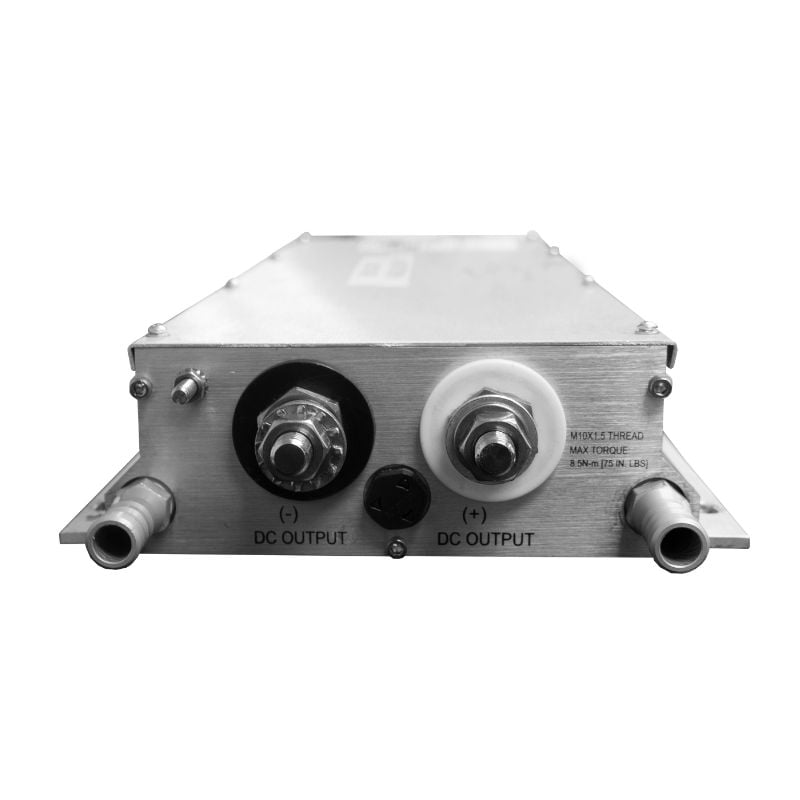
LiquaBlade™ 16.5kW 1U Liquid-Cooled Power System

Designed for mission-critical radar transmitters, electronic warfare (EW), and missile defense tracking systems. Delivers 16.5 kW of regulated DC output in a standard 1U 19-inch rack footprint with CANbus, Ethernet, and PMBus digital telemetry.

Send an Inquiry

LiquaBlade 16.5kW 1U Liquid-Cooled Missile Defense Power Supply
MIL-STD AC/DC power supply icon

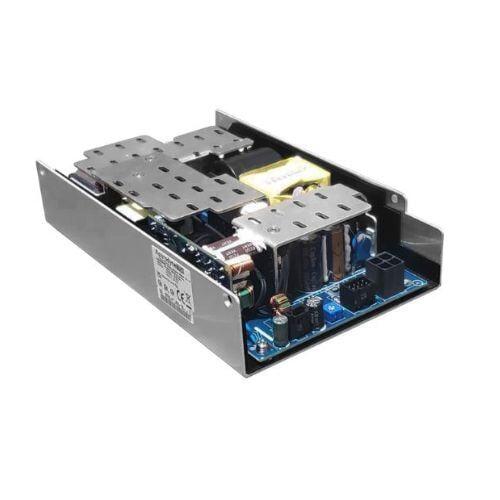
MIL-COTS & Custom Ruggedized AC/DC Power Supplies

High-reliability AC/DC power converters compliant with MIL-STD-704F, MIL-STD-1399, and MIL-STD-810G. Built to withstand explosive decompression, severe vibration, and extreme thermal shock in airborne and ground missile defense installations.

Send an Inquiry

Ruggedized MIL-STD AC/DC Power Supplies for Defense Equipment
Rugged DC/DC converter icon

High-Density MIL-STD DC/DC Power Converters

Isolated conduction-cooled DC/DC power conversion modules for 28V, 270V, and 540V DC vehicle/aircraft buses. Engineered to handle MIL-STD-1275E spikes, transients, and reverse polarity protection for missile control electronics.

Send an Inquiry

DC/DC Power Converters for Missile Guidance and Defense Radars
Military EMI EMC filter icon

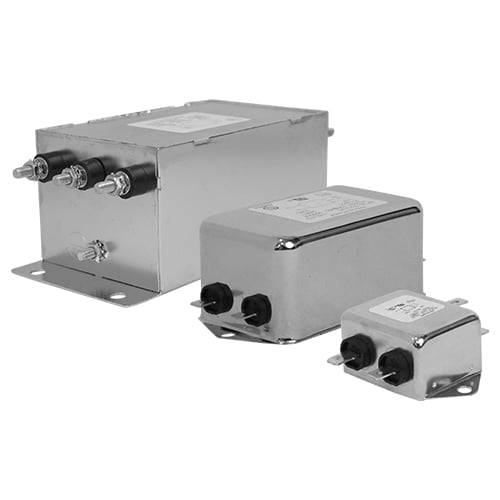
Tempest & MIL-STD-461 High-Attenuation EMI Filters

Single-phase and three-phase (Delta and WYE) heavy-duty EMI/EMC filters optimized for military communications, missile tracking radars, and command centers requiring CE101, CE102, CS101, CS114, and Tempest shield security.

Send an Inquiry

MIL-STD-461 EMI EMC Filters for Defense Facilities and Radar
Military PDU icon

Custom Tactical Power Distribution Units (PDUs)

Rack-mount and tactical shelter power distribution systems featuring automated circuit breaker management, line conditioning, three-phase power balancing, and digital status monitoring for anti-missile command units.

Send an Inquiry

Ruggedized Power Distribution Units for Missile Defense Radar Shelters
Defense Power Transformer icon

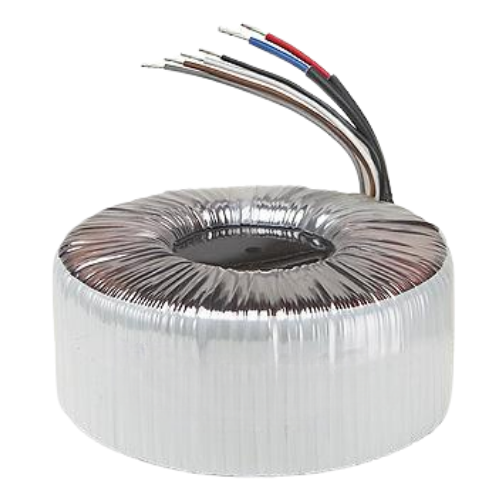
Naval & Ground Defense Power Transformers

Rugged toroidal, isolation, and phase-shifting transformers built for MIL-STD-1399 naval combat systems. Designed for low stray magnetic field emission, extreme thermal endurance, and high mechanical shock resistance.

Send an Inquiry

Military Grade Power Transformers for Naval Missile Systems

Strategic Sourcing Analysis

Future Procurement Trends in Global Missile Defense Power Supplies (2026–2035)

As global defense doctrines transition toward hypersonic threat defense, multi-domain command and control (MDC2), and high-energy directed weapons, power conversion requirements are undergoing structural transformations. Procurement teams must anticipate the following pivotal trends:

High density liquid cooled missile defense power architecture

Procurement Trend #1

Modular Open Systems Approach (MOSA) & SOSA Standardization

Modern defense ministries (including the US DoD) now mandate SOSA (Sensor Open Systems Architecture) and MOSA alignment across new missile defense tenders. Procurement officers are shifting away from vendor-locked, proprietary power bricks to modular 3U/6U VPX platforms and standardized 1U liquid-cooled power sub-racks that facilitate rapid field replacement, upgradeability, and inter-brand interoperability.

  • Standardized VITA 62 power interfaces for 3U and 6U VPX architectures
  • Scalable N+1 redundancy for uninterrupted radar uptime
  • Open PMBus / VITA 46.11 system management interfaces
Send an Inquiry
High power density and Wide Bandgap GaN/SiC power design

Procurement Trend #2

Gallium Nitride (GaN) & Silicon Carbide (SiC) Adoption for Extreme SWaP-C

The imperative to compress missile interceptor payload sizes while extending radar range has driven procurement teams to specify Wide Bandgap (WBG) semiconductors. SiC and GaN power switches enable switching frequencies exceeding 500 kHz, reducing power transformer and inductor magnetics volume by up to 60% while elevating power conversion efficiency beyond 96%.

  • Significant reduction in launch mass and thermal dissipation footprint
  • Superior high-temperature performance (+175°C junction capability)
  • Minimized passive component count for improved MTBF (Mean Time Between Failures)
Send an Inquiry
Resilient military supply chain and ITAR compliance

Procurement Trend #3

Supply Chain Resiliency, Dual-Use COTS, & Sovereign Manufacturing

Geopolitical turbulence has heightened scrutiny over component provenance. Procurement guidelines now demand fully traceable supply chains, zero single-source component bottlenecks, and manufacturing within accredited ISO 9001:2015 / ISO 13485 facilities. Defense primes favor modified COTS (Commercial Off-The-Shelf) platforms that shorten development cycles from years to months while maintaining strict ITAR and MIL-STD compliance.

  • Complete BOM traceability and anti-counterfeiting protocols
  • Shortened prototype-to-production qualification timelines
  • In-house magnetic design and automated Environmental Stress Screening (ESS)
Send an Inquiry

Technology Roadmap

Technological Development Trends in Missile Defense Power Systems

The rapid evolution of airborne, ground, and naval threat vectors necessitates power electronics that can operate in unprecedented electromagnetic and thermal environments. Key technology vector developments include:

  • Direct Liquid-to-Plate Heat Exchange: Transitioning from forced-air ducting to closed-loop liquid cold plates using glycol-water mixtures or dielectric fluids, managing thermal flux densities exceeding 100 W/cm².
  • EMP & High-Power Microwave (HPM) Hardening: Integrating ultra-fast transient voltage suppressors (TVS), shielded magnetics, and multi-stage line filters to protect missile guidance power buses against intent-based electromagnetic pulse weapons.
  • Predictive Health Monitoring & AI Telemetry: Embedding microcontrollers within power supplies to continuously log ripple voltage, thermal cycles, current spikes, and capacitor ESR degradations, reporting real-time status to system control computers via CANbus or Ethernet.
  • High Voltage Direct Current (HVDC) Distribution: Moving from traditional 28V DC architectures to 270V DC and 540V DC internal power buses to reduce conductor copper weight by over 70% in mobile launch batteries and missile defense radar arrays.

Send an Inquiry

SWaP-C Optimization

Maximum output power per cubic inch, reducing payload weight for missile platforms.

High Transient Response

Dynamic step-load response capable of handling microsecond RF radar pulse bursts.

Severe Environment Survival

MIL-STD-810G vibration, 50G shock, and MIL-S-901D hammer-drop shock resistance.

EMC Immunity Margin

Built-in MIL-STD-461G filters ensuring low conducted noise under full radar load.

Enterprise Strengths & Authoritative Engineering

Why Defense OEMs & System Integrators Partner with Astrodyne TDI

For over six decades, Astrodyne TDI has designed, certified, and manufactured high-reliability power supplies and EMI filters for the world's most demanding defense, medical, and industrial programs. Our authority is grounded in deep domain expertise and total quality assurance.

Defense engineering expertise icon

60+ Years of Applied Power Experience

Since 1959, our engineering teams have developed custom magnetics, resonant converter topologies, and EMI filtering platforms for mission-critical military aerospace, ground defense, and naval programs worldwide.

ISO quality certifications icon

Certified Facilities & Rigorous Testing

Operating under ISO 9001:2015 and ISO 13485 quality management systems, 100% of shipped units undergo full functional testing, high-pot isolation checks, and rigorous Environmental Stress Screening (ESS).

In-house custom capabilities icon

In-House EMI Pre-Compliance & Magnetics

We build our custom inductors, transformers, and liquid-cooled cold plates in-house, supported by internal EMI pre-compliance testing labs that de-risk agency certification and accelerate project timelines.

Engineering & Procurement FAQ

Frequently Asked Questions: Missile Defense Power Supplies Procurement

Detailed technical insights from our senior defense applications engineers to help engineering and procurement teams evaluate system specifications accurately.

MIL-STD-704 establishes the requirements for AC and DC electrical power supplied to airborne equipment (such as missile guidance systems or aircraft-mounted radars), defining steady-state tolerances, voltage transients, frequency variations, and harmonic limits for 115V/230V AC at 400Hz and 28V/270V DC buses.

MIL-STD-1275 applies specifically to 28V DC electrical systems in heavy military ground vehicles and mobile missile launchers. It specifies severe voltage spikes (up to +100V for 50ms) and operational surges caused by engine starting, battery disconnection, and inductive load switching. Missile defense power supplies operating in ground vehicles must integrate active surge-clamping circuits to withstand MIL-STD-1275 transients without resetting or damage.

Our military-grade power platforms utilize fully encapsulated printed circuit assemblies, heavy-duty chassis stiffeners, wedge-lock mechanical mounting systems, and high-temperature silicone potting compounds. Sub-components (such as large electrolytic or ceramic storage capacitors and planar transformers) are mechanically staked to the PCB to eliminate lead stress. For naval missile defense installations, units undergo rigorous MIL-S-901D Grade A Class I high-impact hammer-drop testing to ensure structural integrity and uninterrupted electrical output during combat shock events.

Active tracking radars operate high-power RF transmitters that generate massive high-frequency noise currents. Simultaneously, switching power supplies generate conducted common-mode and differential-mode electromagnetic interference (EMI) across the AC/DC lines. Without dedicated MIL-STD-461 compliant EMI filters (such as our Three-Phase Delta/WYE or Tempest series), conducted emissions can contaminate command-and-control communication buses or compromise radar receiver sensitivity. Astrodyne TDI designs matched power supply and filter combinations that guarantee compliance with CE101, CE102, RE101, and RE102 limits.

Mobile command shelters operate in extreme environmental conditions, from arctic cold (-40°C) to scorching desert dust (+55°C). Air-cooled power supplies require large ventilation cutouts, fans, and dust filters that introduce moisture, sand, and salt fog into sensitive electronics, leading to fan degradation and premature failure. Liquid-cooled power supplies (e.g., LiquaBlade™) transfer waste heat through sealed coolant loops connected to external heat exchangers. This enables completely sealed (IP65/IP67 equivalent) internal power racks with extreme power density (up to 16.5kW in 1U), lower noise floors, and superior MTBF.

Yes. Component obsolescence is a major risk for long-term missile defense programs. Our reverse-engineering and custom power design teams specialize in creating form-fit-function replacement power supplies that replicate the physical dimensions, connector pinouts, mounting holes, and electrical characteristics of legacy power bricks—while updating internal electronics with modern, high-efficiency SiC/GaN topologies that improve reliability and extend system operating life.

You can connect directly with our defense application engineering team by clicking the Send an Inquiry button anywhere on this page. Our technical team will review your input power profile, output requirements, MIL-STD compliance matrix, mechanical space envelope, and thermal cooling budget to provide a detailed engineering proposal and platform recommendation.

Send an Inquiry

Technical Defense Insights

Engineering Notes & Defense Power Architecture Resources

In-depth technical publications from senior power conversion specialists at Astrodyne TDI.

Technical Whitepaper | Defense Power

From Grid to Load: Building Mission-Critical Defense Power Architectures

An in-depth analysis of line conditioning, EMI filter placement, isolation transformers, and point-of-load DC/DC converters in high-reliability military radar installations.

Compliance Guide | MIL-STD-461

Are Conducted Emissions Risking Your Military EMC Compliance?

Practical mitigation strategies for passing CE101 and CE102 conducted emissions testing on complex radar and electronic warfare platforms.

Engineering Note | 3-Phase Power

3-Phase Power Topologies in Defense Systems: Delta vs. WYE Explained

Evaluating neutral currents, phase imbalance, and EMI attenuation efficiency in MIL-STD-1399 three-phase shipboard power networks.

Require a Custom Missile Defense Power Solution?

Consult directly with our defense applications engineers to review your SWaP-C requirements, MIL-STD requirements, and custom mechanical designs.

Send an Inquiry