60+ Years of Power Engineering  ·  ISO 9001:2015 & ISO 13485 Certified Manufacturing
0%

A modern semiconductor fab depends on more than clean rooms and precision tools. Every etcher, deposition system, and inspection station needs stable, predictable electrical power. Semiconductor Fab Equipment Power Supplies help deliver it, converting incoming electricity into carefully controlled outputs for sensitive equipment. Even brief voltage dips can interrupt a process, trigger alarms, or force engineers to inspect a wafer lot again.

Power-conversion expert Dr. Alex Lidow’s published work offers a useful lens on efficiency and reliability. The line below is an editorial paraphrase, not a verified verbatim quotation: “Power quality is part of process quality.” In a fab, that idea has practical weight. A supply must manage heat, electrical noise, load changes, and continuous operation, often inside crowded equipment cabinets. A small detail matters: a cooling fan clogged with dust can raise internal temperatures and shorten component life.

This outline examines why these supplies matter, what technical demands they face, and how engineers evaluate them. It also considers redundancy, monitoring, and maintenance. No power design removes every risk. Engineers still need to test real operating conditions, document failures, and question assumptions that seem settled. The goal is not merely to keep machines on. It is to help them perform consistently, shift after shift.
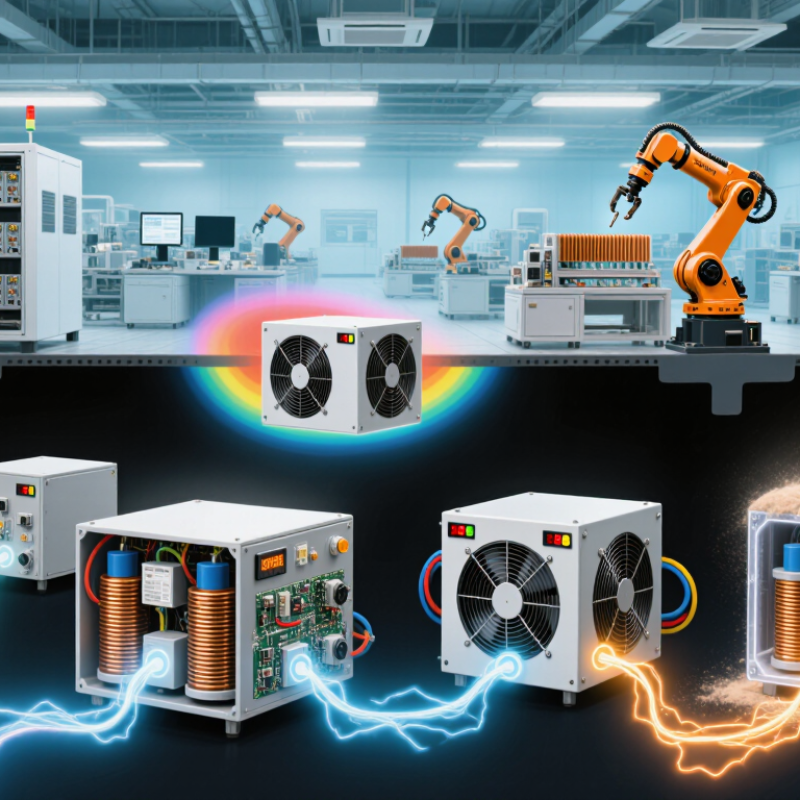
Why Semiconductor Fab Equipment Power Supplies Matter?

What Power Supplies Do in Semiconductor Fab Equipment

Why Semiconductor Fab Equipment Power Supplies Matter?

What Power Supplies Do in Semiconductor Fab Equipment

A semiconductor tool depends on carefully controlled electrical power. Its supply converts incoming electricity into the voltages and currents required by subsystems such as vacuum pumps, motion stages, sensors, and process chambers. Each subsystem has different needs. A pump may draw a steady load, while a motor can demand a brief surge during startup.

Stable output matters. Voltage ripple or electrical noise can interfere with sensitive controls and measurement circuits. In plasma-processing equipment, power supplies also help deliver controlled energy to the chamber, supporting repeatable operating conditions. Protection features can limit damage during overloads, short circuits, or temperature rises.

Small changes matter.

It is tempting to treat the supply as a background box, but its performance affects tool behavior and maintenance planning. Engineers check load response, grounding, heat removal, and compatibility with the equipment’s control system. They also consider what happens during a sudden load change.

Heat adds up.

A poorly matched unit may run hot, trigger faults, or shorten component life, even if its rated output appears sufficient. The details vary by tool, so installation and service decisions should follow measured operating conditions, not assumptions alone.

Key Electrical Requirements for Stable Fab Operations

In a semiconductor fab, a power supply is part of process control, not just a box that delivers voltage. A brief sag can interrupt a wafer-transfer robot, reset a controller, or destabilize a plasma tool. Small dips matter. SEMI F47-0706 defines equipment ride-through points of 50% voltage for 200 milliseconds, 70% for 500 milliseconds, and 80% for one second. These figures give engineers measurable targets when specifying power supplies and testing tool immunity.

Stable operation also depends on clean input power, grounding, and predictable output under changing loads. A pump starting nearby can expose weak transient response; poor grounding may add noise to sensitive measurement circuits. IEEE 519-2022 assesses harmonic distortion at the point of common coupling, with limits tied to system voltage and short-circuit strength. Fab teams should check the actual installation, not rely only on a supply’s bench-test result. One uncomfortable lesson: a unit can meet its rating yet behave poorly during a real tool cycle. Recording voltage sags, harmonics, and output ripple under production load can reveal that gap. The measurements are not always tidy, but they are useful.

How Power Quality Affects Wafer Processes and Yield

In a semiconductor fab, power quality can influence wafer processes through more than a simple equipment shutdown. Short voltage dips, electrical noise, or unstable output may disturb sensitive control circuits. On plasma etch tools, for example, a brief change in delivered power can affect plasma conditions and etch consistency. Small shifts matter. Their effect depends on the tool design, recipe, and duration of the disturbance.

A stable supply helps maintain repeatable conditions for pumps, heaters, motion stages, and process controllers. If a heater’s power fluctuates, wafer temperature may drift from its target. If control electronics reset or respond slowly, a process step can lose timing accuracy. These changes do not always create visible defects, but they can add variation across wafers or lots. Yield impact is often indirect.

Monitoring should track voltage events and supply behavior alongside tool alarms and process data. A single alarm rarely explains the full cause. Engineers can compare event timestamps with recipe steps, temperature logs, and maintenance records before changing settings. It is tempting to blame the power supply for every variation; that is not always fair. Still, measuring at the equipment input can reveal disturbances that a facility-wide meter misses.

Why Semiconductor Fab Equipment Power Supplies Matter

Voltage-sag ride-through benchmarks help explain how power quality can affect wafer-processing equipment and production continuity.

How to read this chart: The bars show the minimum remaining voltage associated with three SEMI F47 voltage-sag ride-through benchmarks: 50% for 0.2 seconds, 70% for 0.5 seconds, and 80% for 1 second. These are equipment immunity benchmarks, not measured wafer-yield results. A voltage sag that disrupts tools can interrupt process steps and risk wafer loss.

Risks of Power Supply Failure in Semiconductor Tools

Power supplies in semiconductor tools do more than deliver electricity. They help maintain the stable voltage and current needed by pumps, process chambers, motion systems, and control electronics. In plasma etchers, even brief fluctuations can disturb process conditions. A tool may alarm, pause a wafer run, or require checks before production resumes. The visible fault is not always the real cause.

Failure risks range from gradual drift to sudden shutdown. Excessive electrical noise may affect sensitive controls, while overheating can shorten component life. A failed supply can interrupt a process mid-cycle, wasting materials and valuable tool time. In a cleanroom, recovery also takes coordination: technicians may need to review alarms, inspect connections, and verify tool performance before restarting. These effects depend on the tool and process; one symptom does not prove the power supply is at fault. Still, loose connectors and overlooked warning signs are easy to miss.

Tips: Track voltage, current, temperature, and alarm trends instead of relying only on sudden-failure checks. Keep airflow paths clear, inspect connectors during planned maintenance, and compare readings with equipment specifications. Record recurring faults. These checks reduce uncertainty, but they cannot prevent every failure; a connector can loosen between visits.

Why Semiconductor Fab Equipment Power Supplies Matter? — Risks of Power Supply Failure in Semiconductor Tools

Power System or Tool Function Typical Role Potential Failure Mode Possible Tool or Process Impact Practical Risk-Reduction Measures
Facility power input and distribution Delivers electrical power to tool cabinets, controllers, pumps, heaters, and process modules. Voltage sag, interruption, phase imbalance, loose connections, or an overloaded circuit. Unexpected tool shutdown, interlocks, aborted process steps, or loss of equipment availability. The outcome depends on which circuits are affected and the tool’s state. Use correctly rated distribution equipment; monitor power quality; inspect connections; and coordinate facility protection settings with tool requirements.
Uninterruptible power supply (UPS) Provides short-term backup power to selected control, data, or safety-related loads during an interruption. Degraded batteries, inverter fault, overloaded output, or incorrect load coverage. Control systems may lose power before the equipment reaches a safe state. A UPS does not necessarily support the tool’s full process load. Define which loads require backup; check battery condition and runtime; test alarms and transfer operation; and document safe-shutdown procedures.
RF generator and matching network Supplies radio-frequency energy used to sustain plasma in processes such as plasma etching and deposition. Output instability, protection trip, loss of matching, or interruption of RF delivery. Plasma conditions can change or extinguish, potentially interrupting a recipe and affecting process uniformity or wafer disposition. Monitor generator status and reflected power; maintain cooling and connections; verify matching-network operation; and use approved recovery procedures.
DC bias or high-voltage supply Provides controlled electrical bias or other high-voltage functions in process equipment. Output drift, insulation breakdown, arc detection, or protective shutdown. Process conditions may deviate from their recipe targets. High-voltage faults can also trigger interlocks and require inspection before restart. Follow electrical safety procedures; inspect cables and connectors; verify output through approved diagnostics; and investigate repeated trips rather than bypassing protection.
Electrostatic chuck (ESC) supply Applies voltage to hold a wafer on the chuck; some systems also rely on separate circuits for chuck temperature control. Clamping-voltage loss or instability, leakage current, or a related control fault. Wafer clamping may be compromised, or the tool may stop the process. Chuck and wafer handling must follow the equipment’s specified recovery sequence. Monitor supply alarms and leakage indicators; maintain connectors and cabling; and use the prescribed wafer release and recovery procedure.
Vacuum pumps and motor drives Support chamber evacuation and, in some systems, pressure control during processing. Drive trip, loss of motor power, overheating, or interruption of pump control. Chamber pressure may leave its operating range, causing process interruption or an equipment interlock. Restart timing depends on the vacuum system and tool procedure. Monitor drive and pump alarms; maintain cooling and ventilation; verify protective settings; and confirm pressure recovery before resuming a process.
Temperature-control power circuits Power heaters, chillers, and other temperature-control components used to maintain process or equipment conditions. Heater output loss, controller power fault, or interruption to temperature-control equipment. Temperature may drift from the required operating window, affecting process readiness or requiring the tool to pause for stabilization. Trend temperature and power alarms; inspect control wiring; maintain thermal equipment; and require temperatures to stabilize before process restart.
Tool controller, sensors, and data systems Run equipment control logic, collect sensor readings, manage interlocks, and record process information. Controller reset, loss of a control supply, corrupted or incomplete data, or communication interruption. The tool may stop, enter a safe state, or require checks of recipe status and event records before processing can continue. Protect designated control loads; maintain alarm and event logging; back up approved configurations; and validate tool state after power restoration.
Wafer handling and transfer systems Power robot axes, aligners, load ports, and other mechanisms that move wafers between tool locations. Servo-drive fault, power interruption during motion, or loss of position feedback. Wafer movement may stop or require recovery. The tool may need a position check and controlled recovery before normal operation resumes. Maintain drives, sensors, and cabling; use the equipment’s recovery sequence; and verify wafer and robot position before restarting automatic transfer.
Power restoration and restart sequence Returns the tool and its subsystems to a verified operating condition after an outage or power fault. Unsequenced restart, unresolved alarms, or restarting process modules before supporting systems are ready. Repeated trips, incomplete initialization, or process attempts before vacuum, temperature, and subsystem conditions are stable. Follow the documented startup sequence; review fault history; confirm subsystem readiness and interlock status; and obtain required operator or engineering sign-off.

Note: Actual failure effects vary by tool design, process, facility power configuration, and the specific loads supported by backup systems. Follow the equipment documentation and site safety procedures.

How Power Supplies Are Selected and Maintained in Fabs

At a fab, power-supply selection starts with the tool’s real load profile, not its nameplate alone. Lithography, plasma, and vacuum systems can respond differently to startup surges, voltage dips, and electrical noise. Engineers compare voltage and current ranges, ripple, transient response, isolation, and protection behavior with each tool’s specifications. SEMI F47 defines voltage-sag immunity criteria for semiconductor processing equipment, offering a reference for ride-through assessments. But facility power and tool design must be reviewed together. One checklist cannot cover every process.

SEMI reported worldwide semiconductor manufacturing equipment sales of $117.1 billion in 2024, up 10% from 2023, in its 2025 industry report. That figure reflects the scale of investment, not a universal power-supply specification. During maintenance, technicians can log alarms, inspect connectors and cooling paths, and compare output readings with baseline measurements. Dust-clogged filters and loose connections are easy to overlook. A common blind spot is relying on fixed replacement intervals without considering temperature, operating hours, and fault history. Records help, though they rarely explain every intermittent fault.

FAQS

Why does power quality matter in a semiconductor fab?

Brief voltage dips or electrical noise can disturb robots, controllers, and process tools. Small changes matter.

What voltage ride-through targets can engineers use?

Equipment targets include 50% voltage for 200 milliseconds, 70% for 500 milliseconds, and 80% for one second. Test the actual tool.

How can a voltage dip affect wafer processing?

A dip may disturb plasma conditions, heater output, or process timing. Effects depend on the tool and recipe.

Can a power issue affect yield without causing an alarm?

Yes. Temperature drift or control delays may add variation across wafers without a clear warning. The cause may be hard to pin down.

What should engineers monitor during production?

Track voltage events, output ripple, harmonics, current, temperature, and tool alarms. Compare timestamps with recipe and process data.

Why check power at the tool input?

A facility meter may miss a disturbance near one tool. Measurements at the equipment input offer a clearer view.

What are common signs of a failing power supply?

Watch for recurring alarms, overheating, electrical noise, or gradual changes in voltage and current. One symptom alone proves little.

What maintenance checks can reduce power-related interruptions?

Keep airflow paths clear and inspect connectors during planned maintenance. Record recurring faults; a connector can loosen between visits.

Conclusion

Semiconductor Fab Equipment Power Supplies provide the controlled, dependable electrical energy that fabrication tools need to operate sensors, motion systems, process chambers, and control electronics. Because semiconductor manufacturing depends on precise and repeatable conditions, these supplies must deliver stable voltage and current, respond appropriately to changing loads, and tolerate the electrical demands of continuous operation. Good power quality helps equipment maintain consistent process conditions, reducing the chance that electrical fluctuations will affect wafer uniformity, device performance, or production yield.

A failure or interruption can halt a tool, disrupt a process, damage sensitive components, or lead to costly wafer losses and downtime. Fabs therefore select power supplies according to each tool’s electrical requirements, operating environment, reliability needs, and compatibility with monitoring and protection systems. Regular inspection, performance monitoring, and timely maintenance help identify problems before they interrupt production. Careful selection and upkeep support stable fab operations and protect both equipment availability and process consistency.


Amelia

Amelia

Amelia is a dedicated marketing professional with a strong understanding of the company’s products, customers, and industry landscape. With a thoughtful, research-driven approach, she transforms complex product information into clear, practical, and engaging content that helps readers make informed......