In modern industrial automation, semiconductor fabrication, medical instrumentation, and defense-grade telecommunications, board-mount power converters serve as the critical heartbeat of system reliability. Selecting a top-tier CE certified board mount manufacturer requires far more than matching input/output voltage tables and nominal power ratings. It demands a sophisticated engineering evaluation of electromagnetic compatibility (EMC), thermal dissipation dynamics, creepage and clearance insulation topologies, and mean-time-between-failures (MTBF) under elevated stress environments.
Compliance with the European Conformity (CE) marking is not merely a administrative badge; it is a legally binding assertion that board-mounted power supplies conform to the stringent requirements of the Low Voltage Directive (LVD 2014/35/EU), the Electromagnetic Compatibility Directive (EMC 2014/30/EU), and the Restriction of Hazardous Substances Directive (RoHS 2011/65/EU). Furthermore, advanced board-mount topologies must align with vertical safety standards such as EN IEC 62368-1 for audio/video/ICT equipment and EN 60601-1 3rd/4th Edition for patient-adjacent medical systems.
This technical whitepaper explores the technological paradigms shaping board-mount power architecture, analyzes standard vs. OEM/ODM custom designs, outlines future procurement strategies, and highlights eight leading power platforms engineered for critical OEM applications.
Explore high-efficiency AC/DC adapters, open-frame PCBAs, regulated DC switching units, and industrial board-mount power conversion platforms.
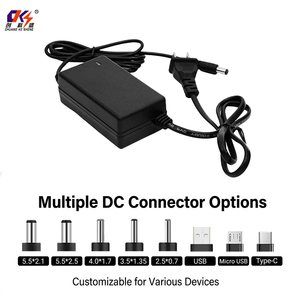
Compact, high-efficiency switching power supply equipped with universal US/EU/UK/AR regional AC plugs and dual output cables. Perfect for CCTV surveillance, IoT edge gateways, and industrial board-level telemetry systems.
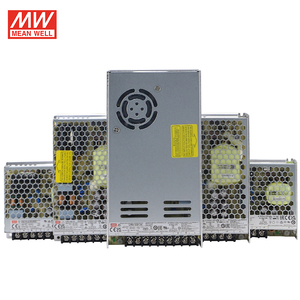
Heavy-duty, enclosed switching power supplies engineered for extreme industrial environments. Available in 5A to 60A current capacities with wide DC outputs (5V, 12V, 15V, 24V, 36V, 48V) to drive embedded control boards.
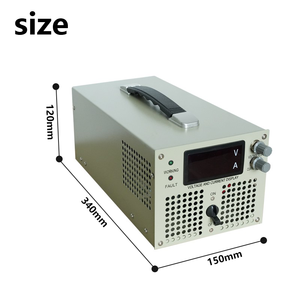
Single-output high-power DC regulator delivering 12V to 600V adjustable output range. Features 88-89% benchmark conversion efficiency, integrated soft-start architecture, and precision overcurrent response.
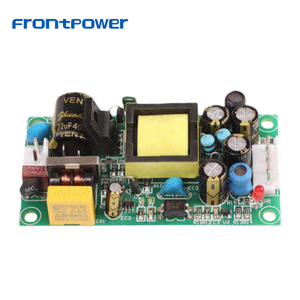
Versatile open-frame PCB printed circuit board assemblies ranging from 24W to 500W. Tailor-made for board-mount integration inside compact equipment chassis requiring 12V, 15V, 20V, 36V, or 48V supply rails.
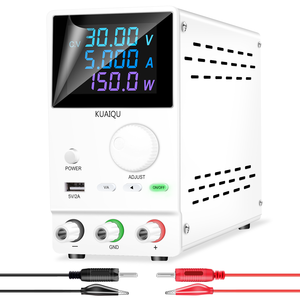
Precision-engineered benchtop and system power source offering 30V/5A, 60V/5A, 30V/10A, and 120V/3A output modes. Features digital LED display, ultra-low ripple noise, and fine/coarse voltage tuning controls.
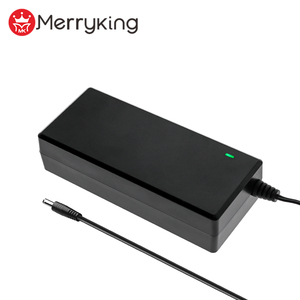
Industrial-grade desktop power supplies delivering up to 300W continuous output. Engineered with multi-voltage options (12V, 15V, 24V, 48V) and current ratings up to 10A to power external hardware setups safely.
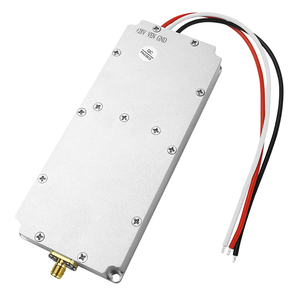
Ruggedized AC/DC power switching module optimized for 24V and 28V DC bus systems. Designed to withstand electrical fast transients (EFT) and surge spikes in automated factory floors and military auxiliary power lines.
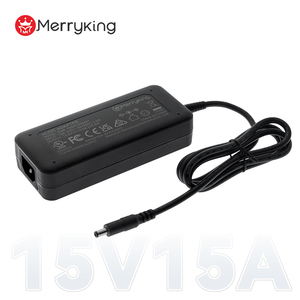
High-reliability desktop and internal conversion unit offering output options spanning 12V, 18V, 19V, 24V, 36V, and 48V at currents up to 15A. Ideal for medical imaging equipment, displays, and robotics.
Board-mount power modules (AC/DC converters and DC/DC brick supplies) are subject to stringent physical space constraints, demanding maximum volumetric power density without sacrificing safety margins. Leading CE-certified board mount manufacturers employ state-of-the-art engineering methodologies to solve three primary system-level hurdles:
To comply with IEC/EN 62368-1 and IEC/EN 60601-1, board-mount layouts must maintain strict PCB physical distances between primary high-voltage circuits and secondary safety extra-low voltage (SELV) outputs. High-pot isolation up to 4000VAC requires specialized transformer bobbin designs and conformal coating barrier techniques.
Conducted and radiated electromagnetic noise generated by high-frequency switching MOSFETs (often exceeding 100kHz–500kHz) must be attenuated internally. Incorporating multi-stage Pi-filters, common-mode chokes, and Y-capacitors directly onto the PCBA ensures compliance with CISPR 32 / EN 55032 Class B limits.
Overcoming thermal derating in sealed board enclosures relies on thermally conductive epoxy or silicone potting compounds (reaching thermal conductivities >1.5 W/m-K). Potting eliminates hot spots around planar magnetics while delivering vibration resistance and IP-rated environmental protection.
| Design Parameter | Open-Frame PCBA | Encapsulated Board-Mount | High-Power Enclosed Module |
|---|---|---|---|
| Volumetric Power Density | Medium (15–25 W/in³) | Very High (30–60 W/in³) | High (20–40 W/in³) |
| Environmental Protection | Dust/Moisture Sensitive | Fully Sealed (IP67/IP68 Compatible) | Vented / Fan Cooled Chassis |
| Thermal Dissipation Method | Convection / Forced Air Flow | Conduction to PCB Motherboard / Baseplate | Internal Cooling Fan / Heat Sink |
| Safety & Isolation Class | Class I or Class II options | Reinforced Class II (2×MOPP available) | Class I Earth Grounded |
| Primary Target Application | Embedded Control Panels | Medical Devices, Sensors, Harsh Industrial | Heavy Automation, High-Wattage Drives |
The global power supply industry is undergoing a seismic shift driven by dynamic market demands for miniaturization, higher energy conversion efficiencies, and digital control integration. Board-mount power supply manufacturers are at the forefront of implementing groundbreaking technological innovations:
Gallium Nitride (GaN) and Silicon Carbide (SiC) field-effect transistors have revolutionized board-mount AC/DC and DC/DC converter topologies. By offering significantly lower switching losses, zero reverse recovery charge, and elevated breakdown voltage limits, GaN switches allow board-mount power supplies to operate at switching frequencies exceeding 1MHz. This dramatic frequency increase decreases the physical size of inductors and capacitors by up to 50%, elevating overall power density to unprecedented levels exceeding 50 W/in³ while pushing peak efficiencies above 94%.
Modern industrial and cloud computing systems require real-time monitoring of power rail status. Advanced board-mount power modules now incorporate embedded microcontrollers supporting PMBus™ (Power Management Bus) protocols over I²C channels. Hardware designers can dynamically adjust output voltage setpoints, monitor board temperatures, track load current demand, and receive predictive fault alerts (over-temperature, over-voltage, phase failure) prior to system failure.
In semiconductor manufacturing cleanrooms, minor AC mains voltage sags can cause equipment aborts costing millions in scrapped silicon wafers. Modern board-mount power supplies designed for fab tools are engineered to satisfy the SEMI F47 standard, ensuring continuous regulated DC output through voltage sags down to 50% for up to 200 milliseconds without requiring massive external bulk capacitors.
Procurement teams sourcing board-mount power supplies face complex global supply chain realities. Strategic purchasing extends beyond unit price negotiations; it relies on comprehensive lifecycle management and vendor risk assessment:
OEM engineering teams are increasingly standardizing on industry-recognized form factors (such as 1x1 inch, 2x1 inch, quarter-brick, and half-brick footprints). Sourcing board-mount modules with drop-in pin-to-pin compatibility guarantees supply chain resilience against component shortages.
CE marking alone is self-declared in many instances. Rigorous procurement policies now require board-mount manufacturers to provide verified Notified Body Test Reports (IEC CB Scheme certificates) issued by recognized labs (TÜV, UL, Intertek) to validate safety declarations.
Substandard power supplies with unverified low-cost capacitors (e.g., non-Japanese 85°C electrolytic caps) shorten board MTBF drastically. Evaluating thermal derating curves and field return rates (RMA metrics) proves that premium board-mount power modules lower field servicing costs over a 10-year product lifetime.
Industrial OEMs require guaranteed product longevity (typically 7 to 10 years minimum build lifetime). Reliable manufacturers publish formal Product Change Notifications (PCN) 6–12 months in advance, protecting OEMs from unexpected End-of-Life (EOL) redesign cycles.
With over six decades of power conversion authority, our manufacturing facilities specialize in solving difficult technical requirements that off-the-shelf standard power modules cannot address. We partner directly with OEM engineering teams from concept to volume production.
Our automated manufacturing plants maintain rigorous quality management frameworks capable of fulfilling critical medical device and aerospace traceability standards.
Eliminate expensive test lab failure iterations. Our design centers feature embedded anechoic chambers and spectrum analyzer setups to fine-tune filtering before formal submissions.
Every board-mount unit undergoes 100% full functional testing (ATE), high-voltage isolation flash test, and full-load thermal burn-in to achieve near-zero DPPM quality metrics.
Technical and procurement answers from our application engineering staff regarding board-mount power selection and certification standards.
Connect directly with our senior application engineering team to request sample units, review schematic isolation topology, or obtain detailed CE/CB test documentation.
