Explore our high-performance electrical infrastructure components. Every unit undergoes rigorous partial discharge, impulse withstand, and thermal derating validation prior to global export.
Navigating grid modernizations, thermal dissipation boundaries, and stringent international compliance frameworks demands transparent engineering data and verified manufacturing integrity.
Leveraging six decades of custom power engineering, our high-voltage equipment incorporates advanced topology design, precision magnetics, and robust mechanical structures. Built for continuous multi-decade field operation under severe electrical stress.
Every step of our manufacturing pipeline operates under ISO 9001:2015 and ISO 13485 quality control standards. Complete material traceability, 100% routine testing, and rigorous factory acceptance testing (FAT) eliminate early-stage field failures.
High-voltage switching events generate intense conducted emissions and transient overvoltages. Our integrated EMI/EMC filtering topologies ensure seamless compliance with CISPR, FCC, and MIL-STD limits across broad bandwidths.
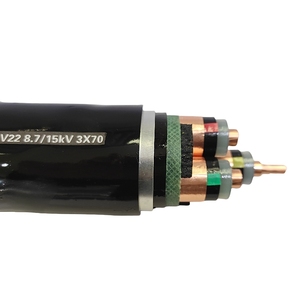
In high-voltage engineering (operating above 1kV AC and 1.5kV DC up to 220kV transmission class), insulation longevity is directly governed by dielectric stress management. Partial discharge (PD)—microscopic electrical discharges within gas voids in solid, liquid, or gas insulation—is the primary driver of premature transformer and cable degradation. Our manufacturing process enforces severe PD thresholds: all transformers and switchgear units are validated to maintain partial discharge levels below 5 pico-Coulombs (pC) at 1.73 times nominal voltage (Uo).
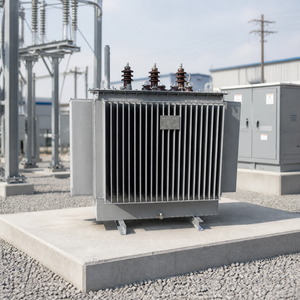
To achieve this level of dielectric stability, our oil-immersed transformers (such as the S22 10kV/0.4kV line) utilize high-grade Cold-Rolled Grain-Oriented (CRGO) silicon steel cores, treated via high-vacuum oil impregnation processes. This removes moisture and entrapped gas pockets down to <10 PPM water content, ensuring an oil breakdown voltage (BDV) exceeding 60kV. Furthermore, windings feature continuous step-lap core stacking and thermally upgraded insulating paper (Class H standard), suppressing hot-spot temperature rises under 120% continuous overload conditions.
| Engineering Metric | Standard Commercial Grade | CE Certified Industrial / Grid Grade | Our High Voltage Engineering Benchmark |
|---|---|---|---|
| Partial Discharge (PD) Level | < 20 pC @ Nominal Uo | < 10 pC @ 1.5 Uo | < 5 pC @ 1.73 Uo (Factory Certified) |
| Dielectric BDV (Oil Insulation) | 35 kV – 45 kV | 50 kV – 55 kV | > 60 kV (Vacuum Degassed & Dehydrated) |
| Voltage Sag Immunity | Standard Unbuffered | Basic Transient Tolerant | SEMI F47 Compliant Ride-Through |
| Thermal Dissipation Method | Convection Air / Basic Fans | Forced Air (ONAF) | Liquid Cooled 1U / Optimized Liquid-to-Air |
| Switchgear Arc Fault Withstand | 0.1 sec Internal Arc | 0.5 sec @ 25 kA | 1.0 sec @ 31.5 kA (IAC AFLR Rated) |
As global energy transitions accelerate and industrial automated processes become hyper-sensitive to power quality, procurement managers face evolving technical and environmental demands.
Sulfur hexafluoride ($SF_6$) has historically dominated high-voltage insulation due to its exceptional arc-quenching capability. However, with a global warming potential (GWP) 23,500 times higher than $CO_2$, stringent EU F-gas regulations and global environmental mandates are forcing EPC contractors to specify $SF_6$-free alternative gases (such as dry-air, synthetic air, or Fluoronitril-based gas mixtures) alongside Advanced Vacuum Circuit Breaker (VCB) technology for ratings up to 220kV.
Driven by semiconductor fabs, data centers, and heavy industrial automation, physical space is becoming a premium constraint. Procurement is shifting rapidly toward closed-loop liquid-cooled power supply architectures (such as our 16.5kW 1U liquid-cooled platforms). Liquid cooling removes heat at the source without high-velocity fans, eliminating acoustic noise, dust accumulation, and mechanical fan degradation in cleanroom environments.
With industrial grids experiencing increased voltage instability due to intermittent renewable integration, high-voltage step-down equipment and downstream power converters are increasingly required to satisfy SEMI F47 voltage sag immunity standards. Power platforms must continue operating uninhibited during short-duration input line sags down to 50% voltage for up to 200 milliseconds, preventing multi-million dollar industrial tool aborts.
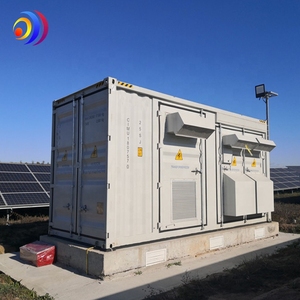
Procurement specifications now frequently mandate native digital interfaces over traditional analog metering. Modern compact substations and switchgear assemblies integrate optical temperature sensors, real-time dissolved gas analysis (DGA) units, and automated partial discharge tracking communicating over IEC 61850 protocols. This enables predictive maintenance schedules, extending transformer service lives beyond 35 years.
Direct engineering guidance for EPC managers, utility buyers, and OEM system integrators.
Connect directly with our senior application engineers for single-line diagram (SLD) reviews, custom winding topologies, CE compliance documentation, and competitive export quotations.
