Explore our flagship portfolio of high-reliability marine navigational radar components, active phased-array 3D UAV detection modules, 400Hz airborne power supplies, and regulated DC power conversion units designed for zero-down-time military and commercial operations.

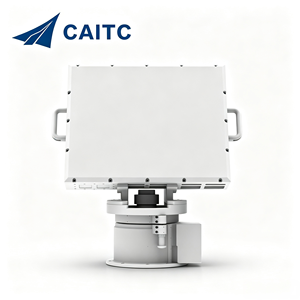

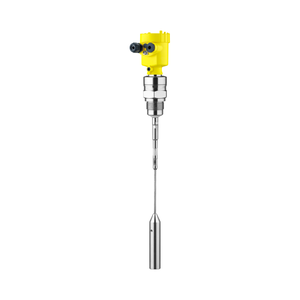
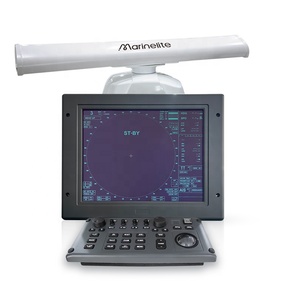
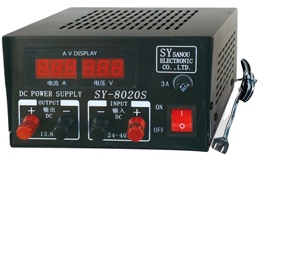
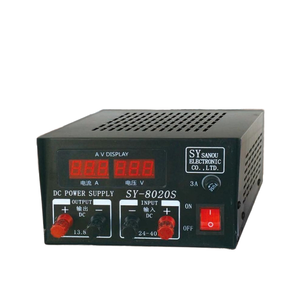
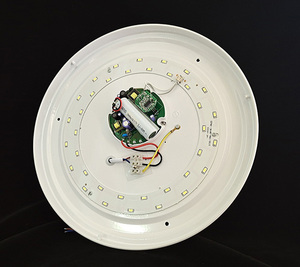
Modern radar systems—ranging from airborne navigation and Ku-band 3D active phased-array (AESA) UAV tracking to heavy marine 96 nm pulse systems—demand an unprecedented level of power stability, thermal efficiency, and Electromagnetic Compatibility (EMC). As leading CE certified radar power manufacturers and factories, our custom engineering frameworks address the stringent operational needs of defense prime contractors, vessel integrators, and semiconductor tool builders worldwide.
Radar transmitter units (TWT amplifiers and solid-state SSPA transceivers) generate sharp, high-amplitude pulse load profiles. Power supply units (PSUs) operating under these dynamic conditions must guarantee rapid transient response without introducing voltage sags or phase noise into sensitive RF receiver channels. Achieving European CE compliance (under the Low Voltage Directive 2014/35/EU and EMC Directive 2014/30/EU) requires rigorous mitigation of conducted and radiated interference across extreme operational bandwidths.
In high-frequency military and marine radar systems, high output voltage ripple directly modulates the RF transmission phase, degrading target doppler resolution. Our custom CE-compliant radar power supplies utilize multi-stage L-C filtering, active power factor correction (PFC > 0.99), and low-ESR ceramic capacitor banks to achieve output ripple levels below 10mV peak-to-peak even under 100Hz to 10kHz pulse load repetitions.
Navigational airborne equipment requires specialized 400Hz AC intermediate frequency power conversion (220V nominal, 2.1A to 1250A output). Our airborne power units meet stringent MIL-STD-704 and CE specs, featuring conduction-cooled envelopes for zero-pressure avionics bays.
Marine radar power units (such as 24V DC 20A regulated supplies and 19-inch 96 nm radar drive assemblies) feature IP66 ruggedized steel enclosures, anti-corrosive conformal coatings, and CCS / CE certification for continuous operational reliability in salt-fog marine environments.
Active Phased Array radars like the KTDR-C1 Ku-band system demand distributed DC-DC point-of-load conversion. Our high-density modules deliver peak power efficiencies exceeding 94% with localized thermal management to prevent thermal blooming on radar apertures.
As radar architectures shift from centralized traveling-wave tube (TWT) designs to digital beamforming active electronically scanned arrays (AESA), radar power procurement strategies are undergoing a major structural transformation. Systems engineers and procurement officers must evaluate suppliers based on long-term technology roadmaps and regulatory compliance standards.
Legacy radar power supplies relying on traditional Silicon MOSFETs are rapidly being phased out. Next-generation factory platforms integrate GaN and SiC power semiconductors, enabling switching frequencies in excess of 1 MHz. This transition yields a 40% reduction in power supply volumetric footprint while substantially reducing magnetic component size (transformers and inductors), crucial for airborne radar and unmanned aerial vehicle (UAV) bird-detection platforms.
With high-power ground-based and naval defense radars exceeding kilowatt-class operating thresholds, conventional forced-air cooling creates unacceptable acoustic signatures and fan failure vulnerabilities. Future procurement mandates favor liquid-cooled power supply architectures (such as 1U 16.5kW liquid-cooled platforms). Direct Liquid Cooling removes thermal energy at the internal heatsink interface, allowing fully sealed chassis that resist dust, humidity, and chemical contaminants.
Modern semiconductor fabrication facilities (fabs) and radar production facilities encounter momentary line voltage sags caused by grid instabilities. Industrial radar sensor manufacturing tools now require SEMI F47 voltage sag immunity compliance. Certified radar power supplies must ride through single-phase and three-phase input sag profiles (down to 50% line voltage for up to 1000ms) without interrupting output regulation, preserving process yield and eliminating tool aborts.
B2B buyers are increasingly standardizing on smart power conversion modules equipped with PMBus v1.3 or CANbus telemetry. Real-time digital reporting of operating temperature, individual phase currents, input supply quality, and MTBF health metrics allows naval and aerospace radar operators to conduct predictive maintenance long before field failure occurs.
The following technical matrix details the baseline performance specifications engineered across our CE Certified Radar Power production lines, helping systems integrators match electrical requirements with OEM specifications.
| Parameter | Marine Radar Supplies (24V System) | Airborne 400Hz Navigational Units | Ku-Band Phased Array Power |
|---|---|---|---|
| Input Voltage Range | 85-264 VAC / 18-36 VDC | 115/220 VAC ± 10% (3-Phase 400Hz) | DC 24V - 60V Wide Range |
| Output Power Range | 200W - 1500W Regulated | 500W to 275 kW (2.1A - 1250A) | 8W - 100W Integrated Modules |
| CE Directives Compliance | EN 60945, EN 55032 Class B | EN 61000-6-4, EN 61000-4-5 | EN 61000-6-2, CISPR 32 |
| Efficiency (Full Load) | 89% - 92% | 91% - 95% | Up to 96% (GaN Topology) |
| Operating Temperature | -25°C to +70°C Convection/Air | -55°C to +85°C Conduction | -40°C to +85°C Ambient |
| Protection Framework | OVP, OCP, OTP, Short Circuit | Over-frequency, Isolation Lockout | Reverse Polarity, Emergency Backup |
Building on over 60 years of applied power electronics expertise, our specialized factories combine rigorous design engineering with advanced manufacturing controls. We support defense prime contractors, medical system developers, and marine navigation suppliers from initial custom topology conceptualization through full agency certification and decade-long production runs.
Unlike off-the-shelf power supply assemblers, our engineering teams design and wind custom planar transformers, inductors, and common-mode chokes in-house. This control over magnetic geometry allows us to optimize power density, control parasitic capacitance, and achieve stringent low-leakage performance required by patient-connected medical systems (IEC 60601-1 2×MOPP) and sensitive military radar platforms (MIL-STD-461).
Conducted emissions failures at third-party test houses can delay program deployment by months. Our state-of-the-art EMI labs offer full pre-compliance testing across 1-Phase/3-Phase Delta and WYE topologies, feed-thru, Tempest, and MIL-COTS filter lines. We ensure your complete radar assembly clears EN 55032 and CISPR limits on the first attempt.
Our global manufacturing operations operate under ISO 9001:2015 (Industrial & Defense) and ISO 13485 (Medical Device) quality management systems. Every single radar power supply undergoes 100% full-load burn-in, automated parametric testing, and automated optical inspection (AOI) prior to shipment, establishing an enviable field reliability record (MTBF > 500,000 hours per MIL-HDBK-217F).
Naval and airborne radar build cycles span 10 to 20 years. We implement strict engineering change notices (ECN) and component lifecycle management to guarantee form-fit-function product continuity. We avoid unannounced component substitutions, providing total supply chain security for defense OEMs.
Expert insights from our application engineering team regarding CE compliance, pulse power regulation, thermal management, and custom modification workflows.
Consult directly with our senior application engineering team to evaluate your electrical specs, thermal envelopes, and EMC compliance requirements.
Get Catalog