Engineered to meet stringent safety framework requirements including IEC/EN 60601-1 3rd/4th Editions, low patient leakage currents, and broad input voltage stability.
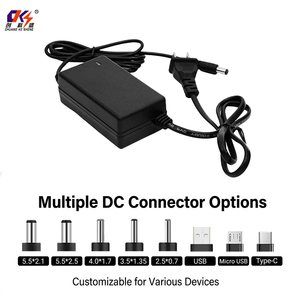
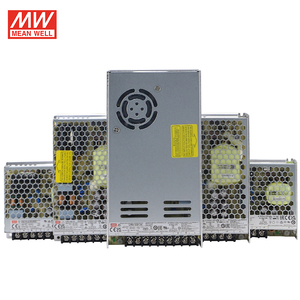
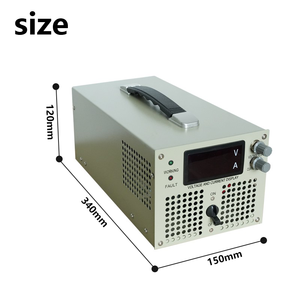
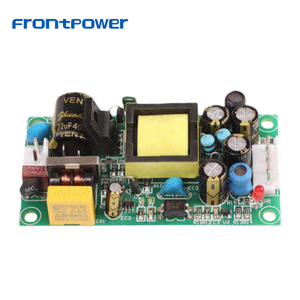
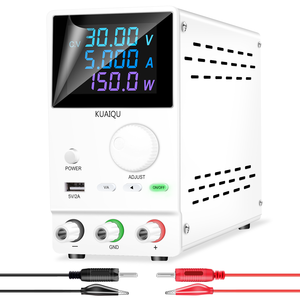
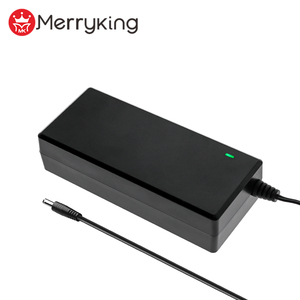
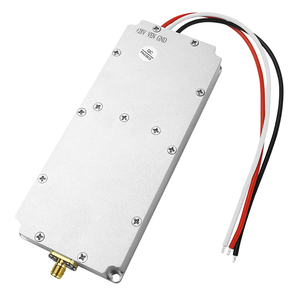
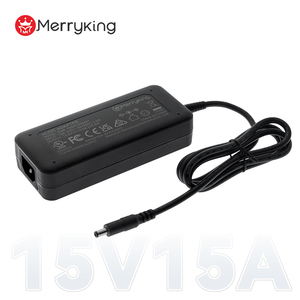
Combining advanced Chinese manufacturing capabilities with rigorous Western engineering governance (ISO 9001:2015 and ISO 13485). We solve the complex thermal, electromagnetic, and regulatory challenges that standard off-the-shelf power supplies cannot address.
Our medical power conversion architectures incorporate double Means of Patient Protection (2×MOPP) featuring 4000 VAC isolation withstand voltage and creepage/clearance distances exceeding 8mm to satisfy IEC/EN 60601-1 requirements for Type BF and CF patient-contact equipment.
Leveraging wide-bandgap (GaN/SiC) semiconductors and direct liquid-cooling technologies, we achieve kilowatt-scale outputs inside ultra-compact 1U rack enclosures—eliminating fan noise, dust contamination, and fan failure risks in cleanroom environments.
Designed for semiconductor fab equipment and sensitive diagnostic systems, our single-phase input platforms feature enhanced hold-up capacitors and control loops engineered to ride through short-duration line voltage sags without output disruption.
As medical instrumentation advances toward surgical robotics, high-field MRI shielding, portable point-of-care devices, and AI-driven clinical tools, power supply design is undergoing a massive architectural transformation.
"Modern medical equipment requires power supplies that transition from simple energy conversion components into active, digitally monitored sub-systems capable of real-time telemetry, low risk profiles, and sub-100µA leakage levels."
The global adoption of the IEC 60601-1-2 4th Edition standard has elevated electromagnetic compatibility (EMC) testing thresholds for medical electrical equipment. Today's healthcare devices operate outside strictly controlled clinical environments—frequently appearing in home healthcare settings where unconditioned AC mains and radio frequency (RF) interference from wireless devices are prevalent. Chinese medical power manufacturers are now integrating advanced multi-stage differential and common-mode EMI filters directly onto power inlet PCBA topologies. This integration ensures compliance with CISPR 11 Class B radiated and conducted emission requirements while sustaining robust immunity against 8kV contact and 15kV air electrostatic discharges (ESD).
Gallium Nitride (GaN) and Silicon Carbide (SiC) switches are rapidly replacing legacy Silicon MOSFETs in high-density switching power supplies. By operating at switching frequencies exceeding 500 kHz, GaN-based power supplies drastically reduce the physical footprint of magnetic components (transformers and inductors) and output capacitors. For OEMs importing medical power modules from China, this shift allows for 30% to 50% higher watts-per-cubic-inch power density, enabling sleek benchtop devices, compact desktop adapters, and ultra-lightweight open-frame modules for portable monitoring instruments.
Smart medical ecosystems demand continuous visibility into power sub-system health. Advanced power supplies manufactured for high-end applications now come equipped with digital control loops powered by microcontrollers supporting PMBus, I2C, or CANbus protocols. System engineers can remotely monitor real-time operating parameters including primary-side thermal stress, output current drawn by sensitive optical sensors, rail voltage drift, and fan speed degradation. Predictive maintenance algorithms leverage this continuous data stream to warn clinical technicians of impending power anomalies before system failure occurs during surgical procedures.
Controlling earth leakage current (NC < 500µA) and patient leakage current (NC < 100µA for Type BF, < 10µA for Type CF cardiac-floating applications) remains the primary technical bottleneck in high-wattage medical power supply design. Modern manufacturing trends utilize proprietary planar transformers with shielded Faraday layers to achieve low inter-winding capacitance. Furthermore, surgical theater equipment demands ultra-quiet acoustic footprints (< 35 dBA). Power suppliers are increasingly adopting conduction-cooled cold-plate designs or liquid-cooling loops that transfer heat directly to the system chassis without noisy forced-air fans.
Selection matrix for systems design engineers evaluating medical and industrial switching power platforms.
| Cooling Modality | Power Density | Acoustic Noise | Isolation Level | Typical Applications |
|---|---|---|---|---|
| Natural Convection | Low to Medium (2 - 5 W/in³) | 0 dBA (Completely Silent) | 2×MOPP / 2×MOOP | Patient Monitors, Infusion Pumps, Desktop Adapters |
| Forced Air (Internal Fan) | Medium to High (8 - 15 W/in³) | 35 - 55 dBA | 2×MOPP / Industrial | Laboratory Instrumentation, Clinical Chemistry Analyzers |
| Conduction (Cold Plate) | High (15 - 25 W/in³) | 0 dBA (Fanless) | 2×MOPP Isolation | Sealed Medical Carts, Outdoor Emergency Devices |
| Liquid Cooled (Water/Glycol) | Ultra High (> 40 W/in³) | 0 dBA (External Chiller) | Custom High Isolation | High-Power Laser Surgery, Semiconductor Fab, MRI Auxiliary |
Key structural shifts global OEM procurement teams must navigate when sourcing certified medical power components from China.
Global medical OEMs are moving away from fully custom ground-up designs due to long tooling lead times and expensive safety requalification fees. Instead, procurement directors are selecting pre-certified "modified standard" platforms from established Chinese exporters—adjusting connector pinouts, cable lengths, potting compounds, and output voltage trims while keeping the core CB Scheme and UL certifications intact.
Regulatory bodies (FDA, MHRA, NMPA) require complete component-level traceability across medical device supply chains. Buyers are prioritizing Chinese suppliers offering automated SMT production lines, barcode-tracked ECN/ECO engineering change notifications, and mandatory 100% full-load burn-in records stored for at least 10 years.
Energy efficiency standards like DoE Level VI and EU CoC Tier 2 are baseline prerequisites. However, long-term procurement evaluations now account for no-load standby power consumption (< 0.15W) and thermal dissipation within clinical enclosures—factors that directly influence overall system reliability and fan lifespan.
Answers to key technical questions raised by procurement managers and power design engineers during supplier evaluation.
Whether you require standard 2×MOPP medical desktop adapters, open-frame PCBA power supplies, or custom liquid-cooled multi-kilowatt platforms—our engineering team is ready to evaluate your specification.
