Engineered for extreme reliability, high power density, and precise digital programmability across semiconductor, medical, electroplating, and heavy industrial automation applications.
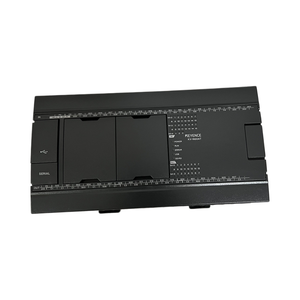
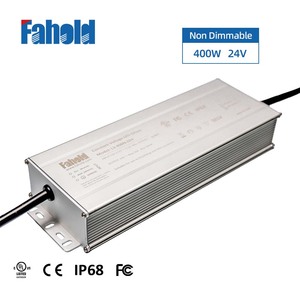
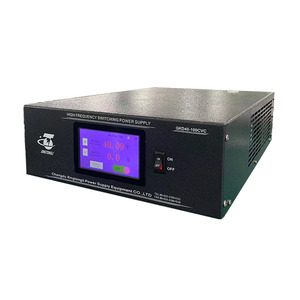
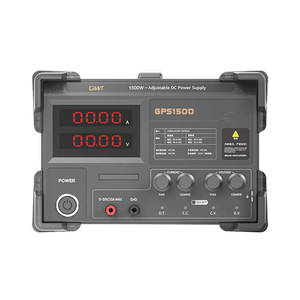
An engineering analysis of power conversion topologies, digital PLC control interfaces, thermal management architectures, and quality verification standards for international B2B procurement.
In modern industrial engineering, simple static power conversion is no longer sufficient. Industrial operations—ranging from semiconductor fabrication and precision electroplating to EV battery formation—demand fully programmable, software-defined power architectures. Leading Chinese OEMs and joint-venture manufacturing hubs have transformed from low-cost assembly lines into high-precision power electronics innovation centers.
Today's top-tier manufacturers design and build highly integrated AC/DC and DC/DC platforms featuring digital signal processors (DSP), field-programmable gate arrays (FPGA), and high-frequency active power factor correction (PFC) stages. These advancements deliver efficiencies exceeding 96% while reducing total harmonic distortion (THD) to under 3%.
| Specification Parameter | Linear Programmable DC | High-Frequency Switch-Mode (SMPS) | Megawatt Liquid-Cooled Rack |
|---|---|---|---|
| Power Range | 100W – 3kW | 1kW – 50kW Module | 15kW – 500kW+ Parallel System |
| Voltage & Current Ripple | Ultra-Low (<1mV RMS) | Low (<10mV – 30mV RMS) | Controlled (<50mV RMS) |
| Power Density | Moderate (1U–4U Benchtop) | High (Up to 30W/in³) | Ultra-High (16.5kW in 1U Liquid Chassis) |
| Cooling Mechanism | Internal Heatsink / Quiet Fan | Forced Air / Variable Speed Fans | Integrated Closed-Loop Liquid Plate |
| Primary Target Application | R&D Benchtop, Sensitive Analog ATE | Industrial Burn-In, Electroplating, PLCs | Semiconductor Fabs, EV Battery Systems |
Key technological shifts driving global buyer behavior when sourcing high-wattage programmable power and PLC control modules from OEM partners.
Procurement teams are prioritizing manufacturers utilizing Silicon Carbide (SiC) and Gallium Nitride (GaN) MOSFETs. These power devices operate at vastly higher temperatures and switching speeds, allowing for a 40% footprint reduction and lower thermal dissipation demands.
System integrators no longer accept standalone manual power supplies. Modern standard specifications demand native industrial fieldbus communications (RS485 Modbus, CANbus, EtherCAT) that interface directly with PLC controllers such as Keyence, Siemens, and Mitsubishi.
For semiconductor fab tools and high-power electroplating lines, forced-air fans introduce dust, particulate contamination, and noise. Liquid-cooled power blocks (such as 1U 16.5kW architectures) remove 95% of heat via fluid plates, eliminating fan failure points completely.
Over six decades of combined engineering pedigree in designing custom power conversion, magnetic components, and heavy-duty industrial control modules.
Every programmable DC supply, electroplating rectifier, and PLC controller module undergoes rigorous High-Accelerated Stress Screening (HASS) and full automated functional testing prior to shipment.
Single-phase and three-phase input systems designed to ride through line-voltage sags without interrupting tool operation, preventing scrapped wafers and multi-million dollar tool aborts in fabs.
Strict quality control processes supporting mission-critical sectors including medical devices (IEC 60601-1 2×MOPP), aerospace, defense (MIL-STD-461), and advanced energy grid infrastructure.
In-house engineering teams capable of customizing output voltage rails, form factors, potting, conformal coatings, and custom microcontroller firmware routines to meet non-standard OEM specs.
Direct answers from our senior power engineering team to solve critical selection and integration challenges for global buyers.
The selection depends entirely on your load requirements. Programmable AC supplies simulate real-world grid anomalies, voltage sags, harmonics, and frequency shifts (45Hz–500Hz+) to evaluate device behavior under grid stress. Programmable DC supplies deliver regulated DC voltage/current outputs (e.g., 0-60V, 0-600V) for electroplating, component burn-in, battery pack charge/discharge cycling, and DC motor testing. Consider required peak current, slew rate, and ripple voltage limits during evaluation.
Integrated touch-screen rectifiers allow operators to program multi-step electroplating profiles (voltage steps, current ramp rates, reverse polarity pulsing, and timers) directly on the factory floor. By pairing these units with industrial PLCs via RS485 Modbus or digital I/O, central control rooms can automatically record plating telemetry, detect electrode shorting instantly, and maintain precise coating thickness consistency.
SEMI F47 is an international semiconductor industry standard specifying the minimum voltage-sag ride-through capability for capital equipment. Power supplies compliant with SEMI F47 must continue to deliver fully regulated DC output without shutdown during short-duration utility voltage drops (e.g., 50% sag for 200ms, 70% sag for 500ms). This prevents catastrophic tool aborts and saves millions in scrapped semiconductor wafers.
Yes. Leading tier-1 OEMs offer modified-standard and fully custom power development services. This includes adjusting output voltage ranges, adding conformal coatings for harsh environments, upgrading EMI filtering to pass CISPR 32 Class B limits, altering mounting brackets (rack-mount vs DIN-rail), and customizing digital communication registers to match proprietary system code.
For power levels up to 5kW, forced-air cooling with variable-speed fans is typically cost-effective. However, for megawatt-scale or multi-module 10kW–50kW installations—especially in cleanrooms or sealed NEMA/IP enclosures—liquid cooling is superior. Closed-loop liquid cold plates dramatically reduce package size (e.g., 16.5kW in 1U height), eliminate fan acoustic noise, and prevent dust ingress into critical electronic assemblies.
An auditing engineer should verify: 1) ISO 9001 / ISO 13485 quality control documentation; 2) On-site ATE (Automated Test Equipment) station burn-in records; 3) Conducted and Radiated EMI pre-compliance testing capabilities; 4) Thermal camera profiling under full continuous load; 5) Dielectric high-voltage withstand (Hi-Pot) safety testing logs.
