Precision-engineered AC/DC desktop adapters, high-density enclosed SMPS, and regulated laboratory power conversion systems built for aerospace ground support, cabin electronics, and harsh industrial environments.
Positioned at the center of China's advanced electronics ecosystem in Shenzhen and Suzhou, our manufacturing infrastructure bridges low-cost scalable production with rigorous aerospace-grade compliance.
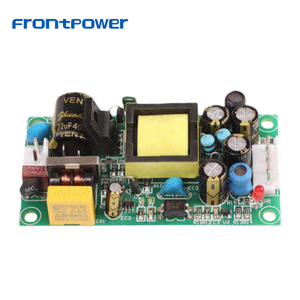
Full in-house control over topology selection, planar magnetics design, and digital feedback control loops. We support custom open-frame PCBA configurations from 24W up to multi-kilowatt custom racks.
Integrated electromagnetic compatibility labs capable of evaluating conducted and radiated emissions against RTCA DO-160G Section 21, MIL-STD-461G, and CISPR 32 Class B specifications.
From conduction-cooled cold plates to liquid-cooled 1U platforms (delivering up to 16.5kW density), our power modules function reliably in unpressurized bays from -55°C to +125°C.
Modern commercial aviation, defense electronics, unmanned aerial vehicles (UAVs), and advanced urban air mobility (AAM) platforms require power conversion equipment that combines minimal physical footprint with uncompromised reliability. Sourcing from a premier China Wholesale Avionics Power Supplier and Exporter allows global original equipment manufacturers (OEMs) and Tier-1 system integrators to leverage high-density manufacturing capabilities while meeting stringent international airworthiness frameworks.
Avionics power supplies operate in an extremely hostile electrical and environmental context. Unlike standard commercial off-the-shelf (COTS) industrial switch-mode power supplies (SMPS), airborne units must withstand severe input voltage transients, continuous structural vibrations, extreme thermal shock, and strict electromagnetic interference (EMI) boundaries defined by standards such as RTCA DO-160G Section 16 and MIL-STD-704F.
Core Architectural Requirement: Airborne power units must maintain uninterrupted output regulation during line voltage sags, power interruptions down to 50 milliseconds, and high-voltage lightning surge transients (DO-160G Section 22 Pin Injection testing).
When selecting or custom-specifying an avionics power supply from China export manufacturers, systems engineers must evaluate the primary electrical distribution bus topology:
| Parameter / Parameter Group | Standard Commercial SMPS | Industrial High-Density SMPS | Aerospace & Avionics Grade (DO-160G) |
|---|---|---|---|
| Input Frequency Range | 47 Hz – 63 Hz | 47 Hz – 440 Hz | 360 Hz – 800 Hz (Variable Frequency AC) |
| Operating Temperature | -10°C to +50°C | -20°C to +70°C (Derated) | -55°C to +125°C (Full Conduction/Liquid) |
| Transient Hold-Up Time | 10 ms – 16 ms | 20 ms standard | Up to 50 ms (Custom Capacitance Bank) |
| Di-electric Isolation | 1.5kVAC Input-Ground | 3.0kVAC Input-Ground | 1.5kVAC to 2.5kVAC with 2×MOPP Medical Option |
| MTBF Target (MIL-HDBK-217F) | 100,000 Hours | 250,000 Hours | > 500,000 Hours Airborne Inhabited Dark |
China's power supply exporting ecosystem has rapidly integrated Wide-Bandgap (WBG) semiconductor switches into standard modular product lines. Replacing traditional Silicon (Si) MOSFETs with Gallium Nitride (GaN) HEMT devices and Silicon Carbide (SiC) MOSFETs unlocks transformative advantages for airborne applications:
GaN semiconductors exhibit near-zero reverse recovery charge ($Q_{rr}$) and significantly lower gate charge ($Q_g$). This allows switching frequencies to push beyond 500 kHz to 1 MHz without incurring unsustainable switching losses. Higher switching frequencies directly correlate to smaller passive filtering components—enabling open-frame PCBA power supplies to achieve power densities exceeding 40 Watts per cubic inch ($W/in^3$).
As global aerospace primes migrate toward open-architecture systems, China's power supply designers are pioneering several key technological trajectories that redefine airborne power delivery:
Modern high-power avionics racks, radar signal processors, and active electronically scanned array (AESA) radar pods generate heat loads that exceed forced-air dissipation capacity. Modern power architectures utilize liquid-cooled cooling plates integrated directly into 1U and 2U rack housings. Liquid-cooled AC/DC power supplies (similar to the LiquaBlade framework) remove over 95% of internal thermal energy via closed-loop liquid glycol mixture channels, allowing kilowatts of power to be converted inside completely sealed, IP67-rated enclosures.
Analog PWM control ICs are increasingly replaced by 32-bit Digital Signal Controllers (DSCs). Modern avionics power units feature real-time telemetry output over PMBus, CANopen, or ARINC 429 networks. Flight control computers can monitor individual rail currents, internal thermal junction temperatures, input voltage health, and electrolytic capacitor equivalent series resistance (ESR) degradation to perform predictive maintenance before hard failures occur in-flight.
Achieving compliance with MIL-STD-461G CE102 (Conducted Emissions 10kHz to 10MHz) requires bulky inductors that add unwanted takeoff weight. Advanced exporters now implement hybrid EMI filtering—combining active noise cancellation circuits with compact passive differential-mode and common-mode chokes. Active filtering units measure line noise in real time and inject inverse current phases, neutralizing noise spikes while reducing passive filter footprint by over 40%.
Procuring power supplies for defense, aerospace, and critical ground support equipment from Chinese manufacturers has evolved from simple component purchasing into long-term strategic engineering integration. Navigating international supply chains requires a thorough understanding of key procurement shifts:
Rather than funding ground-up custom developments—which carry high non-recurring engineering (NRE) costs and 12-to-18-month qualification cycles—importers favor modified-standard platforms. Procurement teams start with a proven, mass-produced industrial base unit and request specific mechanical interface modifications, conformal coating (MIL-I-46058C), custom wire harnesses, or output voltage trimming.
Global aerospace buyers enforce strict component traceability down to semiconductor wafer batches and capacitor dielectric sources. Tier-1 China exporters now offer full CoC (Certificate of Conformance), material lot tracking, and long-term component availability guarantees (10+ year product lifecycle commitments) to prevent unexpected component obsolescence.
While initial unit cost is vital, procurement officers prioritize total lifetime costs—factoring in burn-in test yields, field failure rates (target < 50 DPPM), warranty repair logistics, and regulatory testing support. Leading Chinese vendors now include pre-compliance EMI and environmental test data sheets with export shipments.
Direct answers regarding specifications, certification pathways, custom modifications, and quality control from our engineering team.
Need customized power conversion platforms, DO-160G qualified power units, or full product catalogs for your aerospace and industrial programs? Speak directly with our applications engineering team today.