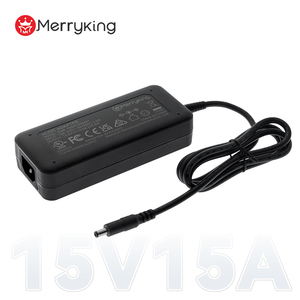
Explore our foundational switching power supply units (SMPS), desktop adapters, enclosed industrial power blocks, and configurable PCBA solutions. Engineered for high conversion efficiency, robust thermal margin, and worldwide safety compliance.
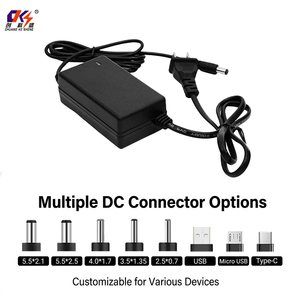
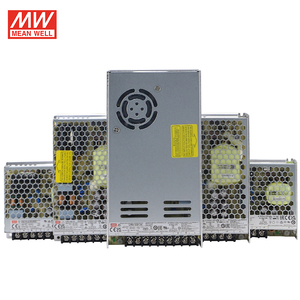
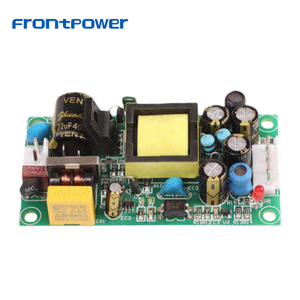
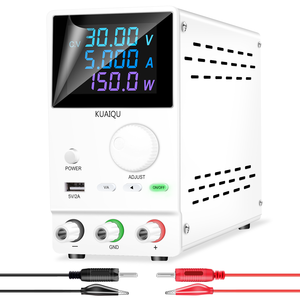
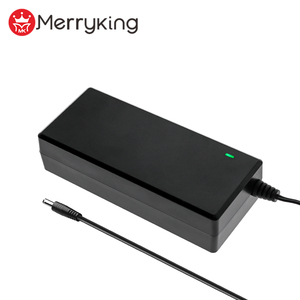
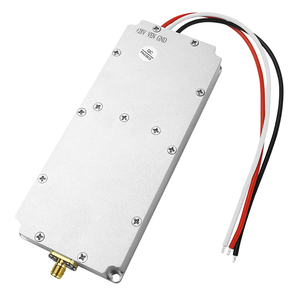
The global power electronics landscape is undergoing a structural paradigm shift. As high-density computing, industrial automation, medical robotics, semiconductor fab expansion, and electro-mobility push operational limits, the underlying electrical architecture must evolve simultaneously. Original Equipment Manufacturers (OEMs) and System Integrators searching for premier China wholesale power module manufacturers require more than simple catalog sourcing. They require robust engineering partnerships capable of delivering scalable topology, long-term component availability, stringent electromagnetic compatibility (EMC) compliance, and verifiable quality assurance.
Over the past six decades, power module manufacturing in China has transitioned from high-volume, low-cost assembly to sophisticated, research-driven engineering powerhouse operations. Leading Chinese power supply manufacturers operate under international quality management systems, including ISO 9001:2015 for industrial electronics and ISO 13485 for medical-grade devices. By leveraging integrated supply chains—from custom toroidal coil winding to automated surface-mount technology (SMT) and in-house compliance pre-testing—top-tier suppliers offer significant Information Gain and total cost of ownership (TCO) advantages for international buyers.
Selecting a power module based solely on static datasheet specifications frequently leads to field failures during extreme transient events, thermal throttling inside sealed enclosures, or costly non-compliance at final EMC testing. A reliable manufacturer must provide dynamic thermal derating curves, verified Mean Time Between Failures (MTBF according to MIL-HDBK-217F standard), comprehensive harmonic distortion profiles, and clear compliance mapping (UL, CE, UKCA, SEMI F47, IEC 60601-1).
How international OEM procurement teams are adapting to supply chain realignments, technical advancements, and stringent regulatory demands.

While standard off-the-shelf power supplies offer low upfront cost and ground-up custom designs provide tailored fitment, market leaders are increasingly choosing Modified Standard Platforms. By taking a certified, field-proven power architecture and modifying specific output voltages, wiring harness connectors, mechanical mounting brackets, or protective conformal coatings, OEMs reduce qualification lead times by up to 65% while keeping tooling NRE costs minimal.

Gallium Nitride (GaN) and Silicon Carbide (SiC) power semiconductors are rapidly replacing legacy Silicon MOSFETs in wholesale power modules. Wholesale Chinese manufacturers are integrating wide-bandgap (WBG) switches into high-frequency LLC resonant converters. This technical shift enables double the power density in half the volume, ultra-low standby power losses, and superior thermal characteristics in kilowatt-class industrial power systems.

Mechanical cooling fans represent the single most common point of failure in enclosed power conversion equipment. Furthermore, fans draw in airborne contaminants, dust, and corrosive vapors in harsh industrial environments or cleanroom fabs. Sourcing trends show a heavy tilt toward liquid-cooled power plates (such as 16.5kW 1U modular platforms) and heavy metal baseplate conduction cooling, eliminating fan noise and extending system service life beyond 100,000 operational hours.

Modern power supply modules are no longer black-box analog units. Global buyers now demand digital control loops featuring PMBus, CANbus, or RS485 communication protocols. Real-time system monitoring of internal temperatures, voltage/current metrics, dynamic load variations, and predictive fault alarms allow industrial systems to implement proactive maintenance schedules, preventing unexpected assembly line downtime.

Procurement teams are shifting away from buying isolated components (buying an AC/DC unit from one vendor, an EMI filter from a second, and a transformer from a third). Strategic buyers prefer enterprise wholesale partners capable of designing the entire power chain—from the utility grid connection down to the point-of-load DC module—ensuring system-level compliance without component impedance mismatching.
Understanding the internal electrical topologies of modern wholesale power modules is critical for senior hardware architects and sourcing directors. When evaluating a Chinese power module manufacturer's factory capability, evaluating their technical mastery over complex switching schemes provides instant insight into product reliability.
Traditional hard-switched forward or flyback topologies suffer from severe switching losses at elevated frequencies. Modern high-power wholesale modules utilize zero-voltage switching (ZVS) and zero-current switching (ZCS) LLC Resonant Converters paired with active Power Factor Correction (PFC).
Industrial power grids present violent line transients, voltage sags, phase loss, and high ambient thermal stress. Premium wholesale manufacturing integrates multi-tiered protection circuitry directly into the power board (PCBA):
A reputable Chinese manufacturer must tailor power module manufacturing processes to match the precise regulatory ecosystem of the destination market:
Requires strict compliance with IEC 60601-1 3rd Edition. Key requirements include 2×MOPP (Means of Patient Protection) galvanic isolation, ultra-low patient leakage current (<100 µA for BF/CF contact), and 4th Edition EMC immunity against RF interference in hospital environments.
Requires high voltage stability for electrostatic chucks (e-chucks), cleanroom-compatible liquid cooling lines, low outgassing materials, and verified immunity against line voltage fluctuations under SEMI F47 standards.
Demands compliance with MIL-STD-461G for electromagnetic compatibility, MIL-STD-810H for shock and vibration resistance, and custom Tempest EMI filtering for secure communications infrastructure.
Building world-class power conversion equipment requires absolute consistency in materials, state-of-the-art automated assembly, and uncompromised testing protocols.
Unlike standard assemblers who outsource critical components, we design, wind, and vacuum-impregnate custom transformers, common-mode chokes, and inductors in-house. This gives us total control over thermal performance, core loss, and high-voltage dielectric breakdown margins.
High-speed Surface Mount Technology (SMT) lines equipped with 3D Automated Optical Inspection (AOI) and X-ray inspection ensure perfect solder joint integrity on fine-pitch ICs and high-power DPAK components. Automated conformal coating protects modules operating in humid or chemical environments.
Every single power module unit leaving our facility undergoes automated computer-controlled functional testing under full dynamic electrical load. Thermal soak burn-in chambers stress modules at elevated ambient temperatures to eliminate early life infant mortality failures before shipment.
Detailed technical answers to help engineering and sourcing teams evaluate suppliers, mitigate risks, and streamline agency certification.
Start by defining the complete load profile: continuous wattage, short-duration peak load surges, dynamic transient steps, and required output voltage regulation tolerance. Next, establish the applicable safety and EMC regulatory framework. For medical equipment, the core standard is IEC/EN 60601-1 3rd Edition. You must determine whether your application requires 2×MOPP (Means of Patient Protection) for direct patient contact or 2×MOOP (Means of Operator Protection) for clinical lab equipment.
Additionally, evaluate maximum acceptable earth leakage current and touch leakage current (typically <100 µA for patient-connected units), EMC immunity under IEC 60601-1-2 4th Edition, thermal derating within your physical enclosure, and preferred cooling topology (convection vs forced air vs liquid). Our applications engineering team conducts comprehensive line-by-line architecture reviews before recommending standard or modified platforms.
The difference lies fundamentally in the AC utility distribution scheme and the presence of a neutral conductor. A Delta EMI Filter is designed for 3-wire three-phase systems where no neutral line is distributed. It filters phase-to-phase differential mode noise and phase-to-ground common mode noise.
Conversely, a WYE EMI Filter is engineered for 4-wire three-phase systems that carry a distributed neutral conductor. The WYE topology provides noise attenuation paths for line-to-neutral currents and incorporates higher-current rated neutral inductors and capacitors. Installing a Delta filter onto a 4-wire WYE system leaves line-to-neutral common-mode noise completely unattenuated, which routinely results in catastrophic failure during formal CISPR/FCC conducted emissions testing.
Liquid cooling offers a thermal transfer coefficient up to 25 times greater than forced air. This allows power engineers to achieve extreme power density (e.g., fitting 16.5kW of regulated power into a compact 1U rack envelope) that would be physically impossible with air-cooled heatsinks.
Furthermore, eliminating internal fans removes the single most frequent mechanical failure point in power supplies, completely eliminates acoustic noise, and prevents fan airflow from blowing particulate matter or moisture across sensitive electronics. Liquid cooling is the industry standard for semiconductor fabrication tools, sealed outdoor industrial enclosures, high-power RF transmitters, and cleanroom environments.
Yes. Leading enterprise manufacturers maintain dedicated NPI (New Product Introduction) and custom engineering teams. Depending on program volume and project timelines, projects typically follow one of two paths:
SEMI F47 is the semiconductor industry benchmark standard defining the voltage sag ride-through capability required for fab capital equipment. Utility grids routinely experience brief voltage dips caused by lightning, switching surges, or grid faults.
A SEMI F47 compliant power supply contains sufficient internal hold-up energy storage (large primary bus capacitors or dynamic boost circuits) to maintain uninterrupted, regulated DC output voltage during sags down to 50% of nominal line voltage for up to 1100 milliseconds. This prevents tool aborts, wafer scrap, and millions of dollars in lost fab production.
Tier-1 Chinese power module manufacturers supply comprehensive documentation packages to streamline buyer quality audits. Standard documentation includes Certificate of Conformance (CoC), full Factory Test Reports (ATE serial-number tracking), UL/cUL safety certificates, CE/UKCA declarations of conformity, RoHS and REACH compliance statements, and detailed Reliability Calculation Reports (MTBF analysis per MIL-HDBK-217F or Telcordia SR-332).
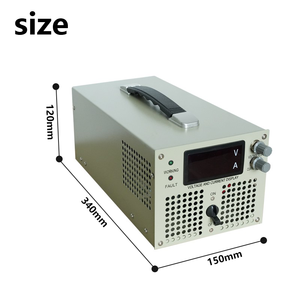
Whether you require standard switching power supplies, modified desktop adapters, high-voltage bench power sources, or custom medical/industrial power modules, our applications engineering team is ready to assist.