Explore our certified catalog of switching power supplies, desktop adapters, adjustable industrial power sources, and OEM printed circuit board assemblies (PCBA) engineered for high reliability.
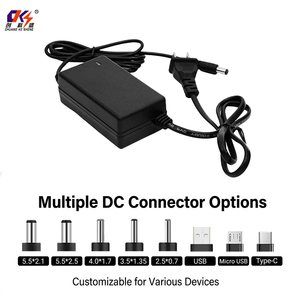
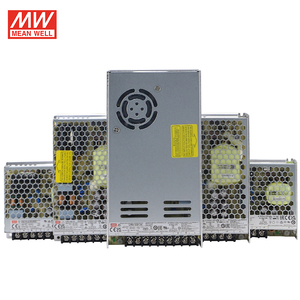
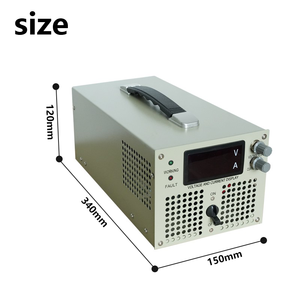
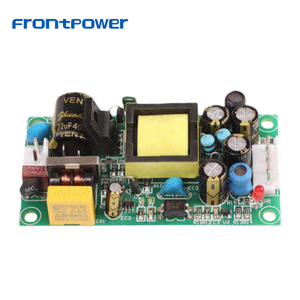
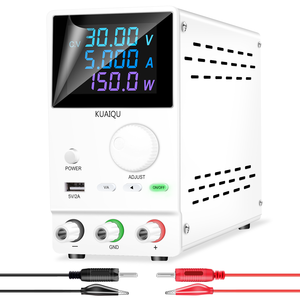
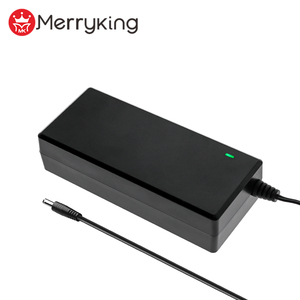
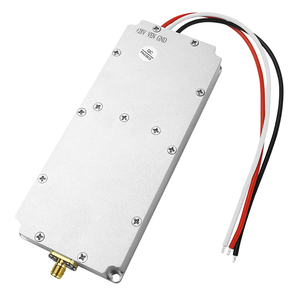
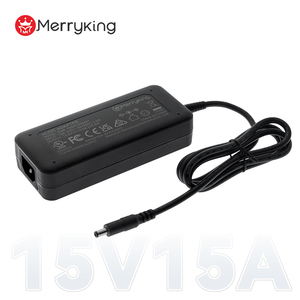
In modern electronic systems design, the AC-DC power supply is no longer merely a passive commodity component; it serves as the critical heartbeat of industrial machinery, medical diagnostics, semiconductor fabrication tools, and mission-critical communications networks. As global original equipment manufacturers (OEMs) demand higher power densities, strict electromagnetic compatibility (EMC), and enhanced energy efficiency, partnering with a qualified Custom OEM AC-DC Converter Factory becomes a fundamental strategic advantage.
With over six decades of heritage in custom power engineering, our manufacturing infrastructure combines deep topological research with complete quality system traceability. From single-output open-frame PCBAs delivering 24W to multi-kilowatt liquid-cooled power systems capable of generating 16.5kW in a 1U footprint (such as our flagship LiquaBlade™ architecture), our engineering teams solve complex power conversion challenges. We bridge the gap between initial system design, rigorous pre-compliance testing, and high-volume factory output.
Complete control over magnetic design, control loops, and printed circuit board layouts. We optimize flyback, LLC resonant, active PFC, and interleaved forward converter topologies specifically tuned for your load dynamics.
Direct integration of single-phase, three-phase Delta/WYE, and feed-thru EMI/EMC filters. Our internal labs ensure your finished system passes CISPR, FCC Part 15, and MIL-STD-461 limits without costly redesign loops.
Built under ISO 13485 quality systems to comply with IEC/EN 60601-1 3rd Edition (2×MOPP patient isolation) and SEMI F47 voltage sag immunity for sensitive semiconductor manufacturing environments.
The global power electronics market is undergoing a structural transition driven by electrification, industrial automation, AI-driven edge computing, and stringent environmental directives. Procurement officers and engineering directors must evaluate prospective power supply exporters not only on current bill-of-materials (BOM) cost, but on long-term technological alignment.
The transition from legacy Silicon MOSFETs to Gallium Nitride (GaN) and Silicon Carbide (SiC) switches represents the most significant shift in switching power supply design. GaN components allow switching frequencies to exceed 500 kHz to several megahertz, dramatically reducing the size of passive magnetic components (transformers and inductors).
Procurement Advantage: OEM buyers adopting GaN-based open-frame PCBAs and desktop adapters gain up to 40% reduction in spatial enclosure volume and achieved operating efficiencies exceeding 95%. This drastically minimizes waste heat and enables fanless, fully sealed IP67 enclosures.
As system density increases—particularly in kilowatt-class industrial switching supplies, high-power DC adjustable power units (1500W-2000W+), and semiconductor processing tool racks—forced-air fan cooling becomes a major point of system acoustic noise and mechanical failure. Fans pull dust, humidity, and corrosive contaminants into sensitive power electronics.
Future Sourcing Direction: Leading OEMs are transitioning to liquid-cooled AC-DC power supply architectures. Liquid cooling removes thermal energy directly at the cold-plate interface with exceptional efficiency, eliminating fan failure modes and making kilowatt power supplies suitable for cleanrooms, harsh industrial environments, and sealed defense chassis.
Analog-controlled power converters are rapidly giving way to Microchip and DSP-driven digital power architectures. Modern enterprise procurement contracts increasingly mandate digitally programmable output voltage ramps, dynamic active current sharing, and telemetry protocols such as PMBus or CANbus.
System Reliability Benefit: Smart AC-DC power supplies enable predictive maintenance by reporting internal thermal conditions, input line voltage sags, ripple parameters, and output current consumption directly to the central system host.
When evaluating an OEM power adapter or industrial switching supply manufacturer, engineering teams must look beyond nominal voltage and current ratings. A complete technical evaluation requires analyzing thermal derating curves, safety agency insulation parameters, and electromagnetic interference mitigation.
Detailed technical insights provided by our senior applications engineering team.
Selecting a medical-grade power supply begins with establishing the precise load profile, including continuous baseline wattages and transient peak power demands. Next, verify the exact isolation and risk classification required under IEC/EN 60601-1 3rd Edition. Equipment with direct patient contact requires 2×MOPP (Means of Patient Protection) isolation (4,000 VAC isolation voltage and 8mm creepage distance).
Furthermore, electromagnetic compatibility must align with IEC 60601-1-2 4th Edition immunity standards, keeping earth leakage current below 300 µA (or under 100 µA for patient-adjacent devices). Mechanical enclosure design, thermal dissipation pathway, and expected service life should be vetted prior to pre-compliance testing.
A Delta filter topology is specifically engineered for three-wire three-phase electrical systems operating without a distributed neutral wire. In contrast, a WYE filter is designed for four-wire three-phase systems carrying a dedicated neutral line.
The WYE filter includes components rated for line-to-neutral noise attenuation as well as line-to-line filtering. Applying a Delta filter on a system with a neutral connection leaves line-to-neutral common-mode noise unattenuated, frequently resulting in failed conducted emissions testing at regulatory labs.
Liquid cooling provides significantly higher thermal transfer coefficients than forced air cooling. This allows power design engineers to shrink the overall envelope size of kilowatt-class power supplies into ultra-dense Form factors (such as 16.5kW in a 1U rack profile).
Liquid cooling completely removes the need for high-RPM internal fans, eliminating mechanical noise and moving-part wear. It prevents environmental dust and airborne chemical contaminants from depositing on internal high-voltage components—making it the ideal thermal management choice for cleanroom semiconductor tools, sealed military equipment, and harsh chemical processing plants.
Our manufacturing facility supports both modified-standard platforms and full ground-up custom design programs. Modified standard power supplies allow customers to adjust output voltage trims, customize wire harnesses and connector pinouts, add protective conformal coatings, or modify mounting chassis brackets—drastically shortening safety agency re-certification timelines and engineering NRE costs.
For specialized applications, our R&D teams execute complete ground-up developments including custom transformer winding, proprietary digital firmware, custom PCBA mechanical shapes, and integrated power distribution units (PDUs).
SEMI F47 is an international semiconductor industry standard specifying minimum voltage sag immunity requirements for equipment used in fab facilities. The standard mandates that electrical equipment must ride through defined line voltage sags (e.g., dropping to 50% of nominal voltage for up to 200 milliseconds) without interrupting continuous regulated DC output.
Power supplies with verified SEMI F47 compliance utilize enlarged high-voltage bulk hold-up capacitors and dynamic feedback loops to prevent tool process aborts, keeping expensive wafer production lines running continuously during utility power fluctuations.
Whether you require high-volume production of standard desktop power adapters, custom open-frame PCBAs, or heavy industrial 2000W adjustable switching power supplies, our engineering team is ready to consult on your application.
Inquire Now