Engineered to conform with global safety, IEC 60601-1, MIL-STD-461, and SEMI F47 standards. Select a unit below for customized OEM/ODM modifications.
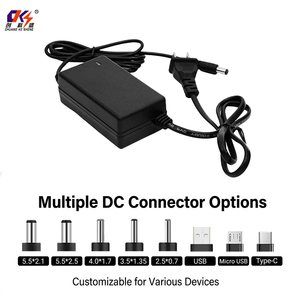
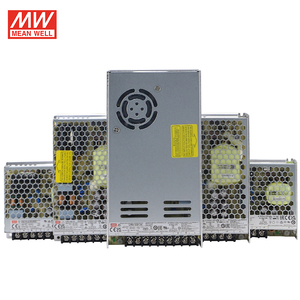
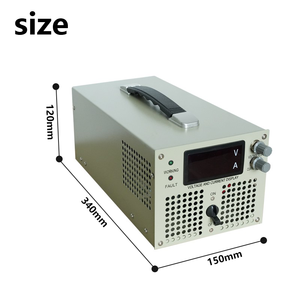
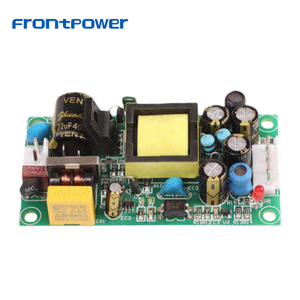
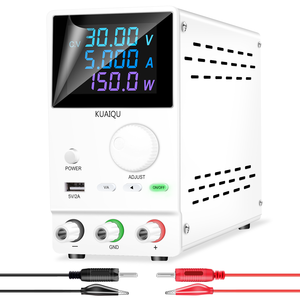
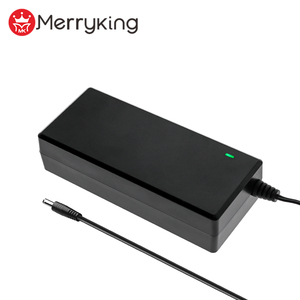
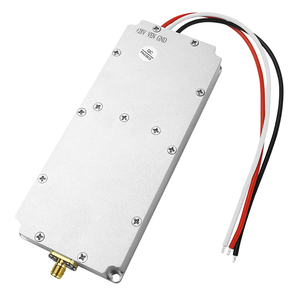
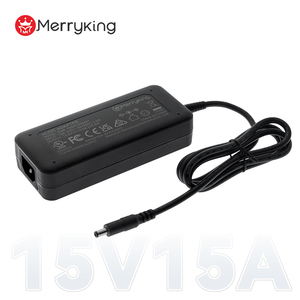
An engineering deep-dive into three-phase Delta EMI/EMC filter design, conducted noise suppression mechanisms, and modern power architecture integration for global OEMs.
In modern industrial electrification, semiconductor processing tools, renewable energy inverters, and heavy automation machinery, electromagnetic compatibility (EMC) is a primary operational prerequisite. As high-speed pulse-width modulation (PWM) switching devices—such as Silicon Carbide (SiC) and Gallium Nitride (GaN) MOSFETs—operate at elevated switching frequencies and steep $dv/dt$ voltage gradients, they inadvertently inject intense conducted electromagnetic interference (EMI) back into the AC mains line.
To mitigate high-frequency noise and safeguard system reliability, electromagnetic compatibility engineers rely heavily on targeted filter topologies. Among these, 3-Phase Delta EMI Filters serve as the foundation for 3-wire high-power industrial installations lacking a distributed neutral line. Selecting, designing, and customizing an OEM Delta filter requires a fundamental understanding of network topology, magnetic saturation thresholds, leakage current bounds, and safety isolation classes.
Engineered exclusively for 3-wire systems (L1, L2, L3) without a neutral conductor. Delta filters focus filtering energy line-to-line and line-to-ground, delivering optimal attenuation for heavy motor drives, pumps, and industrial power supplies.
Combines high-permeability nanocrystalline common-mode chokes with precision line-to-line X-capacitors. Neutralizes both symmetrical differential-mode transients and asymmetrical common-mode noise across broad spectrums (150kHz to 30MHz).
Custom OEM housing options including compact chassis-mounts, book-style DIN rail packages, liquid-cooled cold plates, and epoxy-encapsulated IP67 ruggedized formats tailored to harsh operating envelopes.
A critical initial step for OEM system architects is selecting between a 3-Phase Delta (3-wire) and 3-Phase WYE (4-wire) filter configuration. The table below highlights key functional, electrical, and structural differences:
| Electrical Specification | 3-Phase Delta EMI Filter | 3-Phase WYE EMI Filter |
|---|---|---|
| Wiring Configuration | 3-Wire Input (Phase-to-Phase: L1, L2, L3) | 4-Wire Input (Phase-to-Neutral: L1, L2, L3 + N) |
| Neutral Conductor | No Distributed Neutral Required | Neutral Line Active & Filtered |
| Primary Application | Variable Frequency Drives (VFDs), Motors, Inverters | Distributed Load Systems, Commercial Hubs, 4-Wire Grids |
| Filtering Components | Line-to-Line (X-Caps) + Line-to-Ground (Y-Caps) | Line-to-Neutral, Line-to-Line, Neutral-to-Ground |
| Leakage Current Profile | Controlled via Earth Y-Capacitance balance | Requires neutral current handling and balancing |
| Typical Voltage Ratings | 480VAC, 520VAC, 600VAC, 690VAC Delta | 277/480VAC, 120/208VAC WYE |
Discover how material science, advanced thermal management, and dynamic grid standards are shaping the next generation of custom filter manufacturing.
Traditional ferrite cores often experience magnetic saturation under heavy continuous current and elevated operational temperatures. Modern custom OEM Delta filter manufacturers are transitioning toward ultra-fine amorphous and nanocrystalline core matrices. These materials offer significantly higher saturation flux density ($B_s \approx 1.2\text{ T}$) and elevated complex permeability over broad thermal ranges, allowing OEM filters to achieve superior common-mode attenuation in a physical chassis that is up to 40% smaller.
For kilowatt-class applications in cleanroom semiconductor fabrication plants, medical MRI rooms, and naval military bays, forced-air fan cooling introduces unacceptable acoustic noise, vibration, and particulate contamination. Advanced OEM power and filter platforms, such as liquid-cooled 16.5kW 1U systems, utilize closed-loop liquid cold-plates directly coupled to heavy choke coils and power semiconductors. This approach dramatically lowers thermal resistance, allowing ultra-high power density without reliance on ambient air movement.
While passive LC filter networks remain the gold standard for high-energy surge handling and baseline attenuation, hybrid designs incorporating Active EMI Filtering (AEF) are emerging. AEF circuits actively sense conducted noise currents on the line and inject an opposing phase-inverted current. This active cancellation significantly reduces the required physical magnitude of passive inductor chokes and capacitors, allowing custom OEMs to fit heavy 3-phase filtering into tight 1U and 2U rack enclosures.
Global regulatory frameworks are imposing strict immunity requirements beyond basic emissions reduction. Semiconductor tool power systems must strictly conform to SEMI F47 voltage sag tolerance standard—riding through short-duration AC voltage sags without tool interruption. Simultaneously, medical equipment demands compliance with IEC 60601-1 3rd Edition (2×MOPP Means of Patient Protection) and 4th Edition EMC immunity, requiring customized low-leakage Delta and isolation filter networks.
Strategic insights for engineering managers, procurement officers, and system integrators seeking resilient OEM filter manufacturing partnerships.
As global supply chains navigate geopolitical shifts, raw material fluctuations, and compressed time-to-market cycles, the procurement of critical electrical components—specifically custom power supplies and 3-phase Delta EMI filters—has evolved from simple component purchasing into strategic engineering co-development.
Waiting until final system validation to resolve EMI/EMC compliance often results in costly board redesigns and delayed launch schedules. Procurement teams are now partnering with custom filter manufacturers early in the design cycle. Accessing in-house pre-compliance testing facilities allows OEMs to simulate conducted emissions under real load profiles before freezing mechanical designs.
While ground-up custom engineering offers total tailoring, modifying an established, pre-certified standard filter or power platform provides a faster path to production. Sourcing strategies increasingly focus on vendors capable of modifying terminal blocks, potting compounds, enclosure brackets, and Y-capacitance values on validated baseline platforms.
Mission-critical industries require rigorous traceability. Enterprise buyers prioritize filter manufacturers possessing dual ISO 9001:2015 and ISO 13485 (Medical Devices) quality certifications. Dual certification ensures standardized manufacturing protocols, rigid change-control management (PCN/EOL), and 100% automated functional testing across all production lots.
Over 60 years of vertical integration, custom magnetic design authority, and rigorous compliance testing.
We do not simply assemble off-the-shelf components. Our engineers design and wind custom common-mode chokes, differential inductors, and isolation transformers in-house, optimizing permeability and thermal dissipation to match exact electrical requirements.
Every single power adapter, industrial SMPS, and 3-phase Delta filter undergoes full automated functional testing, high-potential (Hi-Pot) dielectric insulation testing, and thermal burn-in prior to packaging, ensuring zero-defect delivery.
We understand that enterprise product lifecycles span decades. We maintain strict engineering change notifications (ECN) and guarantee long-term form-fit-function availability, preventing unexpected re-qualification burdens for your end systems.
Direct answers from our senior application engineering group to help simplify your OEM filtering and power selection process.
A Delta filter is specifically designed for 3-wire three-phase electrical systems where no distributed neutral conductor is present (L1, L2, L3 + Earth). Its internal capacitors are primarily arranged line-to-line and line-to-ground. A WYE filter is engineered for 4-wire systems containing a neutral line (L1, L2, L3, Neutral + Earth), incorporating neutral-line attenuation components. Installing a Delta filter on a WYE system (or vice versa) can leave common-mode noise unattenuated and potentially trigger high leakage currents or safety compliance failures during EMC testing.
Most of our standard baseline platforms carry existing UL/cUL, IEC, and CE safety marks. When performing minor modifications—such as custom wire harness lengths, specialized enclosure mounting flanges, or alternate potting compounds—we can often extend existing agency family approvals under modified file extensions. For full ground-up custom designs, our engineering team manages the complete submission process with regulatory bodies, utilizing our pre-compliance test data to accelerate final certification.
Leakage current is predominantly driven by the Y-capacitors connected between active phase lines and protective earth ground. In industrial applications, higher Y-capacitance values are often used to maximize high-frequency common-mode noise reduction. However, in medical applications governed by IEC 60601-1 (2×MOPP), ground leakage current must be strictly limited to micro-ampere $(\mu\text{A})$ levels to ensure patient safety. Our custom OEM capabilities allow us to tune Y-capacitor values and optimize choke inductance to achieve maximum EMI attenuation while strictly adhering to your target system's leakage current budget.
Liquid cooling removes heat significantly more efficiently than air ($24\times$ thermal conductivity ratio). This enables ultra-high power density—such as delivering 16.5kW of regulated power in a compact 1U enclosure. Additionally, liquid cooling eliminates fan noise, prevents airborne dust intake in cleanrooms or semiconductor fabs, and allows equipment to operate in completely sealed IP65/IP67 enclosures exposed to harsh ambient environments.
To provide an optimized proposal, our applications team typically evaluates: (1) Operating AC Line Voltage & Frequency, (2) Rated Continuous & Peak Current per Phase, (3) System Wiring Topology (3-Wire Delta vs. 4-Wire WYE), (4) Target EMC Standards (e.g., CISPR 11/32 Class A or B, MIL-STD-461), (5) Allowable Maximum Leakage Current, (6) Mechanical Envelope & Cooling Constraints, and (7) Required Termination Types (Studs, Touch-Safe Blocks, Wire Leads).
Speak directly with our senior application engineers. We provide full technical architecture reviews, customized prototyping, and rapid pre-compliance verification for your project.
Send an Inquiry