Designed to comply with rigorous IEC 60945, DNV GL, and ABS marine standards. Our OEM/ODM platforms provide ruggedized electrical stability, extended thermal operational ranges, and military-grade EMI suppression.
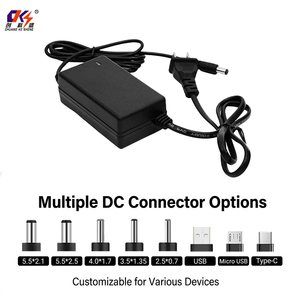
Rugged desktop switching adapter engineered for shipboard CCTV surveillance, sensor clusters, and auxiliary bridge electronics with universal US/EU/UK/AR plug compatibility.
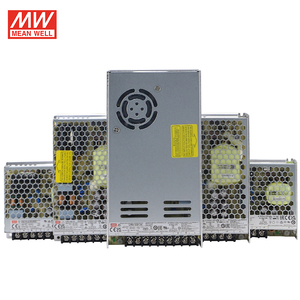
Industrial switching power supplies built for high-vibration marine control panels, engine room telemetry, and distributed propulsion bus networks up to 60A capacity.
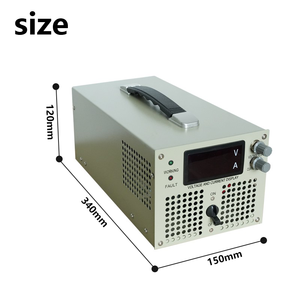
Adjustable single-output high-voltage power source designed for electric vessel drives, bow thruster testing, sonar array transmitters, and integrated overcurrent protection.
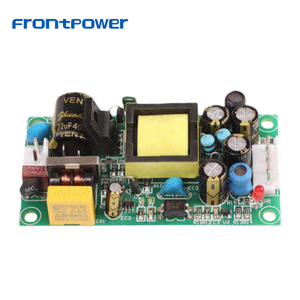
Custom engineered open-frame board-level AC/DC converters (12V/15V/24V/48V) tailored for space-constrained navigation displays and underwater acoustic instruments.
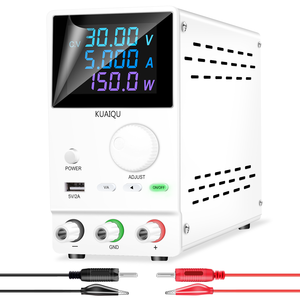
Precision-regulated benchtop power supply providing stable DC voltage (30V/60V/120V) for onboard maintenance workshops, radar calibration, and marine system testing.
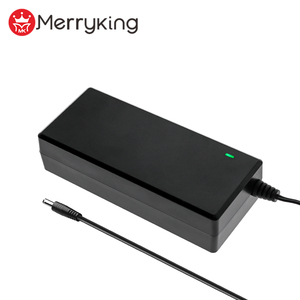
High-wattage desktop power converter supplying continuous clean power to marine communication consoles, satellite receivers, and commercial vessel computing systems.
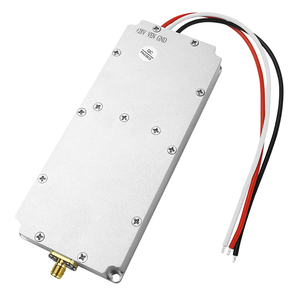
Naval-spec 24V/28V DC power conversion system built for emergency power switching, winch control systems, and steering actuators with superior surge protection.
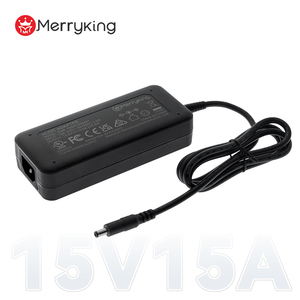
Versatile desktop power conversion platform delivering stable outputs (12V-48V up to 15A) for bridge navigational displays, ECDIS systems, and marine radios.
Modern vessel electrification, naval combat automation, and offshore marine operations demand power conversion architectures capable of operating flawlessly under severe environmental, electrical, and mechanical stresses.
As an established Custom OEM Marine Power Manufacturer and Engineering Supplier, our company solves the complex challenges of marine power electronics. Deploying power supplies in maritime environments presents unique failure modes not encountered in standard industrial applications. Saline mist, continuous mechanical vibration from diesel engines, wide ambient temperature swings, and dirty line voltage generated by shipboard generators necessitate a ground-up engineering approach.
Whether integrated into autonomous underwater vehicles (AUVs), surface naval platforms, or commercial cargo vessels, marine OEM power units must be architected around four core design pillars:
The maritime industry is undergoing an unprecedented energy transition toward hybrid-electric propulsion, autonomous navigation systems, and high-density DC microgrids.
Transitioning from traditional Silicon MOSFETs to Silicon Carbide (SiC) and Gallium Nitride (GaN) switching devices allows marine power converters to operate at higher switching frequencies (>500 kHz). This drastically shrinks magnetic component sizes, reduces thermal losses by up to 40%, and enables 1U kilowatt-class high-density rack power.
Modern commercial vessels are migrating from traditional AC distribution to 350V–800V DC bus architectures. This eliminates heavy low-frequency transformers, optimizes engine generator speeds, and requires high-efficiency bidirectional DC/DC converters capable of managing energy storage battery banks.
To completely protect electronics from corrosive sea air, next-generation power supplies are fully sealed within IP67 liquid-cooled cold plates. Utilizing water-glycol or dielectric fluid loops, heat is rejected directly to the sea-water heat exchanger, eliminating fan maintenance completely.
Integrating PMBus™, CANbus (NMEA 2000 compliant), and MODBUS digital communication protocols into power supplies enables real-time monitoring of internal temperatures, input voltage degradation, ripple currents, and operating hours—predicting capacitor end-of-life before hardware failure occurs at sea.
Zero-downtime mission requirements for naval defense and dynamic positioning systems (DP3) require modular power bays. Internal active OR-ing Diodes/FETs allow hot-swapping failed power modules while the underlying system continues operating seamlessly.
Non-linear loads on shipboard microgrids introduce harmonic distortion that degrades power quality across the entire vessel. Advanced Active Power Factor Correction (APFC) circuits ensure THD < 5%, preserving generator health and preventing interference with acoustic hydrophones.
Procurement leaders facing global supply chain volatility and stringent maritime classification demands must evolve their sourcing strategies.
Selecting a power supply partner for marine applications goes far beyond evaluating initial unit cost. Equipment downtime on commercial container vessels or naval ships can incur costs exceeding tens of thousands of dollars per hour. Consequently, global marine OEMs are consolidating supply chains around manufacturers that offer comprehensive engineering support and long-term component availability guarantees.
| Procurement Metric | Standard Industrial Supply | Custom Marine OEM Platform | System Advantage |
|---|---|---|---|
| Operating Temp Range | -10°C to +50°C | -40°C to +85°C Conduction | Reliable cold-start & high engine-room heat survival. |
| Humidity & Salt Spray | Basic Dust Cover | Conformal Coated / Encapsulated | Eliminates short-circuit risks from salt condensation. |
| Vibration Standard | Minimal IEC 60068 | MIL-STD-810G / IEC 60945 | Prevents physical component shear under sea heave. |
| Marine Certifications | UL 62368-1 Only | DNV GL, ABS, Lloyd’s Register | Accelerates end-system vessel classification approval. |
| Lifecycle Continuity | 2-3 Year EOL Cycle | 10 to 15+ Year Guaranteed Supply | Eliminates costly platform re-design & re-testing. |
Total Cost of Ownership (TCO) Optimization: Leading marine OEMs are actively transitioning from off-the-shelf modified adapters to dedicated custom PCBA and modular power subsystems. Designing a customized power chassis that integrates EMI filtering, power distribution (PDU features), and auxiliary backup charging into a single enclosure lowers overall bill-of-materials (BOM) cost, reduces cabling harness weight, and dramatically streamlines shipyard assembly time.
Leveraging over 60 years of heritage (since 1959), our design authority, in-house magnetics engineering, and vertical manufacturing deliver unmatched reliability for high-reliability military, medical, and marine OEMs worldwide.
We design and wind our own planar transformers, high-frequency inductors, and EMI chokes. This guarantees optimal thermal coupling, custom isolation barriers, and rapid prototyping without relying on third-party magnetic suppliers.
With deep expertise in single-phase, three-phase Delta/WYE, and Tempest EMI filtering, we integrate pre-engineered filter stages directly into your power supply—ensuring first-pass compliance at maritime EMC test facilities.
Proven ride-through technologies developed for critical semiconductor tools are applied to our marine lines, protecting equipment against severe generator voltage dips during heavy electric motor startups.
Detailed technical insights addressing common queries during the OEM marine power specification process.
Marine power supplies typically require compliance with IEC 60945 (Maritime navigation and radiocommunication equipment and systems), which mandates strict environmental testing (corrosive salt mist, shock, vibration) and stringent EMC conducted and radiated emission limits. Furthermore, equipment installed on commercial vessels must meet classification society rules such as DNV GL, ABS (American Bureau of Shipping), Lloyd's Register, and Bureau Veritas. Naval defense applications often specify MIL-STD-1399 Section 300 (Interface standard for shipboard systems) and MIL-STD-461 for electromagnetic compatibility.
Galvanic isolation physically separates the input power source from the sensitive output load using transformer coupling. On vessels with aluminum or steel hulls, ground loops and stray DC leakage currents can cause accelerated hull electrolysis (galvanic corrosion). High galvanic isolation (typically 3000V AC to 4000V AC isolation ratings with reinforced insulation) protects downstream microprocessor electronics, prevents stray currents into the sea water, and protects operators from electric shock.
Forced-air cooling fans draw ambient air across exposed components. In marine environments, this air carries conductive salt moisture, oil droplets, and high humidity, leading to rapid component degradation, fan bearing failure, and premature dust buildup. Conduction-cooled power supplies dissipate heat through a heavy aluminum cold plate bolted directly to a thermal chassis wall or cold plate. This allows the electronic assembly to be completely sealed in an IP65/IP67 enclosure, eliminating moving parts and extending mean time between failures (MTBF > 500,000 hours).
While modified industrial power supplies may offer lower initial unit costs, they frequently fail long-term marine qualification. Standard industrial units lack tropicalized conformal coating, heavy magnetics staking, active power factor correction tailored for floating generators, and high surge suppression (TVSS) required to survive heavy inductive load dumping on marine electrical grids. Utilizing custom or modified-standard marine platforms eliminates early warranty claims and high field service costs.
Our engineering team offers extensive modification capability ranging from minor adjustments—such as custom wire harnesses, IP67 circular marine connectors (e.g., Amphenol/M12), modified output voltage rails (e.g., 28V DC military standard or adjustable 12V-600V high voltage)—to ground-up custom PCBA development and ruggedized metal enclosures engineered to fit unique vessel mechanical footprints.
A typical custom program begins with an initial engineer-to-engineer technical requirements review (evaluating thermal envelope, electrical input/output spec, EMI targets, and mechanical mounting). Initial mechanical models and functional prototype samples are typically delivered within 6 to 12 weeks. Following customer evaluation and pre-compliance testing, full production ramp and long-life product support (with strict engineering change control / ECN management) are established.
Collaborate directly with our senior applications engineering team. We review your thermal, electrical, and compliance specifications to deliver high-reliability marine power solutions engineered to perform under extreme maritime conditions.
