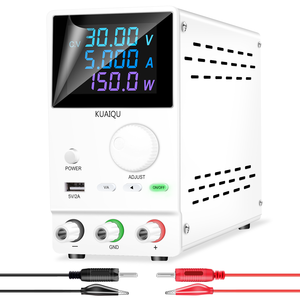
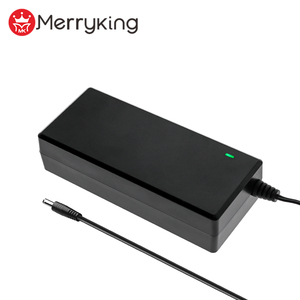
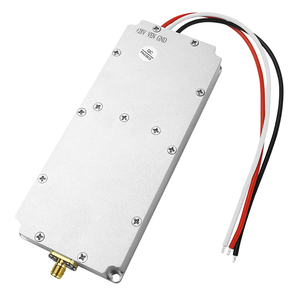
Explore our export-grade medical UPS sub-assemblies, desktop medical power adapters, adjustable bench sources, and DIN-rail switching modules designed for global healthcare OEMs.
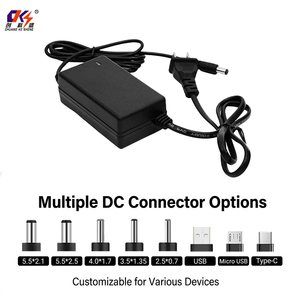
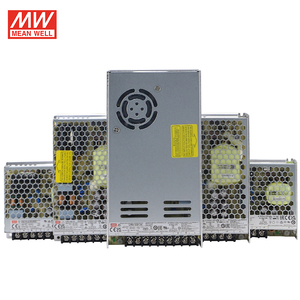
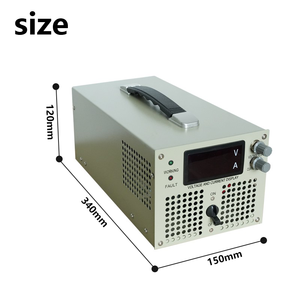
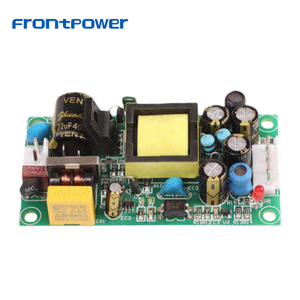
In critical healthcare settings—ranging from intensive care units (ICUs) and surgical suites to mobile point-of-care diagnostics and telemedicine carts—uninterrupted power delivery is a mandatory patient safety requirement. Medical Grade Uninterruptible Power Supply (UPS) platforms operate under stringent safety frameworks distinct from standard commercial IT backup power.
As a leading OEM Medical UPS Factory and Exporters with over six decades of custom power design authority, our engineering teams build isolation-certified, zero-transfer, high-power-density medical backup systems. Standard off-the-shelf UPS solutions fail to meet IEC 60601-1 3rd/4th Edition requirements due to high earth leakage currents, insufficient dielectric isolation, and inadequate electromagnetic immunity under IEC 60601-1-2.
Our custom OEM/ODM solutions integrate toroidal isolation transformers, smart LiFePO4 battery management systems (BMS), pure sine wave inverters, and dual Means of Patient Protection (2xMOPP) insulation barriers to guarantee continuous uptime for mission-critical medical capital equipment.
From initial topological simulation and magnetic winding design to pre-compliance EMC testing and ISO 13485 certified mass assembly, our factory provides complete design-to-delivery ownership.
We modify mechanical enclosures, connector pinouts, thermal heat sinks, and PCB layouts to fit tightly into medical carts, diagnostic imaging gantries, or rackmount shelters without forcing OEM chassis redesigns.
Our manufacturing facilities adhere to strict medical risk management protocols under ISO 14971. Every exported lot undergoes 100% automated end-of-line functional testing, high-pot isolation checks, and dynamic load burn-in.
Incorporating extended hold-up times and fast voltage sag ride-through topologies, our power platforms prevent system aborts during short-duration line dips common in demanding clinical electrical grids.
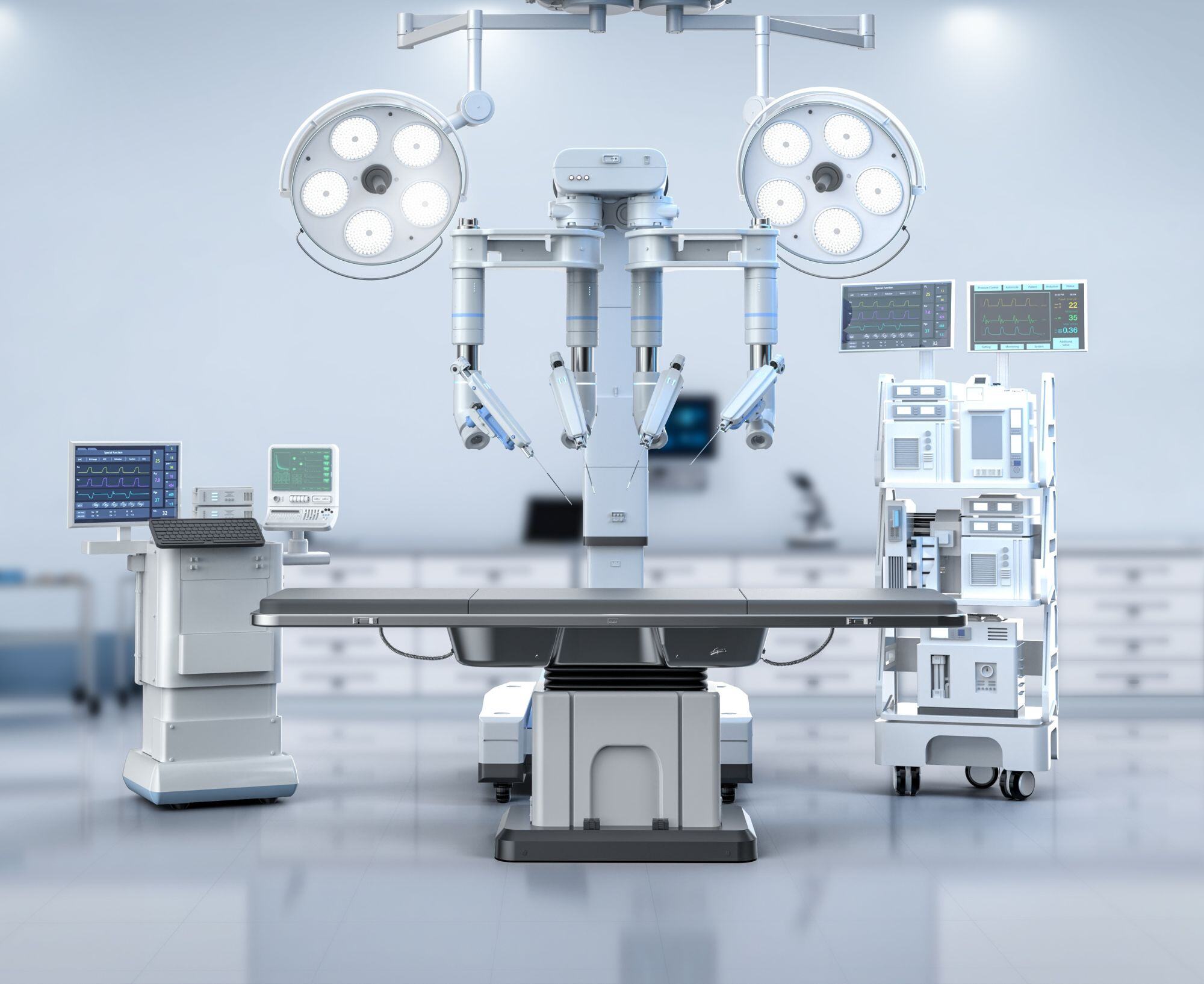
Medical system failure at clinical sites often stems from sub-optimal interaction between the power supply, backup battery, and EMI filter. Our OEM manufacturing process evaluates system-level electrical dynamics before final tooling.
An in-depth whitepaper analysis of regulatory evolutions, battery chemistry shifts, and architecture demands transforming global medical device manufacturing over the next decade.
Traditional Sealed Lead-Acid (SLA) batteries are being rapidly replaced by Lithium Iron Phosphate (LiFePO4) chemistry in clinical UPS systems. LiFePO4 offers 3x longer cycle life (>3500 cycles), 60% reduction in weight for workstation carts, and zero risk of toxic gas venting during thermal events.
Procurement teams are prioritizing single-part-number global platforms. Medical device exporters require power units pre-certified for UL 60601-1 (North America), EN 60601-1 (Europe), PSE (Japan), CCC (China), and CE/UKCA marking, with universal 85V-264V AC input capability.
Next-generation clinical UPS systems require integrated microcontrollers that calculate real-time State of Charge (SoC), State of Health (SoH), and remaining runtime. Cloud-connected medical carts relay battery diagnostics via RS485/CANbus to prevent sudden shutdown during procedures.
Procurement officers must evaluate these critical electrical parameters when specifying backup power systems for medical device applications:
| Performance Parameter | Standard IT / Commercial UPS | OEM Medical Isolation UPS | Clinical Advantage |
|---|---|---|---|
| Safety Standard Framework | UL 1778 / IEC 62368-1 | IEC 60601-1 3rd/4th Ed. | Ensures patient & operator safety compliance |
| Galvanic Isolation Class | Basic Operational Isolation | 2xMOPP Reinforced (4kV AC) | Protects patient from high-voltage AC flashover |
| Earth Leakage Current | > 1500 μA (High) | < 100 μA (Ultra-Low) | Prevents micro-shock in cardiac/applied parts |
| Inverter Transfer Time | 4ms - 10ms (Line Interactive) | 0 ms (Online Double Conversion) | Zero data loss or power reboot on critical gear |
| Battery Technology | Standard SLA (Lead-Acid) | Smart LiFePO4 with BMS | 3x lifespan, 60% weight saving for mobile carts |
| EMC / Immunity Rating | CISPR 32 Class A / B | IEC 60601-1-2 4th Edition | Prevents RF disruption to surgical lasers/ECGs |
By partnering with a dedicated factory exporter experienced in custom medical power topologies, OEMs cut certification lead times by up to 40%. Utilizing pre-qualified 2xMOPP sub-assemblies and modular isolation power bricks simplifies late-stage FDA 510(k) and EU MDR technical file submissions.
Designing a medical device is a multi-year investment. Our engineering and manufacturing ecosystem is built to support your platform across its entire multi-decade production lifecycle.
We engineer our own toroidal isolation transformers and common-mode chokes to optimize thermal efficiency and minimize stray magnetic field emission near patient screens.
We enforce formal Engineering Change Order (ECO) protocols, guaranteeing component longevity and protection against unannounced bill-of-materials changes for 10+ years.
Our factory labs feature in-house EMI darkrooms, thermal chambers, surge impulse generators, and isolation testers to resolve compliance hurdles prior to third-party lab audits.
.jpg)
Practical technical guidance addressing isolation specifications, compliance protocols, and battery management integration.
Under IEC 60601-1, MOPP stands for Means of Patient Protection. 1xMOPP provides basic insulation (2000VAC isolation voltage and 4mm creepage distance), whereas 2xMOPP provides double or reinforced insulation (4000VAC isolation voltage and 8mm creepage distance). Equipment intended for direct patient contact or used inside the patient environment generally requires 2xMOPP isolation between primary AC mains and secondary output lines to prevent lethal electric shock during a single fault condition.
Standard commercial UPS units utilize high-capacitance Y-capacitors connected to ground to filter EMI, which causes leakage currents exceeding 1000μA. Our OEM medical UPS designs utilize low-capacitance custom toroidal isolation transformers, split-bobbin winding geometries, and specialized differential-mode filter topologies. This engineering approach attenuates conducted noise while suppressing touch and earth leakage currents to <100μA, fulfilling Type BF and CF medical equipment safety limits.
Line-interactive UPS topologies require 4 to 10 milliseconds to detect AC line failure and engage the inverter. In surgical robotics, ventilator controllers, or sensitive imaging equipment, even a 4ms voltage drop can cause micro-controller resets, system lockups, or data corruption. True Online Double Conversion continuously converts incoming AC to DC, then back to pristine pure sine wave AC, providing zero transfer time (0 ms) during power anomalies.
We supply both classic Sealed Lead-Acid (SLA/VRLA) and advanced Lithium Iron Phosphate (LiFePO4) battery packs. LiFePO4 is heavily favored for modern mobile medical carts due to its high power density, 3000+ cycle lifespan, lightweight design, and rapid recharge capability. All lithium battery assemblies include an integrated Smart BMS that manages cell balancing, over-charge, over-discharge, and thermal cutoffs in compliance with UN 38.3 transport safety testing.
Yes. As a direct OEM factory exporter, we offer end-to-end mechanical customization. Whether you require an open-frame PCBA sub-assembly, a 1U/2U/3U rackmount enclosure, a internal sheet-metal modular brick, or a fully sealed IP54 mobile cart chassis, our mechanical engineering team designs custom housings complete with tailored cable harnesses, mounting brackets, and branded silkscreening.
Every custom medical UPS order is accompanied by comprehensive engineering compliance documentation. This includes CB Scheme test reports, UL/cUL authorization certificates, CE/UKCA declarations of conformity, IEC 60601-1 safety reports, IEC 60601-1-2 4th edition EMC test data, RoHS/REACH compliance statements, and ISO 13485 quality inspection records to facilitate seamless regulatory clearing.
