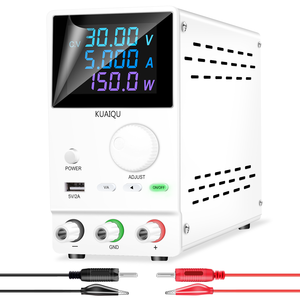
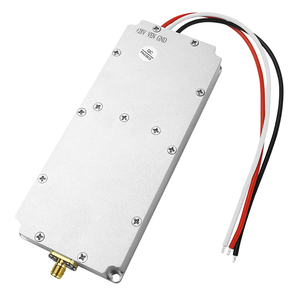
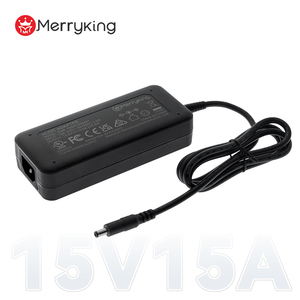
Explore our optimized selection of switching power supplies, custom PCBA units, industrial converters, and desktop adapters built for stringent EMC and power conversion standards.
In modern power electronics design, conventional wire-wound transformers increasingly present severe physical and electrical bottlenecks. As switching frequencies push beyond 100 kHz into the megahertz spectrum—fueled by Gallium Nitride (GaN) and Silicon Carbide (SiC) semiconductors—standard copper-wire magnetics suffer from significant proximity effect, skin effect losses, uneven thermal gradients, and uncontrollable leakage inductance.
Custom OEM planar transformers replace traditional round-wire bobbins with flat copper foil traces or multi-layer printed circuit boards (PCBs) paired with low-profile planar ferrite cores (such as E/I, PQ, and RM planar geometries). This fundamental structural revolution delivers unparalleled volumetric power density, repeatable parasitics, automated manufacturing capability, and thermal performance superior to any traditional magnetic architecture.
Key Design Fact: By utilizing planar copper traces with automated layer stacking, planar transformers achieve a thermal contact area up to 500% larger than conventional magnetics. This translates to power densities exceeding 100 Watts per cubic inch and thermal resistance reductions of up to 50%.
Planar PCB constructions allow precise interleaved primary and secondary turns. Interleaving drops leakage inductance to less than 0.1% of primary inductance, virtually eliminating high-voltage turn-off spikes across primary MOSFETs.
Flat planar ferrite cores present a massive surface-area-to-volume ratio. Heat generated within PCB trace windings is conducted efficiently to heatsinks, cold plates, or liquid-cooled chassis blocks.
Because windings are defined photolithographically on FR4, Polyimide, or Rogers substrates, winding capacitance and leakage inductance exhibit sub-1% unit-to-unit variance, simplifying EMI filter design.
Building upon a 60-year heritage of mission-critical power system development (including medical-grade isolation, semiconductor capital equipment power, and defense platforms), our global planar transformer manufacturing factories offer end-to-end custom engineering support. We bridge the gap between initial simulation and mass production qualification.
| Engineering Parameter | Conventional Wire-Wound Transformer | Custom OEM Planar Transformer | OEM Application Advantage |
|---|---|---|---|
| Power Density | 20 – 40 W/in³ | 80 – 125+ W/in³ | Enables 1U high rackmount & ultra-slim medical devices. |
| Height Profile | 25mm – 75mm+ | 6mm – 18mm | Fits tightly into space-constrained enclosures & vehicles. |
| Coupling Coefficient (K) | 0.95 – 0.98 | 0.99 – 0.999 | Maximizes power transfer efficiency up to 99.2%. |
| Thermal Resistance (Rth) | High (Hotspot trapped in bobbin core) | Extremely Low (Direct core-to-chassis contact) | Compatible with conduction and liquid-cooling plates. |
| Parasitic Reproducibility | Variable (Dependent on manual coil winding) | 100% Repeatable (Photolithographic PCB) | Eliminates manual tuning in high-volume assembly lines. |
| High Frequency Limit | 50 kHz – 200 kHz | 100 kHz – 3.0 MHz | Fully utilizes fast-switching GaN & SiC power topologies. |
Every planar magnetic assembly manufactured across our certified factories undergoes rigorous functional and environmental validation under rigorous Quality Management Systems:
As power electronics transition toward higher energy efficiency standards and carbon-neutral targets, planar transformers are undergoing radical technological evolutions. Sourcing managers and hardware architects must align with factories capable of integrating these advancements:
Next-generation switching converters operate at frequencies exceeding 1MHz. Future planar transformers integrate power semiconductors directly onto the magnetics substrate (Embedded PCB Magnetics), drastically reducing loop inductance and gate driver noise.
To support multi-kilowatt server racks (e.g., 16.5kW 1U liquid-cooled platforms like LiquaBlade™), planar cores are encapsulated with ultra-high thermal conductivity ceramics (AlN, Si3N4 potting), interfacing directly with liquid chill plates.
Rather than concentrating high power into a single bulky core, modern designs split total power into distributed matrix planar transformers connected in parallel or series. This distributes thermal stress and achieves ultra-flat profiles below 8mm.
Procuring high-frequency planar transformers requires a shift from purchasing off-the-shelf catalog parts to establishing strategic engineering-to-engineering (E2E) co-development partnerships. Key market dynamics shaping OEM procurement include:
To reduce regulatory tooling costs and accelerate time-to-market, procurement teams favor suppliers who maintain pre-qualified planar magnetic platforms. By customizing only the internal PCB winding stackup while preserving standard planar core tooling, OEMs cut prototype turnarounds from 16 weeks to under 3 weeks.
While planar transformers may present a slightly higher initial component price than basic wire-wound units, their automated manufacturing eliminates labor-intensive manual coil winding. Furthermore, their 99%+ efficiency significantly reduces energy costs, cooling system footprint, and warranty claims over a 10-year product lifecycle.
Geopolitical challenges and trade tariffs require planar transformer suppliers to maintain redundant production facilities across North America, Europe, and Southeast Asia. Tier-1 buyers require audited supply continuity for ferrite raw materials, copper foil laminates, and high-temp insulating films (Kapton/Mylar).
Deep-dive engineering answers provided by our senior magnetics design team to assist procurement managers and lead electrical engineers during RFQ evaluation.
To generate an accurate electrical design and cost estimate, our application engineers require: (1) Input voltage range and target switching frequency, (2) Nominal and peak output power/current specs, (3) Converter topology (e.g., LLC Resonant, Active Clamp Forward, Phase-Shifted Full Bridge), (4) Creepage/clearance distances and safety isolation class (e.g., 2x MOPP Medical or Industrial Basic Isolation), and (5) Max allowable height profile and cooling method (air-cooled vs. cold-plate).
High interwinding capacitance can cause severe common-mode EMI noise and current spikes. We mitigate this through strategic layer placement, optimized dielectric insulation thickness (utilizing FR4 high-Tg or polyimide films), and incorporating ground shield traces (Faraday shields) directly into intermediate PCB layers to redirect displacement currents safely to ground.
For frequencies between 100 kHz and 500 kHz, high-density MnZn ferrite materials such as 3F36, N95, or TP4A are standard due to low core loss characteristics. For megahertz-range applications with GaN devices, advanced nickel-zinc (NiZn) or ultra-low loss power ferrites (e.g., 3F46, N96) are selected to prevent thermal runaway at elevated flux densities.
Yes. For ultra-high current outputs (e.g., point-of-load converters or industrial plating power supplies), traditional multi-layer PCB traces are combined or replaced with heavy copper stamping busbars (0.5mm to 1.5mm thickness). These solid copper plates are interleaved within the planar core structure to achieve sub-milliohm DC resistance.
Because planar windings rely on automated PCB fabrication tools rather than manual winding fixtures, sample turnaround for modified standard planar units is typically 2 to 3 weeks. Mass production orders benefit from fully automated SMT pick-and-place assembly, delivering lead times of 6 to 8 weeks with 100% automated optical inspection (AOI) and electrical screening.
All custom planar transformer assemblies, ferrite cores, copper foils, and potting compounds supplied by our factories are 100% compliant with EU RoHS 3 (Directive 2015/863) and REACH SVHC standards. Complete material declaration packages and CMRT filings are provided with sample shipments.
Partner directly with our senior applications engineers to optimize your power density, thermal performance, and manufacturing unit costs. Request a comprehensive design review and quote today.