






60+ Years of Power Engineering  ·  ISO 9001:2015 & ISO 13485 Certified Manufacturing

Custom OEM Telecom Power Factories & Suppliers

Mission-Critical Switched-Mode AC/DC & DC/DC Telecommunication Power Supplies, Modular PCBAs, and Industrial Power Conversion Systems Engineered for Global OEM/ODM Deployments.

Featured Hardware

OEM/ODM Telecommunication & Industrial Power Products

Explore our standard, modified, and custom power conversion platforms built to meet stringent efficiency, EMC compliance, and thermal reliability requirements.

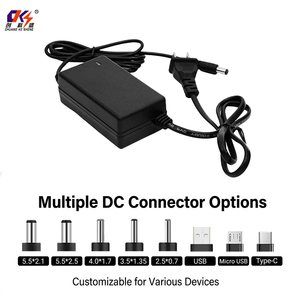
12V 2A 24W Dual Cable Desktop Power Adapter
12V 2A 24W Dual Cable Desktop Power Adapter 12Volt 2000mA Power Supply US EU UK AR Plug AC/DC Switching Adaptor for CCTV Camera
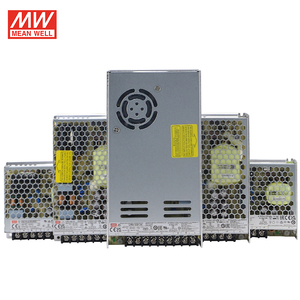
MEAN WELL Power Supply 5A to 60A SMPS
MEAN WELL Power Supply 5A 10A 20A 30A 40A 50A 60A MEANWELL SMPS Power Supply 5v 12v 24v 15v 36v 48v
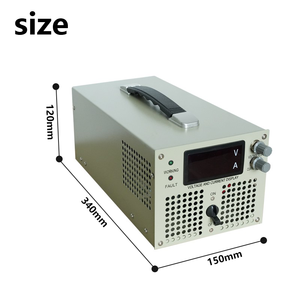
Industrial 1500W-2000W DC Adjustable Switching Power Supply
Industrial 1500W-2000W DC Adjustable Switching Power Supply 12V-600V Single Output High Efficiency 88-89% Overcurrent Protection
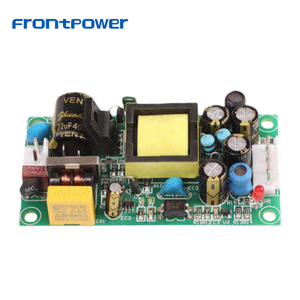
Frontpower Switch Power Supply PCBA PCB Module
Frontpower 12v 15v 20v 36v 48v OEM ODM PCBA Printed Circuit Board PCB 24w 30w 60w 100w 150w 200w 400W 500W Switch Power Supply
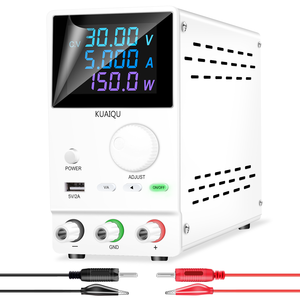
Adjustable DC Regulated Switching Power Supply Bench Digital
Adjustable Power Source 30V 5A 60V 5A 30V 10A 120V 3A DC Regulated Switching Power Supply Bench Digital
100W-300W Desktop Power Supply AC DC Adapters
Power Supply 100W 120w 300w Max Power Supply 12v 24v 48v 4a 5a 6a 7a 8a 10a 15v 9a 10amp Adaptor Ac Dc Desktop Power Adapters
Switching 24V 28V AC DC input power supply
Switching 24V 28V AC DC input power supply for Industrial and Telecommunication Equipment
120-200W Desktop Power Supply Adapter
120-200W Desktop Power Supply 12V 18V 19V 24V 36V 48V 4A 5A 6A 8A 10A Power Adapter 15V 15A AC DC Adapter
60+
Years Power Engineering
ISO 13485
& ISO 9001:2015 Certified
100%
ATE Functional Screening
SEMI F47
Sag Immunity Compliant
Manufacturing Authority

OEM/ODM Power Solutions Engineered for High-Reliability Telecom Systems

From custom PCBA switching modules to liquid-cooled kilowatt-class power shelves, our engineering design authority guarantees seamless integration into 5G radio access networks, edge computing nodes, and enterprise infrastructure.

AC/DC Power Converters

Advanced Topology Design

Utilizing high-frequency LLC resonant converters, active PFC (Power Factor Correction >0.99), and GaN/SiC power semiconductors to achieve system conversion efficiencies exceeding 96% in compact footprints.

EMI EMC Filtering

Integrated EMI/EMC Suppression

In-house designed single-phase, 3-phase Delta, and WYE filters tailored to meet stringent CISPR 32 Class B, FCC Part 15, and MIL-STD-461 conducted and radiated emissions baselines without external filtering overhead.

Thermal Management

Severe Environment Thermal Hardening

Convection, conduction, fanless encapsulated, and liquid-cooling architectures capable of continuous operation from -40°C to +85°C, providing robust thermal protection for outdoor Remote Radio Heads (RRH).

Galvanic Isolation

Reinforced Galvanic Isolation

High-dielectric isolation barriers providing up to 4000VAC isolation, ensuring complete protection for sensitive digital signal processing boards and compliant with IEC/EN 62368-1 and IEC 60601-1 standards.

Power Telemetry & PMBus

Smart PMBus / CANBus Telemetry

Digital control loops incorporating real-time telemetry over I2C, PMBus, or CAN interfaces for remote monitoring of voltage, current, internal temperature, and system life expectancy analytics.

Custom OEM PCBAs

Full OEM/ODM Customization

Tailored mechanical form-factors, custom multi-channel output voltages (12V, 24V, 28V, 48V, 54V DC), conformal coatings, and specialized potting for harsh industrial, outdoor, and maritime telecom deployments.

Architectural Foundations of Next-Generation Telecom Power Systems

Modern telecommunications infrastructure requires an unprecedented level of power density, reliability, and energy efficiency. As global network carriers transition to 5G Standalone (SA) architectures, edge micro data centers, and high-frequency millimeter-wave (mmWave) radio units, traditional power supply architectures face significant operational bottlenecks. OEM telecommunications power supplies must now manage rapid dynamic load fluctuations while maintaining ultra-low ripple voltage to protect sensitive RF transceivers.

Technical Insight: High-frequency switching artifacts can induce phase noise in telecom RF transmitters. Custom OEM power supplies engineered with multi-stage LC output filtering and low-ESR polymer capacitors achieve output ripple voltages under 30mV peak-to-peak, protecting signal modulation fidelity across 5G NR frequency bands.

Switched-Mode Topology Optimization: LLC Resonant vs. Hard-Switched Converters

In high-power telecommunications applications, power conversion efficiency directly correlates with thermal dissipation and equipment MTBF (Mean Time Between Failures). Traditional hard-switched forward or flyback topologies incur substantial switching losses ($P_{sw} = \frac{1}{2} V I f_{sw} (t_r + t_f)$) as operating frequencies rise above 100 kHz. To overcome these physical constraints, our custom OEM manufacturing lines focus on Zero-Voltage Switching (ZVS) and Zero-Current Switching (ZCS) soft-switched LLC resonant converters.

LLC resonant converters utilize the parasitic capacitance of power MOSFETs and the leakage inductance of custom planar transformers to achieve seamless ZVS transitions across the entire operating range. By integrating Wide Bandgap (WBG) semiconductors—specifically Gallium Nitride (GaN) high-electron-mobility transistors (HEMTs)—our OEM telecom power platforms operate at switching frequencies up to 500 kHz with peak conversion efficiencies reaching 96.5%. This dramatic reduction in thermal dissipation enables 1U rack-mount power supplies to deliver kilowatt-class power without aggressive forced-air cooling, eliminating primary fan failure risks.

16.5kW 1U Liquid Cooled Power Supply

Kilowatt-Class Liquid-Cooled & Conduction-Cooled Power Modules

For high-density base station cabinets and enclosed semiconductor processing tools, traditional air cooling is insufficient. Liquid-cooled power supply architectures remove heat directly at the semiconductor junction level, allowing high-power density (up to 100W/in³) in sealed IP67 enclosures.

  • Eliminates particulate intake in cleanroom and harsh dusty environments
  • Eliminates acoustical noise for urban 5G micro-cell installations
  • Provides uniform thermal profiles to extend electrolytic capacitor lifespan

SEMI F47 and Line Sag Ride-Through Performance

Telecommunications facilities and industrial edge nodes are frequently subjected to power quality anomalies, such as utility line sags, momentary dropouts, and harmonic distortion. Equipment operating in critical installations must conform to stringent voltage-sag immunity guidelines, such as SEMI F47 standards.

Our custom OEM power platforms incorporate enlarged bulk storage capacitor banks and wide-input boost PFC circuits designed to maintain full output voltage regulation during AC input voltage drops down to 50% of nominal for durations exceeding 200 milliseconds. This continuous ride-through capability prevents baseband processing unit (BBU) resets, avoiding expensive network downtime and data packet dropped sessions during regional grid disturbances.

Technical Specification Comparison Matrix for OEM Telecom Power Architecture

Parameter Standard Commercial SMPS Industrial Switched Power Custom OEM Telecom Grade Platform
Input Voltage Range 90 - 264 VAC Universal 85 - 305 VAC Extended 85 - 305 VAC / 180 - 400 VDC HVDC Compatible
Efficiency Level 85% - 88% (80 Plus Bronze) 90% - 92% (80 Plus Gold) 94% - 96.5% (GaN/SiC LLC ZVS Topology)
Output Ripple & Noise < 150 mV p-p < 100 mV p-p < 30 mV p-p (Low-Noise RF Dedicated Sub-rail)
Operating Temperature 0°C to +50°C -20°C to +60°C -40°C to +85°C (Full Load Conduction/Liquid Cooled)
EMC Compliance CISPR 32 Class A CISPR 32 Class B CISPR 32 Class B / MIL-STD-461G / FCC Part 15
MTBF (Telcordia SR-332) > 100,000 Hours > 250,000 Hours > 500,000 Hours at 40°C Continuous Load
Digital Communication None Optional RS485 PMBus 1.3 / CANBus / SNMP Telemetry Standard

EMC/EMI Mitigation Strategies in High-Power Converters

High-frequency switching power supplies are inherent sources of electromagnetic interference (EMI). Both common-mode (CM) noise—generated by high $dV/dt$ switching nodes relative to chassis ground—and differential-mode (DM) noise—caused by high $dI/dt$ pulsating currents—can contaminate power distribution lines and violate regulatory guidelines.

To ensure global compliance for telecommunication OEMs, our engineers embed dynamic EMI filter stages directly onto the power supply PCBA or within custom enclosed modules:

  • Common-Mode Chokes: High-permeability nanocrystalline core materials that provide superior impedance against high-frequency CM noise while maintaining minimal volume.
  • Differential Mode Filtering: Low-ESR X-capacitors coupled with custom toroidal inductors designed to prevent high-frequency current ripple from reflecting back into the grid.
  • Shielding & Grounding Topologies: Integrated copper Faraday shields between primary and secondary transformer windings reduce inter-winding capacitance ($C_{ps}$), suppressing common-mode noise transfer across the isolation barrier.

Medical and Critical System Power Solutions

Dual-Certified Medical & Telecom Platform Capabilities

For convergence equipment—such as hospital network gateways, robotic surgical communication hubs, and healthcare IT servers—power supplies must simultaneously satisfy IEC/EN 60601-1 3rd Edition medical safety standard (2×MOPP) and telecom grid standards.

Our custom OEM factories provide certified isolation stations and low-leakage transformers (< 100µA patient leakage current), ensuring equipment operates safely in both patient-adjacent and critical enterprise environments.

Strategic Procurement Insights

Future Trends in Telecommunications Power Systems (2025–2030)

Procurement directors and system architects must evaluate emerging technology vectors to ensure multi-year component availability and operational compatibility.

1. Transition to 336V HVDC Distribution

To reduce copper weight and transmission line power losses ($I^2R$), central telecom offices and large data centers are migrating from legacy -48V DC systems to 336V High-Voltage DC (HVDC) power architectures. OEM suppliers are developing dual-input rectifiers supporting both traditional AC and 336V DC inputs.

2. AI-Driven Predictive Health Monitoring

Next-generation telecom power supplies integrate smart microcontrollers running edge predictive algorithms. By tracking internal MOSFET thermal resistance drift, output capacitor ESR increase, and real-time load profiles, systems report early warning maintenance metrics over PMBus before catastrophic power failure occurs.

3. Wide Bandgap (GaN/SiC) Dominance

Silicon power MOSFETs are approaching their physical operational limits. Gallium Nitride (GaN) and Silicon Carbide (SiC) switches allow 3x to 5x faster switching speeds with near-zero reverse recovery losses, reducing inductor sizes by 50% and driving power supply dimensions down into ultra-thin 1U and sub-1U form factors.

Buyer Guidelines

Frequently Asked Questions (FAQ) for OEM Telecom Power Procurement

Expert technical answers to guide procurement managers, quality engineers, and hardware design architects through the sourcing process.

Q1: How do standard off-the-shelf power supplies differ from custom OEM telecom-grade power supplies?
A: Standard off-the-shelf power supplies are built for generic indoor commercial applications with standard voltage requirements, limited operating temperature ranges (0°C to +50°C), and baseline safety certifications. Custom OEM telecom-grade power supplies are specifically engineered for critical network infrastructure. They offer extended operating temperature windows (-40°C to +85°C), low-noise output sub-rails for RF circuitry, specialized form-factors, conformal coating for humidity and corrosive atmosphere resistance, precise PMBus digital control, and compliance with telecom standards such as NEBS Level 3, SEMI F47, and Telcordia SR-332 MTBF (>500,000 hours).
Q2: What cooling methods are recommended for remote outdoor 5G base station enclosures?
A: For outdoor sealed enclosures (IP65 to IP67 rated), fanless conduction-cooled or liquid-cooled power supplies are strongly recommended. Forced-air cooling using fans introduces a primary mechanical point of failure and draws moisture, dust, and airborne contaminants into the system chassis. Conduction-cooled power supplies transfer heat directly through an integrated aluminum cold-plate to the outer enclosure frame, maintaining high reliability and zero acoustic noise in dense urban deployments.
Q3: Why is MTBF calculation critical, and what standard is used for telecom power evaluation?
A: Mean Time Between Failures (MTBF) measures operational reliability and expected lifespan. In telecommunications, the standard reliability prediction model is Telcordia SR-332 (formerly Bellcore), which accounts for telecom operating environments, component stress levels, and thermal acceleration factors. While military applications often use MIL-HDBK-217F, Telcordia SR-332 provides a more accurate field reliability estimate for commercial telecom deployments. High-grade OEM supplies target MTBF values exceeding 500,000 hours at 40°C ambient operating temperature.
Q4: Can your OEM factory modify standard PCBA power boards to fit custom chassis geometries?
A: Yes. A core advantage of working with an experienced OEM factory is modified-standard capabilities. If standard rectangular PCBAs cannot fit into specialized cylindrical radio housings or low-profile 1U enclosures, our engineering teams can modify the PCB layout, component orientation, heatsink geometry, output wiring harnesses, and input connectors. This modified-standard pathway significantly reduces initial tooling costs and shortens regulatory certification lead times compared to ground-up custom designs.
Q5: What safety and EMC certifications are provided with custom OEM telecom power supplies?
A: Depending on regional deployment demands, our products are certified to UL/cUL 62368-1 (Information Technology and Telecom Equipment), IEC/EN 62368-1, CE Mark, UKCA, and CB Scheme. For EMC compliance, platforms are verified against CISPR 32/EN 55032 Class B conducted and radiated emissions limits, EN 61000-3-2 (PFC harmonic current limits), and IEC 61000-4-5 surge immunity up to 6kV for outdoor lightning exposure. Dual medical/telecom units also hold IEC 60601-1 certifications.
Q6: How is line surge protection handled for power supplies deployed in high-lightning environments?
A: Outdoor telecom power supplies feature integrated multi-stage transient voltage surge suppression (TVSS) circuits. This includes heavy-duty Metal Oxide Varistors (MOVs) paired with Gas Discharge Tubes (GDTs) across line-to-line and line-to-ground paths, accompanied by common-mode inductors. These internal surge networks absorb surge energy levels up to 6kV/3kA (1.2/50µs - 8/20µs combination wave) according to IEC 61000-4-5 standards, shielding sensitive downstream electronics.
Q7: What is the typical lead time and process for launching a fully custom OEM telecom power project?
A: The custom OEM design lifecycle follows structured phase-gate controls: 1. Specification Definition & Architecture Review: 1-2 weeks. 2. Prototyping & Initial Engineering Validation Testing (EVT): 6-8 weeks. 3. Design Validation Testing (DVT) & EMI Pre-compliance: 4-6 weeks. 4. Safety Agency Submissions & Final Production Tooling (PVT): 6-8 weeks. Overall project lead times range from 16 to 24 weeks depending on topological complexity and mechanical customisation requirements.

Partner with a Global Lead in Custom OEM Telecom Power Engineering

Discuss your electrical specifications, thermal derating constraints, and compliance requirements directly with our senior application engineers.

Send an Inquiry