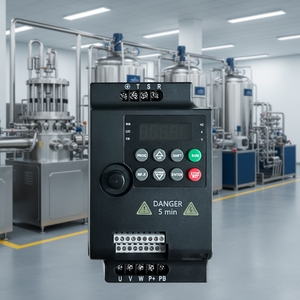
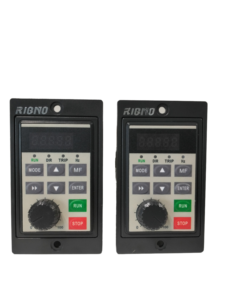
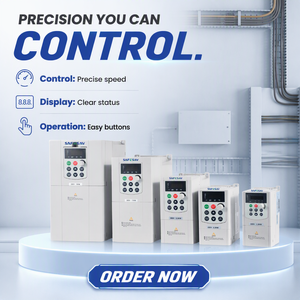
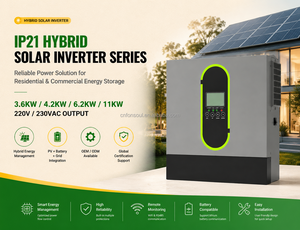
Explore our export-grade motor speed controllers, single-to-three phase converters, and heavy-duty VFD platforms tailored for international OEMs and industrial machinery builders.
Navigating torque dynamics, phase step-up topologies, EMC compliance, and global supply chain strategies in industrial motor speed control.
In modern industrial automation, the Frequency Converter (Variable Frequency Drive / VFD) serves as the central nervous system for motor-driven electromechanical applications. As global manufacturers strive for higher operational efficiency, reduced carbon footprints, and precise motion control, selecting an authoritative OEM/ODM manufacturing partner becomes a strategic imperative. This technical guide outlines the critical engineering parameters, thermal management protocols, topological innovations, and global procurement trends governing next-generation power electronics.
From V/F scalar control to sensorless vector control (SVC) and direct torque control (DTC), our ODM firmware accommodates high-starting torque demands across variable load curves.
Standardized with built-in C2/C3 EMC filters, low-leakage suppression circuitry, and robust common-mode noise attenuation to satisfy rigorous CISPR and FCC standards.
Designed with extended DC-bus capacitance hold-up times to ride through line sags, power transients, and extreme grid fluctuation in critical fab environments.
A primary challenge for international original equipment manufacturers (OEMs) is deploying high-torque 380V three-phase industrial motors in locations where only 220V single-phase power is available. Standard V/F drives fail to generate adequate DC-bus voltage under heavy torque conditions, resulting in phase imbalance, excessive harmonic distortion, and thermal tripping.
Our engineered single-phase 220V to three-phase 380V VFD series utilizes a specialized internal active boost rectifier circuit coupled with Space Vector Pulse Width Modulation (SVPWM). By modulating the switching frequency of high-power IGBT (Insulated-Gate Bipolar Transistor) modules up to 16 kHz, the inverter maintains a steady DC-bus voltage, generating a symmetrical 3-phase AC sine wave output with minimal Total Harmonic Distortion (THD < 3%).
Selecting the appropriate drive architecture depends directly on application dynamics, environmental stress, and energy efficiency targets. Below is a engineering overview comparing market topologies:
| Drive Category | Control Algorithm | Typical Efficiency | Optimal Applications | Key Advantage |
|---|---|---|---|---|
| Micro VFD (0.4kW - 2.2kW) | V/F Scalar / Open-Loop SVC | 96.5% | Conveyors, Small Fans, IP20 OEM Tools | Ultra-compact footprint, quick setup |
| General Industrial (5.5kW - 15kW) | Sensorless Vector (SVC) | 97.8% | Compressors, Cutting Machines, CNC Spindles | High speed regulation, heavy load start |
| Heavy-Duty Vector (15kW - 315kW) | Closed-Loop FOC / DTC | 98.5% | Mining Crushing, Extruders, Pumps | Precise torque control at 0 RPM |
| Hybrid Solar Inverters (3.5kW - 5kW) | Pure Sine Wave MPPT Boost | 98.0% | Off-Grid Pumping, Remote Automation | Battery-free dual output operation |
The global frequency converter market is undergoing a structural transition driven by smart manufacturing (Industry 4.0), carbon neutralization mandates, and wide-bandgap (WBG) power semiconductor adoption. Enterprise procurement teams must consider the following emerging vectors:
A. Transition to Wide-Bandgap (SiC & GaN) Semiconductors: Next-generation VFD designs are shifting from traditional Silicon IGBTs to Silicon Carbide (SiC) MOSFETs. SiC switches enable higher junction operating temperatures (up to 175°C), cut switching losses by up to 60%, and allow radical reductions in magnetic component volume, shrinking overall chassis sizes by 40%.
B. Native Industrial Internet of Things (IIoT) Integration: Modern importers no longer request standalone inverters. OEM contracts now specify integrated Modbus RTU, Profinet, EtherCAT, and CANopen protocols. Embedded edge computing allows the drive to monitor motor vibration, winding temperature, and bearing wear in real time, shifting maintenance from reactive to predictive modes.
C. Conformance with IE4/IE5 Super Premium Efficiency Motors: International energy efficiency regulations (such as EU Ecodesign directives) require frequency converters to operate harmoniously with Permanent Magnet Synchronous Motors (PMSM) and Synchronous Reluctance Motors (SynRM) without software latency or slip loss.
From precision custom PCB layout to military-grade magnetic winding and automated thermal testing, we back every product with six decades of combined engineering authority.
We modify existing platform hardware, firmware, mechanical enclosures, potting, and connectors to fit exact spatial and operational constraints without extending product qualification lead times.
All manufacturing operations conform to strict quality management systems. Every drive undergoes 100% full-load dynamic burn-in testing, high-voltage isolation checks, and environmental stress screening (ESS).
Our product families hold comprehensive agency certifications including UL, cUL, CE, UKCA, RoHS, REACH, and IEC 60601-1 / IEC 61800-3 EMC standard documentation for fast track global export clearance.
Consult directly with our senior application engineers to discuss voltage requirements, custom enclosure IP ratings, or customized firmware algorithms.
Get a QuoteExpert insights covering frequency converter selection, thermal derating, phase topology, and custom manufacturing workflows.
Sizing a Variable Frequency Drive for heavy loads (such as positive displacement pumps, crushers, or cutting machinery) requires calculating full-load amps (FLA) rather than matching nominal horsepower ratings. For high-torque starting demands, select a Heavy-Duty (HD) rated inverter capable of delivering 150% to 200% overload for 60 seconds. Additionally, ensure the drive utilizes Sensorless Vector Control (SVC) or Field Oriented Control (FOC) to maintain precise speed torque regulation at near-zero operating frequencies.
Many commercial workshops, mobile units, and municipal utility locations lack three-phase high-voltage power infrastructure. A step-up single-to-three phase converter boosts the incoming 220V single-phase supply internally using a DC bus step-up stage, allowing standard 380V 3-phase industrial AC motors to operate at full rated power without requiring expensive grid utility line extensions.
VFDs switch DC voltage at high carrier frequencies (2kHz - 16kHz) via PWM, generating high dV/dt voltage transitions that emit conducted and radiated electromagnetic interference (EMI). Integrated Class C2/C3 EMI filters suppress common-mode noise along power lines, protecting adjacent sensor circuits, PLC controllers, and communication networks from electrical noise distortion and preventing CISPR 11 / FCC compliance failures.
Yes. Our engineering department specializes in custom OEM/ODM modifications. We offer custom PLC logic programming within the drive, customized Modbus/CanOpen register mappings, tailored parameter defaults, private-label branding, customized mechanical heat sink plates, and conformal coating options for high-humidity or corrosive industrial environments.
Our industrial drives are engineered with a design life exceeding 10 years (or 40,000 continuous operating hours) under rated ambient conditions. We utilize long-life 105°C rated Japanese aluminum electrolytic capacitors, heavy-duty copper busbars, and oversized thermal sinks. Continuous Mean Time Between Failures (MTBF) calculations exceed 120,000 hours under standard industrial operation profiles.