60+ Years of Power Engineering  ·  ISO 9001:2015 & ISO 13485 Certified Manufacturing

Top 10 Battery Charger Factories & Power Supply Manufacturers

2026 Strategic Sourcing Guide: Technical Benchmarks, OEM/ODM Capabilities, Compliance Frameworks, and Industry Trends

Recommended Industrial Battery Chargers & Switching Power Systems

Explore our engineering-grade portfolio of AC/DC desktop power adapters, OEM printed circuit board assemblies (PCBAs), high-wattage industrial power supplies, and digital benchtop regulated charging stations manufactured under ISO 9001:2015 and ISO 13485 quality systems.
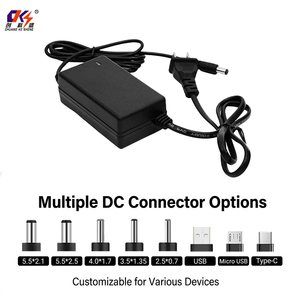
12V 2A 24W Dual Cable Desktop Power Adapter
12V 2A 24W Dual Cable Desktop Power Adapter & Charger
Universal AC/DC switching adapter featuring interchangeable US/EU/UK/AR plugs, dual output cables, and integrated over-current protection for CCTV and medical monitoring devices.
Get a Quote
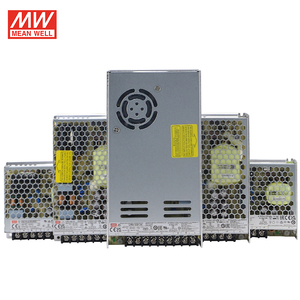
MEAN WELL SMPS Power Supply Module
High-Reliability SMPS Power Module (5V–48V, 5A–60A)
Heavy-duty industrial switched-mode power supply (SMPS) series supporting 5V, 12V, 15V, 24V, 36V, and 48V outputs with active PFC and high thermal efficiency for automated equipment.
Get a Quote
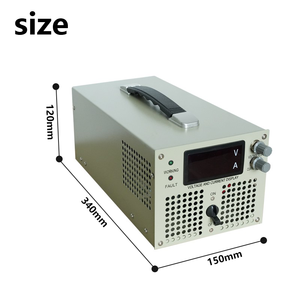
Industrial 1500W-2000W DC Adjustable Power Supply
Industrial 1500W–2000W Adjustable DC Power Supply
High-power single-output DC source delivering 12V to 600V with 88–89% efficiency rating, precise current regulation, and comprehensive short-circuit protection for battery testing.
Get a Quote
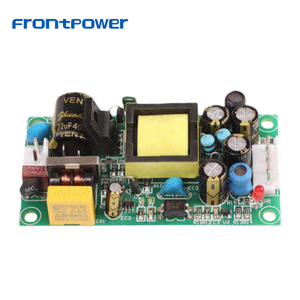
OEM ODM PCBA Power Supply Circuit Board
OEM/ODM Custom PCBA Power Supply (24W–500W)
Tailored open-frame circuit board modules supporting 12V, 15V, 20V, 36V, and 48V rails. Built to custom mechanical envelopes for embedded robotics and industrial electronics.
Get a Quote
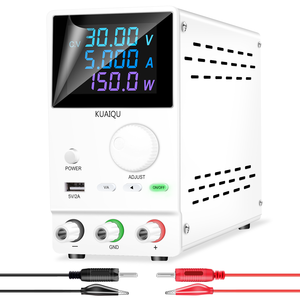
Adjustable Digital Bench DC Power Supply
Precision Bench Digital Regulated DC Power Supply
Multi-mode laboratory power supply offering 30V/5A, 60V/5A, 30V/10A, and 120V/3A output controls with low ripple noise, digital telemetry display, and fine/coarse tuning knobs.
Get a Quote
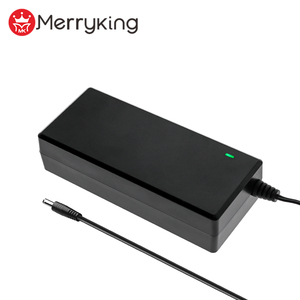
100W-300W Desktop AC DC Adapter
100W–300W Heavy-Duty Desktop Power & Fast Charger
Robust AC/DC desktop adapter supplying 12V, 24V, and 48V output currents up to 15A. Ideal for high-drain commercial battery charging stations and telecom hardware.
Get a Quote
Switching 24V 28V AC DC Power Supply
Wide Input 24V/28V Industrial Switching Power Unit
High-reliability 24V/28V AC/DC input power module designed for rugged environments, featuring reinforced isolation barriers and integrated surge/over-voltage suppression.
Get a Quote
120-200W Desktop Power Supply
120W–200W Multi-Voltage Industrial Desktop Charger
Commercial-grade 12V, 18V, 19V, 24V, 36V, and 48V power adapters engineered with low standby consumption, Level VI energy efficiency, and universal IEC C14/C8 inlets.
Get a Quote
60+
Years of Engineering
100%
EOL Functional Testing
ISO
9001 & 13485 Certified
Zero
Defect Commitment

Executive Overview: Selecting the World’s Leading Battery Charger Factories

Selecting an original equipment manufacturer (OEM) or original design manufacturer (ODM) for industrial battery chargers and switching power supplies is a critical decision that influences system reliability, regulatory compliance, and long-term operating costs. As power electronics transition toward higher power densities, wide bandgap (WBG) semiconductors, and complex smart charging communication protocols (CANbus, PMBus, Modbus), qualifying a manufacturing partner requires looking far beyond basic price-per-watt metrics.

This technical whitepaper provides a rigorous framework for evaluating the Top 10 Battery Charger Factories globally. Grounded in decades of advanced power engineering, our analysis covers key manufacturing criteria including topological design capabilities (LLC resonant convertors, active power factor correction), electromagnetic compatibility (EMC) attenuation, thermal management architectures, automated end-of-line (EOL) testing, and stringent global certification frameworks (such as IEC/EN 60601-1 3rd Edition for medical 2×MOPP isolation and SEMI F47 sag immunity for semiconductor fab equipment).

Compliance & Safety Frameworks

Top-tier factories maintain certified isolation structures (2×MOPP, double insulation), ensuring low patient/earth leakage currents and compliance with international standards such as UL 62368-1, IEC 60601-1, and CE/UKCA directives.

Advanced Thermal Architecture

Leading facilities integrate custom thermal modeling, utilizing conduction, forced-air, or direct liquid cooling (such as liquid-cooled 1U platforms) to maximize MTBF and eliminate heat-induced component degradation.

Integrated EMI/EMC Filtering

Distinguished manufacturers engineer propriety single-phase and 3-phase Delta/WYE EMI filter circuits into their charger units, guaranteeing conducted and radiated emission pass rates (CISPR 32 / MIL-STD-461) on first pass.

Evaluation Matrix: Tier 1 vs. Commodity Battery Charger Factories

To assist procurement specialists and lead system engineers in auditing manufacturing plants, the following data visualization compares the operational capabilities of Tier 1 industrial power OEMs against standard commodity suppliers.

Evaluation Category Tier 1 Global OEM Factories (e.g., Astrodyne TDI Tier) Commodity Volume Factories
Quality Management Systems ISO 9001:2015 & ISO 13485 (Medical Device Manufacturing Certified) Basic ISO 9001 or unverified third-party audits
Topological Design Authority In-house LLC resonant, GaN/SiC high-frequency, active PFC, fully custom magnetics Standard reference designs, off-the-shelf magnetic cores
EMC Pre-Compliance Testing In-house shielded chamber, automated spectrum analysis for CISPR/FCC/MIL-STD Outsourced testing late in the development cycle
Thermal Management Capabilities Liquid cooling, conduction cooling, CFD thermal simulation, heat-pipe designs Basic stamped aluminum heatsinks, standard noisy fans
Product Lifecycle & Traceability 10+ years form-fit-function guarantee, full component lot code traceability Short production lifecycles (1–3 years), frequent unannounced EOL parts
Voltage Sag Tolerance Verified SEMI F47 compliance for continuous operation during main line sags No ride-through guarantees; tool abort risk

Future Procurement Trends in Battery Charger & Power Supply Sourcing (2026–2030)

Global electronics procurement is undergoing a structural shift driven by technological advances, supply chain realignments, and sustainability mandates. Procurement teams sourcing industrial battery chargers, switching power supplies, and charging station modules must align their vendor selection with the following five critical procurement trends:

1. Rapid Adoption of Wide Bandgap (WBG) Semiconductors (GaN and SiC)

Silicon Carbide (SiC) and Gallium Nitride (GaN) switching devices are replacing conventional silicon MOSFETs across mid-to-high wattage battery charging architectures. GaN enables drastically higher switching frequencies (over 500 kHz), allowing engineers to shrink the physical footprint of inductors and transformers by up to 40%. B2B buyers now prioritize factories with specialized automated surface mount technology (SMT) lines capable of handling thermal pads, low-inductance PCB layouts, and exact reflow profiles required by GaN/SiC power packages.

2. Demand for Smart, Digital Telemetry & Multi-Protocol Charging Interfaces

Modern battery chargers are no longer isolated analog power boxes; they are intelligent nodes within larger system networks. Procurement specifications increasingly require native digital control loops driven by microcontrollers or DSPs. Built-in support for PMBus, CANopen, Modbus, and Ethernet/IP enables real-time monitoring of voltage, current, internal temperature, state of charge (SoC), state of health (SoH), and predictive maintenance telemetry. Leading charger factories offer configurable firmware stacks to support multi-chemistry charging algorithms (Li-ion, LiFePO4, LTO, and solid-state batteries).

3. Shift Toward Sealed, Liquid-Cooled, and Conduction-Cooled Enclosures

In harsh operating environments—such as semiconductor cleanrooms, marine applications, military installations, and heavy industrial automation—traditional forced-air cooling with internal fans represents the primary point of failure. Fans pull in dust, moisture, and corrosive airborne particulates. As a result, procurement volume is rapidly migrating toward liquid-cooled (e.g., 1U 16.5kW high-density liquid-cooled systems) and cold-plate conduction-cooled power supplies. Factories offering advanced liquid cold-plate manufacturing and high-IP-rated vacuum potting lead the market in long-term reliability.

4. Stringent ESG Mandates and Supply Chain Carbon Footprint Audits

Multinational OEMs are requiring their supply partners to report Scope 1, 2, and 3 carbon emissions. In the battery charger sector, this translates to demanding higher full-load and light-load energy conversion efficiencies (exceeding 94–96% peak efficiency to minimize operational waste heat), compliance with strict Level VI energy efficiency standards, and adherence to RoHS 3, REACH, and Conflict Minerals regulations. Top charger manufacturers design for circularity, using recyclable aluminum enclosures and modular component designs that facilitate repairability.

5. Dual-Sourcing, Regionalized Manufacturing, and Total Cost of Ownership (TCO)

Geopolitical friction and freight volatility have rendered single-source, single-region procurement strategies obsolete. Strategic buyers evaluate power supply manufacturers based on their global production footprint. Premier charger vendors maintain certified production facilities across North America, Europe, and Asia, permitting seamless transfer of tooling, PCBA files, and bill of materials (BOM) sourcing. This guarantees supply chain resilience and lower Total Cost of Ownership (TCO) by avoiding unexpected tariffs and freight bottlenecks.

Future Development Trends for Industrial Power Conversion & Charging Systems

From an engineering perspective, the next decade of power electronics innovation will reshape the design criteria for battery chargers, DC/DC converters, and switching power supplies. The primary technology vectors include:

Bi-Directional Power Flow (V2G & Microgrids)

Next-generation battery charging hardware is shifting from uni-directional topologies to fully bi-directional active front-end (AFE) converters. This enables energy storage systems (ESS) and electric fleet vehicles to feed power back into the microgrid during peak load hours, turning chargers into grid-interactive power routers.

Ultra-High Power Density (1U & Modular Racks)

Space optimization inside equipment racks has driven target power densities above 50 Watts per cubic inch. Achieving this requires soft-switching LLC topologies, planar transformers, multi-layer high-copper PCBs, and liquid cooling to dissipate heat efficiently within compact 1U and 2U chassis heights.

AI-Assisted Thermal and Life Prognostics

Smart charger modules are beginning to incorporate embedded AI models that monitor real-time electrolytic capacitor degradation, MOSFET junction thermal strain, and switching jitter. By forecasting component wear before functional failure occurs, system downtime is effectively eliminated in mission-critical applications.

Enterprise Manufacturing Authority: Why Leading OEMs Partner With Us

Built upon a foundational legacy of engineering excellence spanning more than six decades, our manufacturing infrastructure combines deep topological expertise with vertical integration. Unlike assembly-only contract manufacturers, we control every critical stage of power supply and battery charger creation—from magnetic core winding and printed circuit board assembly to full electromagnetic compatibility (EMC) compliance testing.

Key Manufacturing & Engineering Differentiators:

  • 60+ Years of Power Conversion Experience: Engineering standard and custom AC/DC power supplies, DC/DC converters, EMI filters, and high-wattage battery charging units since 1959.
  • Dual ISO 9001:2015 & ISO 13485 Quality Systems: Production processes audited for aerospace, industrial, defense, and life-critical medical equipment, maintaining strict batch control and complete component traceability.
  • In-House Magnetics & Proprietary EMI Filter Design: Custom high-frequency transformers, inductors, and single/three-phase EMI filters developed in-house to guarantee low leakage current, high common-mode rejection, and first-pass EMC testing success.
  • SEMI F47 & Medical 2×MOPP Compliance: Robust platform designs engineered to withstand severe line voltage sags (SEMI F47 certified) and satisfy stringent 2×MOPP isolation requirements for patient-contact medical environments.
  • 100% Automated End-of-Line (EOL) Testing: Every single unit manufactured undergoes dynamic load burn-in, dielectric withstand testing (Hi-Pot), functional calibration, and automated parameter recording prior to global shipment.
  • Engineer-to-Engineer Customization Support: Direct collaboration with our senior power systems engineers to modify standard platforms—adjusting voltage curves, custom cabling, potting compounds, or developing ground-up custom power solutions.

Frequently Asked Questions (FAQ) for Battery Charger Procurement

How do I evaluate a battery charger factory’s quality management system for critical applications?
When auditing a manufacturer, look beyond generic ISO 9001 compliance. Ensure they hold ISO 13485 if manufacturing for medical equipment, inspect their statistical process control (SPC) data for automated SMT placement, verify 100% burn-in and dielectric safety testing procedures, and review their Engineering Change Notice (ECN) process to guarantee long-term component consistency without unannounced bill-of-materials changes.
What is the technical difference between standard CC/CV charging and multi-stage programmable algorithm charging?
Standard Constant Current / Constant Voltage (CC/CV) chargers deliver a fixed two-stage charge profile suitable for basic lead-acid or simple lithium configurations. Multi-stage programmable chargers utilize digital microcontrollers to execute complex multi-phase charging profiles (Pre-charge, CC, CV, Float, Equalization, and Refresh). These custom profiles adapt dynamically based on real-time cell voltage, internal resistance, ambient temperature, and battery chemistry (e.g., LiFePO4 vs. NMC), significantly extending cell service life and preventing thermal runaway.
How does built-in EMI filtering impact overall system certification under CISPR 32 / IEC 60601-1-2?
An unshielded battery charger or switching power supply acts as a primary source of conducted and radiated noise due to high dv/dt and di/dt switching transitions. Chargers with integrated single-phase or three-phase Delta/WYE EMI filters attenuate common-mode and differential-mode noise at the power inlet. This prevents high-frequency harmonics from propagating into the AC mains, enabling your entire host system to pass FCC Part 15 / CISPR 32 Class B limits on the first pre-compliance test.
Why are liquid-cooled and conduction-cooled chargers replacing fan-cooled units in semiconductor and industrial fabs?
Forced-air cooling relies on high-RPM internal fans that draw in dust, moisture, and corrosive airborne chemicals, while generating acoustic noise and serving as a mechanical point of failure. In semiconductor cleanrooms and sealed industrial cabinets, fan-driven particulate dispersion is intolerable. Liquid-cooled power supplies transfer heat efficiently to a circulating liquid loop (water-glycol), enabling compact kilowatt-level power density (such as 16.5kW in a 1U footprint), zero acoustic noise, sealed IP-rated protection, and significantly higher MTBF.
What safety isolation protocols (e.g., 2×MOPP, SEMI F47) should B2B buyers specify during factory audits?
For medical equipment in proximity to patients, buyers must specify 2×MOPP (Means of Patient Protection), requiring 4000 VAC isolation, double insulation, and micro-ampere level leakage currents under IEC 60601-1. For semiconductor capital equipment, SEMI F47 compliance is essential; it certifies that the power supply can ride through AC line voltage sags of specified duration and depth without dropping DC output voltage, preserving wafer lots during utility fluctuations.
What is the typical lead time for custom OEM/ODM PCBA charger development, and how can engineers accelerate qualification?
Custom ground-up charger engineering typically spans 16 to 24 weeks from initial architecture design to prototype validation and agency certification. However, system designers can reduce lead time down to 6 to 8 weeks by selecting a "modified standard" platform—leveraging an existing certified PCBA power base and customizing output voltage trimpots, wire harnesses, mechanical enclosure brackets, or firmware charging profiles.

Partner with a Premier Power Conversion Manufacturer

Need customized battery charger designs, high-efficiency switching power supplies, or certified EMI filtering for your mission-critical applications? Talk directly with our applications engineering team today.

Get a Quote