Explore our flagship OEM & ODM power line filter platforms engineered for industrial automation, medical equipment, semiconductor tools, and military-grade applications.
In high-frequency power electronics, the transition toward Silicon Carbide (SiC) and Gallium Nitride (GaN) wide-bandgap (WBG) semiconductors has drastically elevated switching speeds ($di/dt$ and $dv/dt$). While this yields unprecedented energy efficiency and volumetric power density, it creates aggressive electromagnetic interference (EMI) spectra spanning from 150 kHz to well above 30 MHz in conducted noise, and extending into gigahertz bands for radiated emissions.
Procuring electromagnetic compatibility (EMC) components is no longer a simple catalog selection process. Original Equipment Manufacturers (OEMs) across medical equipment, semiconductor fabrication cleanrooms, heavy industrial CNC machinery, and aerospace electronics require component suppliers that offer Information Gain: complete attenuation profiles, common-mode (CM) versus differential-mode (DM) insertion loss curves, thermal derating data, and full regulatory traceabilities (IEC/EN 60601-1, SEMI F47, MIL-STD-461G, FCC Part 15, and CISPR 32 Class B).
Comparative engineering capabilities of top-tier global manufacturers and exporting foundries:
| Manufacturer / Exporter | Primary Topologies | Magnetics Core Material | Compliance Frameworks | Custom OEM Capability |
|---|---|---|---|---|
| Astrodyne TDI / Enterprise OEM | Single/3-Phase Delta & WYE, Liquid-Cooled, Feed-Through | Nanocrystalline, High-$\mu$ MnZn Ferrite, NiZn | ISO 13485 / 9001 IEC 60601-1, SEMI F47 | Full In-House Custom R&D & Pre-Compliance |
| YBX Manufacturing Group | IEC Inlets, Dual-Stage AC Filters, PCB Mount Modules | High-Permeability Ferrite Cores | UL, CE, TUV, RoHS | Standard Modified Platforms & Rapid Prototyping |
| Texasia Components Ltd. | Common Mode Chokes (CMB M, L, XXL, XS Series) | Nanocrystalline Tape-Wound & NiZn Alloys | VDE, ENEC, CISPR 32 | Precision Choke & Inductor Winding Solutions |
| Precision Metal RF Shielding Co. | SMT RF Cavity Shielding Can Enclosures | Tinplated Steel, German Silver, Brass | RoHS, REACH Compliant | Stamping, Custom Embossing & Surface Mount |
| High-Voltage Filter Exporters Foundries | Threaded Feed-Through Ceramic Filters, Pi & C Filters | Multilayer X7R / NPO Dielectric Ceramics | MIL-STD-461, Space Grade | Hermetic Sealing & High-Voltage Custom Stems |
In-depth engineering breakdown of top-recommended EMI suppression components and their respective industrial deployments.

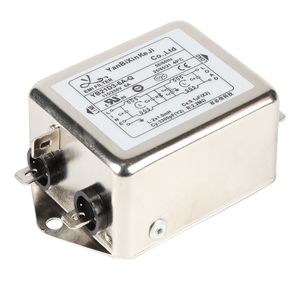
The YB21D3-6A-Q single-phase filter platform is designed to combat severe conducted interference in switched-mode power supplies (SMPS) and industrial drives. Featuring a robust metal enclosure, low earth leakage current, and integrated differential-mode suppression inductors.

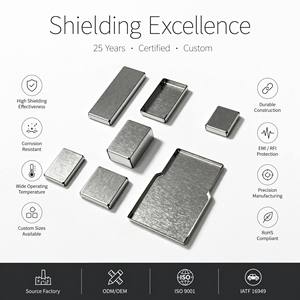
Engineered for high-density surface mount technology (SMT), these precision tinplated steel metal shields isolate sensitive RF front-ends, Wi-Fi/Bluetooth modules, and high-speed digital processors from radiated electromagnetic interference and cross-talk.

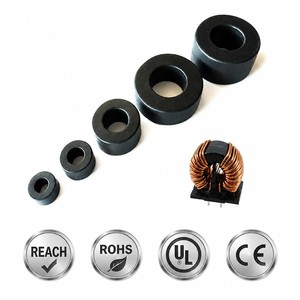
Utilizing tape-wound nanocrystalline magnetic cores, this compact EMI filter delivers 3x to 5x higher permeability than traditional MnZn ferrites across wide temperature ranges. Enables ultra-compact footprints in high-efficiency server power supplies.
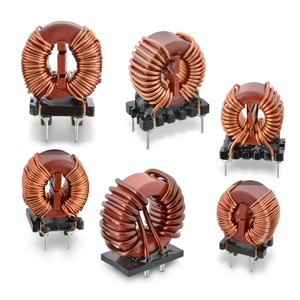
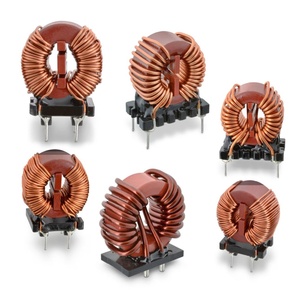
The CMB M series delivers high common-mode impedance in a compact vertical design. Perfect for power line suppression where board real estate is at a premium while requiring compliance with CISPR 32 Class B limits.

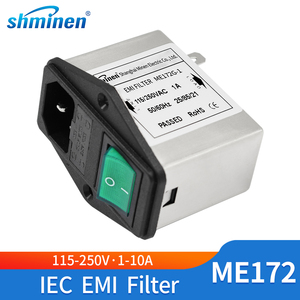
Integrating an IEC C14/C18 power inlet, DPST rocker switch, dual fuse holders, and a multi-stage line filter. Designed for CNC machines, robotics controllers, and medical diagnostic equipment requiring localized entry suppression.

Engineered for kilowatt-class power distribution networks. The CMB L/XXL series uses heavy wire gauges and oversized magnetic cores to handle severe continuous currents without saturating under heavy imbalance conditions.

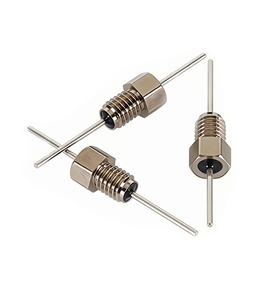
Hermetically sealed threaded coaxial feed-through capacitors designed to be mounted through bulkheads or shielded enclosure walls. Eliminates internal lead inductance to achieve insertion loss extending up to 10 GHz.

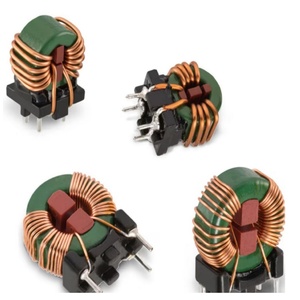
Utilizing specialized Nickel-Zinc ferrite cores designed specifically to target high-frequency common-mode noise between 10 MHz and 300 MHz. The compact footprint makes it ideal for tight PCB layouts.
Strategic foresight for procurement managers, design engineers, and supply chain directors sourcing EMI filter solutions over the next decade.
As modern power converters switch at megahertz frequencies, conventional ferrite-based EMI filters suffer severe core losses and thermal degradation. The industry is moving rapidly toward Tape-Wound Nanocrystalline Cores and custom multi-stage filter topologies. Procurement teams must partner with foundries capable of modeling high-frequency parasitics and skin-effect losses above 30 MHz.
In high-power semiconductor fabrication equipment and defense radar systems, forced-air cooling introduces airborne particulates and fan reliability bottlenecks. The trend favors Liquid-Cooled Power & Filtering Subsystems (such as 16.5 kW in 1U form factors), where EMI filters are potted in high thermal conductivity materials directly coupled to liquid cold plates.
Global semiconductor fabs enforce strict compliance with the SEMI F47 Standard, requiring single-phase equipment to ride through input voltage sags without tool interruption. Modern EMI filter designs must integrate low-saturation inductors that do not lose attenuation capability when subjected to transient high peak currents during voltage recovery phase.
Medical electronics demand ultra-low line-to-ground Y-capacitor leakage currents (often $< 5\,\mu\text{A}$ for cardiac-floating AP/BF patient contact parts). Next-generation medical filters achieve high common-mode attenuation without reliance on large Y-capacitors by employing high-permeability nanocrystalline core geometry and multi-chambered choke structures.
Why Tier-1 medical, semiconductor, industrial, and defense OEMs choose our engineering and manufacturing ecosystem.

Our global manufacturing plants operate under strict quality management systems certified for both industrial capital equipment and class II/III medical device subassemblies. Full lot traceability, component-level inspection, and change control protection ensure multi-year build stability.

We eliminate test-house failure risks. Our engineering centers feature fully equipped shielded chambers and calibrated LISNs (Line Impedance Stabilization Networks) to measure conducted emissions from 9 kHz to 30 MHz and radiated emissions up to 18 GHz, providing immediate design optimization.

When catalog parts cannot meet spatial, thermal, or electrical limits, our magnetics engineers modify proven standard platforms—adjusting inductance ratios, terminal connectors, potting compounds, or developing ground-up custom filter networks within fast prototyping windows.
In-depth technical responses from our senior applications engineering team to guide your procurement and design process.
A Delta EMI filter is designed for 3-wire three-phase electrical systems operating without a distributed neutral conductor. A WYE EMI filter is constructed for 4-wire three-phase systems carrying a neutral line. WYE filters incorporate dedicated line-to-neutral filtering elements and require neutral conductors rated for maximum phase imbalances. Selecting a Delta filter on a WYE system leaves line-to-neutral common-mode noise unfiltered, leading to test-house conducted emissions non-compliance.
SEMI F47 defines the voltage sag immunity profile for semiconductor manufacturing capital equipment. During line voltage sags (down to 50% for 200 ms), single-phase input equipment must maintain regulated DC output to avoid tool aborts and damaged silicon wafers. EMI filters integrated into SEMI F47 systems must utilize choke inductors that do not magnetically saturate during high transient peak currents associated with voltage recovery.
Nanocrystalline alloys offer significantly higher initial permeability ($\mu_i \approx 80,000 - 100,000$) compared to high-grade MnZn ferrites ($\mu_i \approx 5,000 - 15,000$). This allows engineers to achieve equivalent common-mode insertion loss with far fewer wire turns, reducing copper DC resistance ($DCR$), heat generation, and component volume by up to 50%. Additionally, nanocrystalline cores maintain stable magnetic properties up to $120^\circ\text{C}$, whereas ferrites exhibit thermal degradation at lower Curie temperatures.
Medical safety standards (IEC 60601-1 3rd/4th Edition) dictate strict maximum earth leakage current limits—typically $< 500\,\mu\text{A}$ for general medical devices and $< 10$ to $50\,\mu\text{A}$ for patient-contact (BF/CF) equipment. To achieve this, medical-grade EMI filters reduce or completely eliminate line-to-ground Y-capacitors. The loss in capacitive attenuation is compensated by utilizing high-inductance common-mode chokes with custom low-capacitance winding techniques.
Standard industrial power line filters undergo 100% factory Hipot production testing. Typically, line-to-ground (L/N to G) dielectric test voltage is set to 1500V AC or 2121V DC for 1 to 60 seconds. Medical 2xMOPP isolation barriers may require test voltages up to 4000V AC. Line-to-line (L to N) differential testing is conducted at 1000V DC to verify X-capacitor dielectric integrity without thermal breakdown.
Common Mode noise consists of unwanted signal currents flowing in the same direction on both power conductors (Line and Neutral) and returning via the protective earth ground path. It is primarily attenuated by toroidal common-mode chokes and Y-capacitors. Differential Mode noise flows in opposite directions on the power conductors (in phase with the AC supply current) and is suppressed by series differential inductors and X-capacitors placed directly across Line and Neutral lines.
Download our complete 2025–2030 Technical Catalog, request custom sample units, or consult directly with a senior EMC application engineer for rapid design verification.
