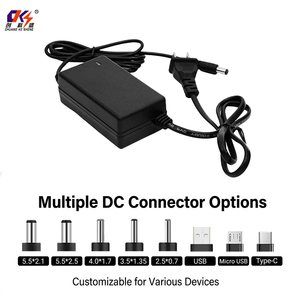
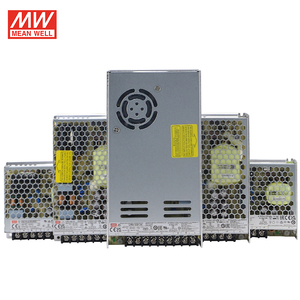
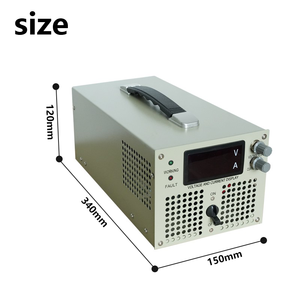
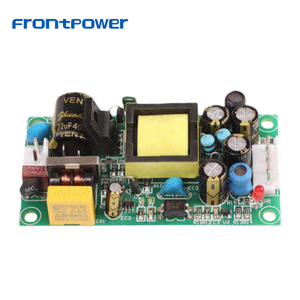
Explore our high-performance switching adapters, benchtop DC sources, and modular OEM power units optimized for high-precision current transducer instrumentation and critical industrial control systems.
In modern industrial power electronics, high-voltage battery storage, and advanced semiconductor fabs, the accurate acquisition of electrical current telemetry is paramount. A Current Transducer converts dynamic alternating current (AC), direct current (DC), or complex pulse waveforms into proportionally scaled, galvanically isolated voltage or current signals suitable for microcontrollers, digital signal processors (DSPs), and SCADA platforms.
Selecting the optimal transducer architecture dictates the thermal budget, noise floor, transient response ($di/dt$), and overall reliability of the system envelope. As a leading manufacturer and exporter, our engineering facilities focus on four primary sensing topologies:
High $dv/dt$ switching spikes from Silicon Carbide (SiC) and Gallium Nitride (GaN) power stages create severe Common-Mode (CM) transients. Our transducers integrate internal Faraday shielding and low coupling capacitance ($< 2 \text{ pF}$) to prevent signal degradation in harsh electro-magnetic environments.
Since 1959, our manufacturing infrastructure has engineered standard and fully customized power management, EMI filtering, and current measurement platforms for global Tier-1 OEMs.
Custom toroidal geometries, high-permeability nanocrystalline cores, and precision copper winding techniques tailored for ultra-low phase angle error and minimum offset drift.
On-site testing laboratories qualified for CISPR, FCC, and MIL-STD-461 standards ensure our integrated systems pass strict emissions and immunity profiles on the first iteration.
Strict component lifecycle control guarantees form-fit-function availability over 10-to-15-year production cycles, mitigating risk for industrial and medical equipment builders.
Compare the core technical characteristics of primary transducer technologies to balance accuracy, thermal performance, footprint, and total system cost.
| Transducer Architecture | Overall Accuracy | Bandwidth (DC to ...) | Isolation Level | Thermal Drift (TCS) | Primary Application Space |
|---|---|---|---|---|---|
| Closed-Loop Hall Effect | ±0.2% to ±0.5% | 150 kHz - 200 kHz | High (up to 6 kV) | Very Low (<0.01%/°C) | Variable Frequency Drives, UPS, EV Charging |
| Fluxgate Technology | ±0.005% to ±0.05% | 500 kHz | Ultra High (8 kV+) | Negligible (<0.001%/°C) | Medical MRI, Calibration Standards, Fabs |
| Open-Loop Hall Effect | ±1.0% to ±2.0% | 25 kHz - 50 kHz | Medium (3 kV - 4 kV) | Moderate (<0.05%/°C) | Battery Monitoring, Automotive, Solar Inverters |
| Rogowski Integrator | ±0.5% to ±1.0% | >1 MHz (AC only) | Galvanic Coreless | Low | Pulse Power, High Frequency Inverters, Smart Grids |
The evolution from pure analog outputs (4-20mA, 0-10V, $\pm 12 \text{V}$ voltage signals) to native digital bus interfaces such as Modbus RTU, CANopen, and PMBus allows direct telemetry integration into Edge IoT gateways, facilitating real-time predictive maintenance.
As Wide-Bandgap semiconductors push converter switching frequencies past $500 \text{ kHz}$, current sensors must achieve higher bandwidths with minimal phase angle error to preserve tight control loops in zero-voltage switching (ZVS) topologies.
In high-power installations (e.g., kilowatt-class liquid-cooled power supplies like the LiquaBlade™ platform), current transducers are embedded into direct liquid-cooled cold plates, maintaining maximum accuracy without thermal derating in sealed 1U enclosures.
Procurement executives and system integrators face escalating complexities: rising energy demands, stringent safety frameworks, and volatile international supply chains.
Navigating these demands requires partnering with manufacturers capable of delivering robust engineering backing rather than commoditized component supply. Critical sourcing considerations include:
Sub-standard current sensors with poor thermal drift or low noise immunity trigger costly line aborts in semiconductor fabs or unexpected field failures in medical tools. Investing in qualified, highly calibrated transducers reduces warranty exposure and field servicing overheads.
Systems designed for global exports require pre-certified components. Sourcing transducers built under ISO 13485 quality systems and verified for SEMI F47 sag ride-through standardizes equipment certification pathways across North America, Europe, and Asia-Pacific.
Fixed mechanical footprints often constrain next-generation systems. Leading manufacturers offer modified standard platforms—custom busbar openings, flexible pinouts, integrated potting, and conformal coating—to streamline mechanical assembly.
Global trade compliance requires rigorous documentation. Our export workflows provide comprehensive support dossiers for effortless customs clearance and regulatory approval:
Different industries present unique stress vectors—from patient safety in healthcare to intense shock and vibration in military environments.
In surgical robotics, MRI gradient amplifiers, and diagnostic X-ray generators, zero-leakage isolation (IEC 60601-1 3rd Edition, 2xMOPP) is mandatory. Fluxgate transducers ensure precise current delivery without acoustic magnetic distortion during scan routines.
Plasma etch, chemical vapor deposition (CVD), and electrostatic chucks require precise high-voltage DC monitoring. Our transducers provide extreme sag immunity and clean signal stability under high RF interference.
Vehicle power management, naval sonar systems, and radar pulse transmitters demand ruggedized components qualified to MIL-STD-461 (EMC) and MIL-STD-810 (Environmental). Encapsulated transducers survive high thermal cycling and mechanical shock.
Technical solutions to common integration questions addressed by our applications engineering team.
Select a Closed-Loop transducer when high precision (<0.5%), broad frequency response, fast dynamic response time (<1 μs), and low temperature drift are required. Closed-loop units use a secondary coil to compensate primary flux, eliminating saturation non-linearities. Select an Open-Loop transducer when application constraints prioritize lower power consumption, smaller mechanical footprints, lightweight construction, and lower unit cost, while tolerating moderate accuracy tolerances (±1% to ±2%).
Galvanic isolation isolates the primary high-power circuit (e.g., 800V DC EV bus or 480V 3-phase industrial line) from the low-voltage control electronics (3.3V/5V DSP microcontrollers). This prevents dangerous ground loops, protects logic circuits from catastrophic over-voltage breakdowns, and ensures compliance with international safety standards such as IEC 61010-1 and IEC 60601-1.
Thermal offset drift ($I_{OE}$) measures how output zero-point strays over ambient temperature variations. In precision control systems, drift appears as measurement error, causing unbalance in multi-phase inverters or DC offset errors in grid-tied solar systems. High-end fluxgate and closed-loop transducers utilize compensated magnetic cores and precision amplifiers to minimize drift to less than 0.01% per °C.
Yes. Both Open-Loop and Closed-Loop Hall Effect transducers, as well as Fluxgate sensors, measure true RMS AC, DC, and complex distorted current signals down to 0 Hz (DC). Conversely, traditional current transformers (CTs) and Rogowski coils operate purely on electromagnetic induction and can only measure alternating (AC) or dynamic transient currents.
SEMI F47 defines the voltage-sag immunity envelope that semiconductor manufacturing equipment must survive without interruption. Current transducers and their powering auxiliary supplies must maintain accurate output telemetry even when the AC line sags to 50% for 200 ms. Compliant hardware prevents tool trip aborts and protects million-dollar wafer production runs.
Standard catalog units ship within short lead cycles. For modified platforms or custom OEM/ODM builds—such as custom primary aperture shapes, special connector harnesses, potting for extreme vibration environments, or calibrated secondary outputs—prototype samples are typically delivered within 3 to 6 weeks depending on tooling and magnetic design parameters.
Require a custom current transducer profile, high-voltage switching adapter, or EMI filter solution for your equipment? Speak directly with an applications specialist today.
