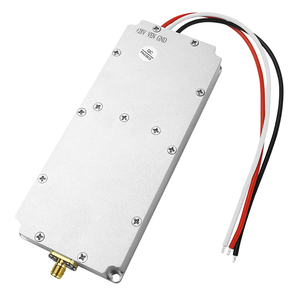
Explore our high-performance switching adapters, regulated DC power units, and industrial-grade high-frequency pulse & power transformers.
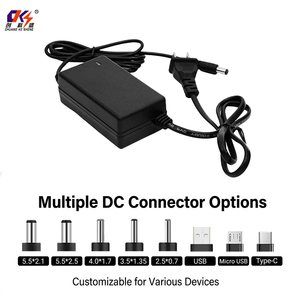
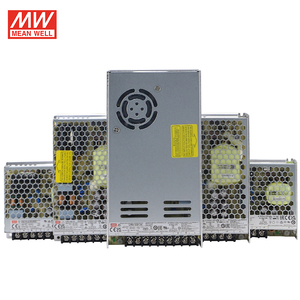
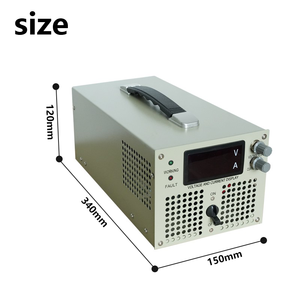
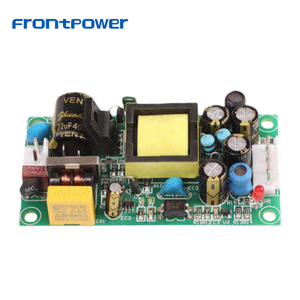
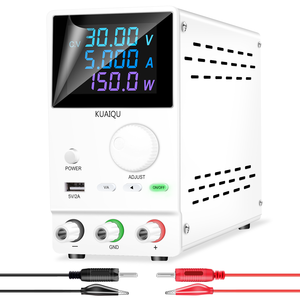
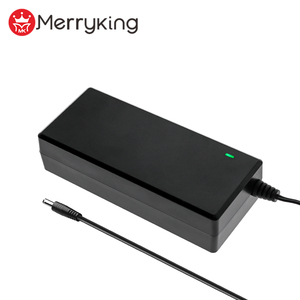
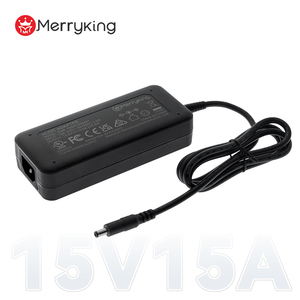
In modern high-power switching power supplies, solid-state gate drive networks, radar telemetry, and medical isolation barriers, the pulse transformer stands as a pivotal component. Unlike standard power transformers optimized purely for continuous steady-state 50/60Hz or fixed-frequency pulse-width modulation (PWM), pulse transformers are tailored to transfer rectangular voltage pulses with minimal waveform distortion, ultra-low rise times, precise volt-second balance, and uncompromising galvanic isolation.
As semiconductor architectures rapidly shift from silicon MOSFETs and IGBTs toward Wide Bandgap (WBG) materials such as Gallium Nitride (GaN) and Silicon Carbide (SiC), pulse transformer design must evolve. Operating speeds pushing into megahertz regimes demand micro-second pulse response, minimal inter-winding capacitance ($C_w$), suppressed leakage inductance ($L_l$), and robust Common-Mode Transient Immunity (CMTI) exceeding 100 V/ns.
Information Gain Insight: The integration of ultra-low loss nanocrystalline cores combined with planar winding geometries reduces inter-winding capacitance by up to 42% compared to traditional wire-wound toroids, enabling noise-free pulse transmission in SiC/GaN gate drivers operating at temperatures above 175°C.
Engineers and procurement teams evaluating high-reliability suppliers must scrutinize critical magnetic specifications rather than relying on generic nominal power ratings. The fundamental design equation governing pulse transformer saturation establishes the operational boundary:
| Electrical Parameter | Engineering Significance | System Impact on Power & Signal Integrity |
|---|---|---|
| Volt-Second Product ($V \cdot \mu s$) | Defines maximum integral of pulse voltage over time before core saturation ($B_{sat}$) occurs. | Prevents core saturation, overheating, and catastrophic driver switch failure. |
| Inter-Winding Capacitance ($C_w$) | Parasitic capacitive coupling between primary and secondary windings. | High $C_w$ allows common-mode noise across isolation barriers; lower $C_w$ improves EMC/EMI compliance. |
| Leakage Inductance ($L_l$) | Uncoupled magnetic flux between primary and secondary circuits. | Causes voltage overshoot spikes during rapid pulse turns-off, requiring snubber circuitry. |
| Isolation Voltage ($V_{iso}$) | Galvanic breakdown rating tested per IEC 60601-1 (2xMOPP) or UL 1577 standards. | Guarantees operator and low-voltage digital micro-controller protection against high HV buses. |
| Pulse Rise/Fall Time ($t_r / t_f$) | Speed at which the transformer reproduces the steep edges of an input pulse. | Shorter rise times reduce switching losses in high-frequency SiC power stages. |
Built upon 60+ years of magnetic integration and custom power conversion expertise.
Utilizing high-permeability, ultra-low hysteresis loss core materials ensuring maximum flux density retention across dynamic temperature ranges (-40°C to +155°C).
Advanced bifilar and sectionalized winding techniques yield leakage inductance figures below 0.1 µH, virtually eliminating inductive ringing in gate drive circuits.
Reinforced isolation systems compliant with IEC/EN 60601-1 3rd Edition, providing clearance distances up to 8mm and dielectric strength rated over 5000 VAC.
Magnetic component structures optimized for semiconductor tool power supplies requiring unbroken operation during severe single-phase input line sags.
Integrated common-mode suppressors engineered alongside pulse transformers to pass CISPR 32, FCC Class B, and MIL-STD-461 conducted emissions easily.
Enclosed, potted, or cold-plate compatible magnetic housings delivering seamless heat removal in high-kilowatt power densities and 1U sealed enclosures.
As a premier manufacturer and exporter of advanced switching magnetics, custom pulse transformers, EMI filters, and complete power subsystems, our engineering legacy spans over six decades (founded 1959 under the Astrodyne TDI heritage). We solve the complex thermal, electromagnetic, and insulation challenges that standard off-the-shelf component suppliers cannot address.
.jpg)
A specification sheet only reveals nominal electrical performance. Real-world applications—such as semiconductor fab tools, military radar systems, industrial medical imaging, and wide-bandgap inverters—fail during field integration due to thermal derating inside cramped enclosures or unpredicted common-mode noise paths.
Our global engineering facilities operate under rigorous ISO 9001:2015 and ISO 13485 quality management systems. Every standard, modified, or ground-up custom pulse transformer undergoes 100% automated functional screening, high-potential voltage withstand testing, and full parametric verification before export.

For critical medical environments (such as surgical robotics, MRI facilities, and patient monitors), magnetic components must conform to strict patient leakage current thresholds micro-amperes wide. By evaluating your system's complete risk file, safety standards framework, and PCB layout early in the design cycle, we ensure your equipment passes formal safety and EMC testing on the very first attempt.
The global electronic components landscape is undergoing a tectonic shift driven by electrification, semiconductor fabrication scaling, and renewable grid intelligence. Understanding where pulse transformer and magnetic component technologies are heading empowers procurement directors and principal designers to future-proof their supply chains.
The transition from conventional Si MOSFETs to Silicon Carbide (SiC) and Gallium Nitride (GaN) devices elevates switching frequencies from tens of kilohertz into the megahertz spectrum. Modern pulse transformers must accommodate dV/dt slew rates exceeding 50 to 100 V/ns without breakdown. This requires custom magnetic wire insulation coatings, triple-insulated wires (TIW), and specialized shielding layers to suppress dV/dt noise coupling into sensitive control circuits.
Traditional wire-wound bobbin structures are increasingly being superseded by planar pulse transformer topologies in ultra-low profile applications (e.g., 1U rackmount power supplies and high-density DC/DC converters). Planar designs leverage multi-layer PCB traces as windings, guaranteeing 100% repeatable parasitic values, exceptionally low leakage inductance, and superior thermal dissipation through direct heat-sink contact.
Standard manganese-zinc (MnZn) ferrite cores face magnetic saturation limits ($B_{sat} \approx 0.35 - 0.45\text{ T}$) at elevated operating temperatures. Advanced nanocrystalline ribbon cores offer higher saturation flux density ($B_{sat} > 1.2\text{ T}$), superior permeability, and significantly lower core losses at elevated switching speeds, allowing a 30% to 50% reduction in total magnetic physical footprint.
High-power applications—including green hydrogen electrolyzers, electric vehicle fast chargers, and industrial semiconductor plasma tools—require pulse and power components that operate reliably under high ambient temperatures, heavy vibration, and corrosive environments. Enclosed potted magnetics and liquid-cooled cold plate integration represent the fast-growing frontier in high-density energy conversion.
Procuring magnetics and power supplies on a global scale requires balancing piece-part unit cost against long-term engineering reliability, supply continuity, and compliance liability. Strategic buyers are shifting focus from simple BOM cost to holistic Total Cost of Ownership (TCO).
Leading OEM buyers increasingly start program evaluations with "modified standard" platforms. By customizing lead lengths, voltage taps, potted materials, or mounting brackets on established core designs, OEMs significantly reduce NRE (Non-Recurring Engineering) expenses and cut safety agency qualification timelines from months to weeks.
Geopolitical disruptions and logistics volatility have heightened scrutiny on raw magnet wire, core material, and ferrite resin sourcing. Procurement teams demand suppliers with dual-region manufacturing footprints and full material lot traceability under ISO standards to prevent production stoppages.
Clear, definitive answers to the most common engineering and sourcing questions regarding pulse transformer specification, compliance, and custom manufacturing.
Whether you require standard switching transformers, custom gate drive magnetics, or complete medical/industrial power solutions, our engineering team is ready to evaluate your schematics and thermal envelopes.