Explore our certified single-phase, 3-phase, metered, switched, and intelligent high-density PDU platforms engineered for continuous operations.
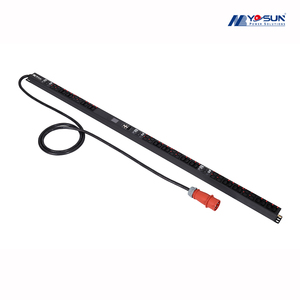
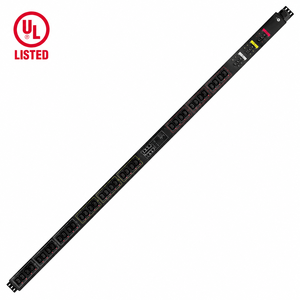
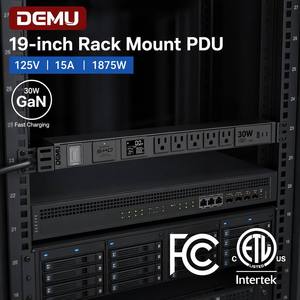
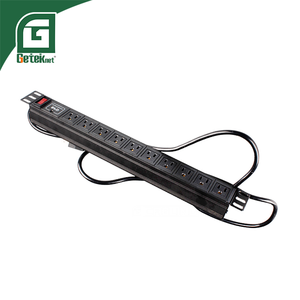
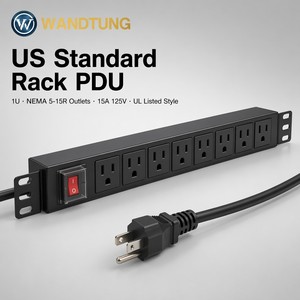
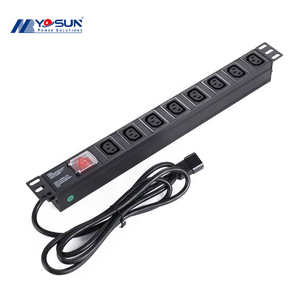
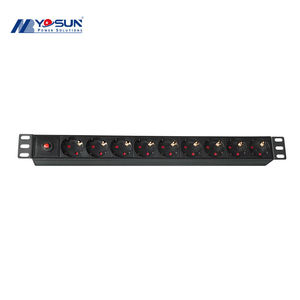
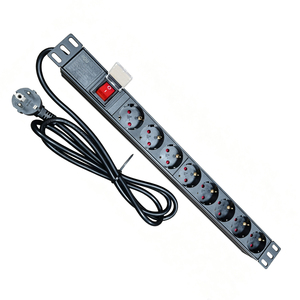
In contemporary hyperscale data centers, semiconductor fabrication facilities, and critical defense infrastructure, the rackmount Power Distribution Unit (PDU) has evolved from a passive hardware component into an active, intelligent pillar of energy management, dynamic thermal regulation, and operational resiliency. As computing density surges—driven by artificial intelligence (AI) clusters, GPU-accelerated arrays, and high-performance computing (HPC) nodes exceeding 40kW to 100kW per cabinet—procurement engineers and data center architects face unprecedented power delivery challenges.
Selecting a verified, top trusted rackmount PDU supplier requires evaluating topological electrical parameters, thermal dissipation capabilities, cybersecurity protocols for networked telemetry, and manufacturing compliance frameworks. This whitepaper analyzes the key engineering parameters governing modern power distribution, future procurement vectors, and technical evaluation matrices essential for mission-critical deployments.
Technical Insight: High-density AI deployments utilizing NVIDIA HGX/DGX architectures demand 3-phase 415V/400V power delivery directly to the rack. Shifting from traditional 208V to 415V 3-phase architectures reduces line currents by up to 50%, enabling smaller conductor cross-sections, mitigating thermal losses ($I^2R$), and improving overall facility Power Usage Effectiveness (PUE).
Modern high-density IT environments have rendered basic single-phase power strips obsolete for high-tier cabinets. The integration of high-draw microprocessors requires rack PDUs capable of supporting elevated ampacities while maintaining rigid thermal stability within ambient operational temperatures ranging from 0°C to 60°C.
Selecting between 3-phase Delta (3-wire + Ground) and 3-phase WYE (4-wire + Neutral + Ground) configurations depends directly on the facility’s transformer architecture and downstream power supply units (PSUs). A 415V WYE input delivers 240V single-phase power directly line-to-neutral to server PSUs, maximizing efficiency. Modern high-density PDUs incorporate phase-balanced branch circuit protection featuring hydraulic-magnetic circuit breakers that are immune to ambient temperature fluctuations, ensuring zero nuisance tripping during peak load spikes.
Legacy rack setups required static combinations of IEC C13 (10A) and IEC C19 (16A) receptacles. The rapid evolution of IT equipment created procurement bottlenecks due to changing plug configurations. Leading PDU suppliers now feature the hybrid Universal C39 receptacle—a specialized design that natively accepts both IEC C14 and IEC C20 plugs. This innovation drastically reduces inventory complexity, optimizes rack space in 42U to 48U cabinets, and facilitates seamless server refreshes.
Designed for 32A, 63A, and up to 100A 3-phase inputs, providing robust headroom for GPU/AI server clusters without branch thermal stress.
Billing-grade metering (±1% accuracy) per phase and per outlet. Full support for SNMPv3, Modbus TCP, and Redfish RESTful APIs.
Engineered to withstand severe utility voltage sags, preventing unplanned tool aborts in semiconductor fabs and critical industrial lines.
Procurement teams, system integrators, and infrastructure directors must anticipate technological shifts when establishing vendor relationships. Over the next five years, the global PDU landscape will be redefined by four key developments:
To eliminate multiple AC-to-DC conversion stages (which incur a 3% to 7% efficiency penalty), high-density data centers are shifting toward direct 400V DC distribution. Future-ready PDU suppliers are developing DC-native rack distribution platforms featuring arc-suppression outlet designs and specialized high-voltage DC circuit breakers.
Modern smart PDUs are transitioning from static monitoring devices to active participants in software-defined power management. Through integration with Data Center Infrastructure Management (DCIM) platforms, smart switched PDUs automatically cap power at the outlet level during utility supply constraints or thermal thresholds, preventing site-wide trip events.
As direct-to-chip liquid cooling and immersion cooling technologies enter mainstream deployments, rack space dynamics are shifting. PDUs are being re-engineered into narrow, ultra-slim vertical profiles (0U) that accommodate coolant manifolds, fluid quick-disconnect couplings, and heat exchanger tubing within standard 600mm and 800mm cabinet envelopes.
Networked PDU controllers are increasingly targeted by cyber threats seeking unauthorized entry to critical facilities. Future procurement standards mandate smart PDUs featuring hardware-root-of-trust security chips, encrypted firmware updates, dual-gigabit network ports for isolated management networks, and strict HTTPS/SSH/SNMPv3 enforcement.
Backing standard and custom power solutions with 60+ years of engineering heritage, rigorous EMI/EMC pre-compliance testing, and certified global manufacturing facilities.
When off-the-shelf PDUs fail to meet unique mechanical envelopes, high-voltage requirements, or specialized connector profiles, our engineering team designs custom power sub-systems. From modified standard platforms to ground-up electrical, firmware, and mechanical enclosure designs.
Our global manufacturing processes adhere to stringent international quality management systems. Every product undergoes thorough design verification, thermal derating analysis, high-potential (Hi-Pot) safety testing, and 100% functional load testing prior to shipment.
High-power switching environments generate severe common-mode and differential-mode electromagnetic interference. Leveraging custom internal EMI/EMC filters and transient surge protection (up to 2100J+), our rack PDUs preserve power quality and comply with CISPR, FCC, and MIL-STD limits.
Designed for rugged industrial applications, semiconductor fabrication facilities, and defense systems. Our heavy-duty aluminum chassis PDUs withstand severe line sags, extreme acoustic profiles, and high ambient thermal loads without operational degradation.
Clear, definitive answers to complex power distribution, safety certification, and customization queries.
Connect directly with our senior application engineers to review your technical specifications, request technical drawings, or get custom production quotes for high-density PDUs.
Contact Us