Explore our engineering-grade EMI/EMC shielded adapters, high-efficiency SMPS units, dynamic power benches, and rackmount TEMPEST power line modules designed to eliminate compromise emissions.
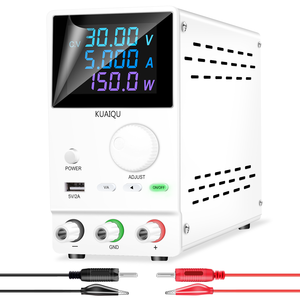
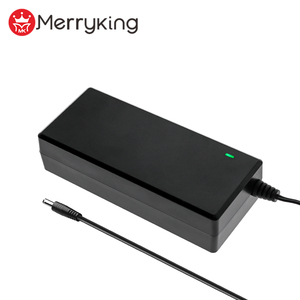
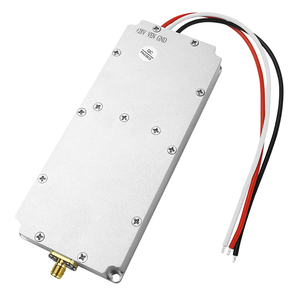
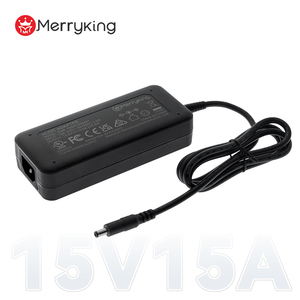
In classified intelligence networks, defense tactical operations, and sensitive commercial R&D environments, electronic processing equipment generates unintentional electromagnetic emissions. These compromised signals—known as TEMPEST (Telecommunications Electronics Material Protected from Emanating Spurious Transmissions)—can be intercepted and decoded remotely, exposing confidential data without breaching digital firewalls.
Power lines act as unwitting antennas. Without specialized power line filters, high-frequency switching noise, clock harmonics, and data stream pulses travel back into the main utility grid or radiated field. Leading OEMs and government defense integrators turn to specialized TEMPEST filter manufacturers to insert deep attenuation barriers at power entry points.
Our TEMPEST power filters are engineered to exceed strict global military and intelligence standards, including NSA 65-6 / NSA 73-2A, NATO SDIP-27 Level A/B/C, MIL-STD-461G, and IEEE 299 shielding effectiveness thresholds across a broad spectrum from 10 kHz to 40 GHz.
A standard industrial EMI filter is designed to satisfy CISPR 32 or FCC Part 15 class limits. A TEMPEST filter must satisfy security isolation requirements that are up to 100 times more stringent.
TEMPEST line filters utilize multi-stage L-C filtering networks featuring high-permeability nanocrystalline core inductors and feedthrough ceramic capacitors. This construction guarantees over 100 dB attenuation starting as low as 10 kHz, capturing fundamental power harmonics and ultra-high frequency parasitics.
Radiated bypass around a filter negates its electrical performance. TEMPEST filters are housed in heavy-duty welded brass or stainless-steel enclosures with fully potted internal compartments, isolated input/output chambers, and continuous RF-shielded mounting flanges.
Due to high-capacity Y-capacitors required for ultra-deep insertion loss, TEMPEST line filters generate significantly higher ground leakage currents. Specialized low-leakage variants are available for mobile defense platforms and patient-adjacent medical applications without compromising security.
| Parameter / Capability | Standard Commercial EMI Filter | Industrial High-Performance Filter | Military-Grade TEMPEST Filter |
|---|---|---|---|
| Insertion Loss Range | 40 dB - 60 dB (150kHz - 30MHz) | 60 dB - 80 dB (100kHz - 100MHz) | 100 dB - 120 dB (10kHz - 10GHz+) |
| Test Standard | CISPR 32 / FCC Part 15 Class A/B | IEC 61000-6-4 / SEMI F47 | NSA 65-6 / MIL-STD-220C / SDIP-27 |
| Enclosure Construction | Sheet Metal / Molded Plastic | Extruded Aluminum Case | Heavy Galvanized Steel / Potted Brass Chassis |
| Passband Isolation | Single Stage Differential/Common | Dual Stage LC Network | Multi-Chamber Isolated Compartments |
| Typical Applications | Consumer Electronics, Appliances | Semiconductor Fabs, CNC Drives | SCIF Facilities, Defense Racks, Radar, Cyber R&D |
With over six decades of custom power conversion and EMI filter engineering expertise, Astrodyne TDI stands as a premier manufacturer and global exporter for critical infrastructure platforms. Our fully integrated vertical manufacturing model ensures every stage—from internal inductor winding to mechanical plating and compliance testing—is verified in-house.
We solve the toughest signal security challenges. Whether converting universal AC power in high-power semiconductor fabrication or designing ultra-quiet DC/DC supplies for naval tactical suites, our engineering team works directly with your hardware team to customize topological footprints, thermal dissipators, and connector interfaces.
Don't compromise system layout for a rigid standard product. Over 65% of our shipped TEMPEST solutions are modified standard platforms tailored to exact dimensions, cable harnesses, and thermal environments.
Available Modifiers:
As switching frequencies accelerate in Wide Bandgap (GaN/SiC) semiconductors and sovereign cyber security laws tighten globally, buyers must adapt their sourcing strategies.
Traditional air-cooled TEMPEST filters are bulky due to large magnetic cores and potting materials. Modern procurement favors liquid-cooled power conversion platforms (such as 1U 16.5kW architectures) that route heat directly to liquid loops, allowing compact, fully sealed TEMPEST cabinets without acoustic or particulate output.
With 5G defense telemetry, radar equipment, and satellite ground stations operating well above 10 GHz, standard 30 MHz line filters leave high-frequency compromises unattenuated. Strategic factories are designing feedthrough arrays rated up to 40 GHz and 100 GHz to block secondary microwave eavesdropping.
Military procurement officers increasingly demand dual-rated modules that combine High-Altitude Electromagnetic Pulse (HEMP) surge protection (MIL-STD-188-125) with TEMPEST NSA 65-6 signal suppression into a single mechanical housing, eliminating redundant installation stages.
Global defense contractors are phasing out unverified third-party exporters in favor of established manufacturers with full material traceability, domestic ITAR capabilities, and TAA/BAA compliance to guarantee hardware zero-trust integrity.
From heavy inductive analog filters to active harmonic cancellation and wide-bandgap compatible topologies.
The history of TEMPEST engineering spans decades of technological refinement. In early military command centers, TEMPEST protection relied exclusively on massive, multi-hundred-pound copper choke assemblies housed in dedicated subterranean electrical rooms. As computing hardware miniaturized and switching power supplies replaced linear power units in the 1980s, the spectral density of parasitic switching noise shifted into much higher frequency bands.
Modern factories now utilize computer modeling software to simulate magnetic saturation, parasitic capacitance, and structural resonance prior to metal fabrication, enabling rapid prototype turns for custom defense programs.
Get authoritative answers to complex installation, certification, and topological selection questions.
A Delta TEMPEST filter is designed for 3-wire three-phase power systems operating without a distributed neutral wire. It provides noise attenuation between line-to-line and line-to-ground paths. A WYE TEMPEST filter is constructed for 4-wire systems carrying a distributed neutral conductor. The WYE topology includes specialized high-current neutral filtering channels to suppress line-to-neutral and neutral-to-ground common-mode noise. Installing a Delta filter on a WYE line leaves line-to-neutral noise unattenuated, leading to TEMPEST information leakage failures.
NSA 65-6 defines insertion loss requirements across a frequency spectrum (typically requiring 100 dB attenuation from 10 kHz to 10 GHz). To achieve this, TEMPEST filters combine hermetically potted steel/brass isolated chambers, feedthrough ceramic capacitors that eliminate series inductance, and nanocrystalline inductors. Testing is conducted according to MIL-STD-220C methodologies inside anechoic shielded rooms under full-rated AC/DC load conditions.
To achieve 100 dB attenuation at low frequencies (such as 10 kHz), TEMPEST filters utilize large Y-capacitors (line-to-ground). These capacitors naturally conduct reactive current to the ground line at 50/60 Hz utility frequencies. While acceptable in stationary SCIF facilities, high leakage currents can trip ground fault circuit interrupters (GFCIs) or create safety hazards in mobile defense platforms. Factories address this by designing low-leakage high-frequency choke topologies tailored to specific facility safety constraints.
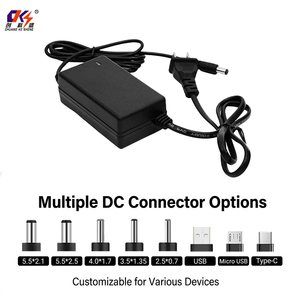
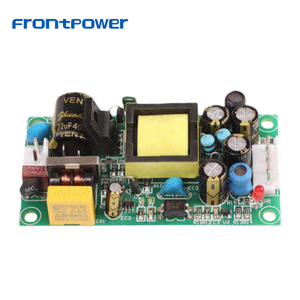
Yes. Many programs begin as standard modified platforms (such as desktop power adapters or open-frame SMPS boards). By adding internal shielding cans, potted input filter stages, custom secondary choke coils, and low-noise output cables, engineers can elevate a standard power platform to pass TEMPEST SDIP-27 Level B or C guidelines at a fraction of the cost of a ground-up custom build.
SEMI F47 defines the voltage-sag immunity envelope that single-phase and three-phase power systems must tolerate without shutting down or interrupting process tools in semiconductor fabs. Compliant power supplies utilize enlarged internal energy storage bulk capacitors or active hold-up boost circuits to maintain output regulation during voltage sags down to 50% for up to 200 milliseconds, preventing scrapped silicon wafers and millon-dollar tool aborts.
International shipments are accompanied by Certificate of Conformance (CoC), ISO 9001/13485 quality inspection reports, 100% automated high-pot test records, factory insertion loss spectrum charts (10 kHz to 10 GHz), and REACH/RoHS environmental declarations. Depending on the destination and application, ITAR or export compliance classification (ECCN) documentation is provided.
Send us your electrical, mechanical, and attenuation specifications. Speak directly with experienced senior applications engineers—no call centers or automated delays.
