Explore our engineering-grade switching power supplies, high-efficiency DC/DC converters, and specialized line noise suppression platforms designed to operate flawlessly alongside high-frequency Power Line Communication (PLC) networks in Belgian industrial and grid infrastructure.
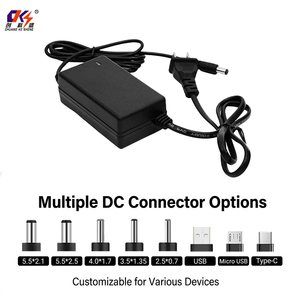
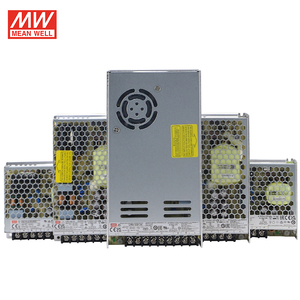
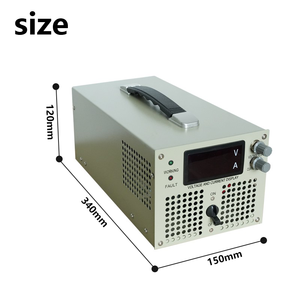
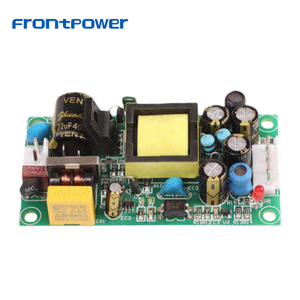
Power Line Communication (PLC) technology leverages existing AC/DC electrical distribution grids to transmit high-speed data, enabling seamless communication for smart meters, automated industrial control networks, and Electric Vehicle Supply Equipment (EVSE). However, the modern low-voltage and medium-voltage grid environment in Belgium—managed by Distribution System Operators (DSOs) such as Fluvius, Ores, and Resa—is increasingly polluted by high-frequency electromagnetic interference (EMI). The rapid proliferation of non-linear loads, such as solar photovoltaic (PV) micro-inverters, variable frequency drives (VFDs), and fast DC EV charging stations, generates severe conductive switching noise in the 2 kHz to 150 kHz spectrum.
Without targeted electromagnetic suppression, this conductive noise directly overlays the narrow-band (CENELEC A, B, C, D bands) and broad-band (G3-PLC, PRIME, HomePlug Green PHY) communication channels. The result is packet corruption, severe signal attenuation, synchronization failure, and unacceptable communication latencies in critical infrastructure. Power Line Communication EMI Filters serve as bi-directional attenuation barriers: they prevent switching power supplies and motor drives from polluting the mains line while simultaneously protecting sensitive PLC modems from external grid harmonics.
Belgian smart metering relies heavily on CENELEC Band A (9 kHz – 95 kHz) and Band C (125 kHz – 140 kHz). Specialized PLC filters provide surgical attenuation of out-of-band harmonics while maintaining near-zero insertion loss at carrier frequencies.
Combines multi-stage nanocrystalline toroidal cores and low-ESR film capacitors to achieve up to 90 dB insertion loss across 150 kHz to 30 MHz, silencing both line-to-line and line-to-ground conductive noise paths.
Variations in power line grid impedance degrade PLC communication. Our filter networks stabilize the terminal impedance seen by the PLC transceiver, ensuring consistent signal transmission regardless of grid load conditions.
Select the optimal filter architecture tailored to your voltage framework, current capacity, and insertion loss requirements for industrial and utility installations across the Benelux region.
| Filter Series Architecture | Phase Configuration | Rated Voltage (V) | Current Rating (A) | Target Frequency Band | Typical Insertion Loss | Belgian Grid Compliance |
|---|---|---|---|---|---|---|
| PLC-NBS-1P (Narrowband Single-Phase) | 1-Phase 2-Wire + GND | 250 VAC (50 Hz) | 5A – 32A | CENELEC A / G3-PLC | 75 dB @ 9–95 kHz | Fluvius Smart Metering Compliant |
| PLC-BBS-3PD (Broadband 3-Phase Delta) | 3-Phase 3-Wire (Delta) | 480 VAC / 690 VAC | 16A – 250A | 150 kHz – 30 MHz | 85 dB @ 500 kHz | CE, Synergrid C10/11 Compatible |
| PLC-IND-3PW (Heavy Industrial WYE) | 3-Phase 4-Wire (WYE) | 400 VAC / 230 VAC | 32A – 1000A | 10 kHz – 100 MHz | 95 dB @ 150 kHz | IEC/EN 61000-6-3, CISPR 32 |
| PLC-DC-EVSE (DC High Power Fast Charge) | DC Power Line (+ / -) | 1000 VDC | 100A – 600A | HomePlug Green PHY / ISO 15118 | 80 dB @ 1.8–30 MHz | DIN 70121, IEC 61851-21-2 |
Belgium’s dense industrial zones, extensive port logistics, and rapid energy transition infrastructure present distinct electromagnetic compatibility (EMC) challenges. Customized PLC EMI filters are engineered to meet the specific operational demands of Belgian enterprise applications.
In Flanders and Wallonia, grid operators deploy automated metering infrastructure (AMI) using G3-PLC and PRIME protocols over public low-voltage networks. High-frequency noise generated by home solar inverters and heat pump compressors frequently jams signal reception at transformer substations. Installing specialized single-phase PLC suppression filters at the customer premises boundary isolates residential noise, ensuring 99.9% automated data collection reliability.
As one of Europe's largest petrochemical and logistics hubs, the Port of Antwerp-Bruges relies heavily on automated gantry cranes, Automated Guided Vehicles (AGVs), and vast industrial conveyor systems. These environments utilize power line communications for real-time telemetry. High-power 3-phase WYE EMI filters attenuate intense conducted interference caused by large Megawatt-class Variable Frequency Drives (VFDs), preventing data packet dropouts in dockside automation.
Offshore wind farms off the coast of Zeebrugge feed gigawatts of renewable power into the onshore high-voltage grid via HVDC converter stations. High-voltage switching transients threaten subsea PLC telemetry lines linking offshore platforms to control centers. Robust feed-through PLC EMI filters provide critical surge absorption and broad-spectrum line filtering, safeguarding offshore grid operations against signal degradation.
Urban EV charging hubs across the Brussels-Capital Region implement HomePlug Green PHY PLC to establish high-speed handshakes between vehicles and charging stations (ISO 15118 protocol). Ultra-fast DC charging rectifiers produce extreme harmonic noise that disrupts digital communication. Heavy-duty DC line filters attenuate rectifying noise, ensuring seamless Plug & Charge authentication and billing cycles.
Engineering compliance in Belgium demands proactive alignment with strict European directives, local grid regulations, and accelerating technological shifts:
Backing your applications with over six decades of custom power conversion and electromagnetic filtering engineering, our organization combines global manufacturing scale with precise application engineering support.
We build our own common-mode chokes and inductors, allowing custom tuning of attenuation curves to match specific PLC modem carrier frequencies (e.g., CENELEC A/B/C/D bands or G3-PLC).
Shorten your time-to-market. Our engineering teams provide full conducted emissions scanning and pre-compliance evaluation according to CISPR 11, CISPR 32, and IEC 61000-6-3 frameworks.
Every filter unit undergoes 100% functional testing, high-potential voltage dielectric testing, and thermal burn-in, ensuring failure-free operation in mission-critical medical, industrial, and defense systems.
Custom enclosures with potted resin options (up to IP67/IP68 rating) protect internal filter components against chemical vapor, high humidity, vibration, and thermal shocks common in industrial plants.
The choice depends entirely on your electrical supply architecture. In Belgian industrial facilities with a 4-wire supply plus neutral (400V WYE), a WYE filter is required because it provides line-to-neutral noise attenuation along with line-to-line and line-to-ground filtering. If your system operates on a 3-wire system without a distributed neutral (e.g., 230V or 400V Delta grids found in older industrial zones in Flanders), a Delta filter topology must be specified to prevent unattenuated common-mode noise leakage.
Yes. Our filter series are engineered explicitly to satisfy EN 50065-1 requirements governing signaling on low-voltage electrical installations in the frequency range 3 kHz to 148.5 kHz. Furthermore, all units carry CE and UKCA marks, fulfilling European EMC Directive 2014/30/EU and Low Voltage Directive (LVD) 2014/35/EU.
Standard EMI filters attenuate all signals within their stopband indiscriminately. However, our specialized PLC EMI Filters feature engineered bandpass windows or steep roll-off insertion loss profiles. They allow designated carrier frequencies (e.g., G3-PLC or PRIME bands) to pass with negligible impedance while aggressively filtering high-amplitude switching noise outside the communication band.
Standard off-the-shelf catalog models ship within 3 to 5 business days across Benelux via our direct logistics network. Modified standard designs (e.g., custom wire harness, specialized mounting brackets, or custom connector pinouts) generally take 2 to 3 weeks for prototype delivery. Ground-up custom magnetic designs typically take 4 to 6 weeks depending on compliance testing requirements.
Absolutely. Conducted emissions in the 2 kHz to 150 kHz window are a primary cause of failed grid compliance audits for commercial solar installations, battery storage facilities, and EV hubs in Belgium. Installing our tuned low-pass EMI filter at the grid point of common coupling (PCC) suppresses high-frequency harmonics to levels well below Synergrid C10/11 threshold limits.
Whether you require standard line filters, custom magnetic assemblies, or modified switching power supplies, our application engineers are ready to review your schematic and EMC test data.
Send an Inquiry