Industrial & Medical Grade Power Platform Catalog
Explore our specialized OEM/ODM switching power supplies, high-power SMPS modules, liquid-cooled racks, and low-leakage desktop adapters tailored for Bangkok’s expanding medical device OEMs, surgical robotics assemblers, and healthcare facility integrators.
Technical Whitepaper & System Architecture
Robotic surgical systems—ranging from minimally invasive laparoscopic assistants and robotic orthopedic drills to autonomous endoscopic steering columns—demand an extraordinary level of power density, electrical safety, and electromagnetic immunity. Unlike standard industrial equipment, a power supply failure inside an active operating theater during a complex surgical procedure is unacceptable. As Bangkok solidifies its position as the primary medical tourism hub and advanced surgical center in Southeast Asia, original equipment manufacturers (OEMs) and hospital systems integration factories in the Greater Bangkok Metropolitan Area require enterprise-grade power architecture engineered to survive rigorous physical and electrical environments.
To achieve compliance with global medical safety frameworks such as IEC/EN 60601-1 3rd/4th Editions, power conversion subsystems must integrate dual Means of Patient Protection (2×MOPP), exceptionally low touch leakage currents (<100 µA total, down to <10 µA for patient-applied parts), and zero-compromise galvanic isolation rated up to 4000 VAC. Furthermore, surgical arm articulated joints powered by multi-axis brushless DC (BLDC) motors generate aggressive back-EMF (electromotive force) transience and localized voltage spikes during rapid deceleration. Custom and modified AC/DC and DC/DC power conversion stages must maintain tight output regulation without tripping over-current protection circuits.
Integrated dual isolation barriers between primary AC mains and secondary patient outputs prevent direct electrical shock risks, complying strictly with medical equipment regulatory mandates.
Advanced low-capacitance transformer topologies reduce parasitic common-mode currents, ensuring compliance with cardiac-floating (CF) applied part isolation standards.
Designed to handle high peak currents during fast robotic motor actuation without output voltage dips, ensuring sub-millimeter surgical accuracy.
The following technical matrix outlines key operational parameters across our medical-grade AC/DC platforms, liquid-cooled modular racks, and custom open-frame PCBA power supplies engineered for medical robotics integrators:
| Power Platform Type | Output Voltage Range | Efficiency Rating | Isolation Class | Primary Application Target |
|---|---|---|---|---|
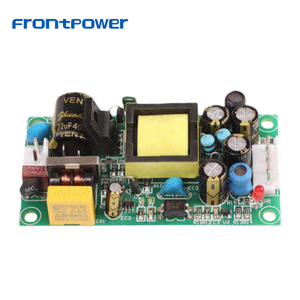
| Medical Open-Frame PCBA | 12V, 24V, 48V DC | 92% - 94% | 2×MOPP (4000 VAC) | Internal Robotic Arm Joint Controllers & Logic Boards |
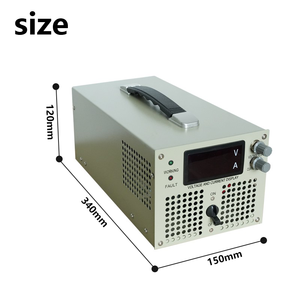
| LiquaBlade™ Liquid-Cooled 1U | 24V to 600V DC (Adj.) | Up to 96% | Basic / Reinforced 2500 VAC | Centralized High-Power Surgical Laser & Electrocautery Carts |
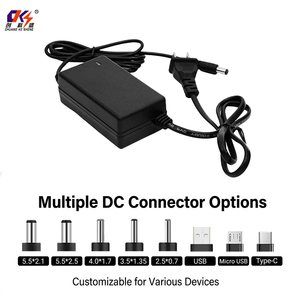
| Medical Desktop Power Adapter | 12V to 48V DC | 88% - 90% | 2×MOPP (4000 VAC) | Robotic Surgical Consoles & Master Haptic Controllers |
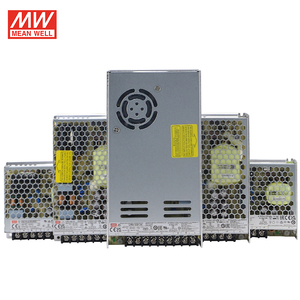
| High-Power Enclosed SMPS | 5V to 48V DC (Single/Multi) | 89% - 93% | Industrial/Medical Dual Grade | Surgical Table Actuators & Heavy Optical Navigation Towers |
Localized Application Matrix
Bangkok is rapidly evolving into Southeast Asia’s epicenter for advanced surgical care and precision medical technology manufacturing. Driven by large hospital networks (such as BDMS, Bumrungrad International, and Siriraj Hospital) and backed by the Thailand Board of Investment (BOI) incentives in the Eastern Economic Corridor (EEC), local factories and system assembly facilities are scaling up local assembly of surgical robotics, automated diagnostic carts, and cleanroom equipment.
However, operating power supplies within the tropical environment of Greater Bangkok presents severe operational engineering challenges that standard off-the-shelf industrial power bricks fail to address:
Bangkok’s ambient temperatures regularly exceed 38°C with relative humidity levels reaching over 85%. Enclosed surgical carts often lack high-airflow fans due to strict operating room acoustic limits and laminar airflow disruption policies. Our liquid-cooled power supplies (such as the LiquaBlade™ platform) and conduction-cooled PCBAs remove heat efficiently without relying on noisy cooling fans, preventing cleanroom contamination while delivering full-rated wattage up to 50°C internal ambient temperatures.
Industrial parks situated around Samut Prakan, Pathum Thani, and Chonburi connected to the Metropolitan Electricity Authority (MEA) or Provincial Electricity Authority (PEA) grids can experience periodic voltage sags caused by heavy seasonal monsoons and nearby industrial switching loads. Power supplies inside surgical robotics units operating in these regions are engineered with SEMI F47 voltage sag ride-through capability, ensuring uninterrupted DC bus regulation during deep AC line brownouts.
Modern operating suites in modern Bangkok medical centers house intense electro-cautery tools, MRI machines, and high-frequency RF ablation instruments. Our power supplies integrate multi-stage EMI/EMC filters that exceed IEC 60601-1-2 4th Edition immunity guidelines, suppressing conducted and radiated noise to protect sensitive robotic sensor feedback loops and sub-millimeter haptic tracking encoders from signal jitter.
A premier Thai medical technology firm based in Bang Na, Bangkok, integrated our modified Frontpower 400W open-frame PCBA power supply alongside dedicated 3-phase EMI filtering into their 4-arm endoscopic assistant robot. The system achieved a 100% first-pass clearance during IEC 60601-1 3rd edition safety testing, while zeroing out line-noise interference on critical HD 4K camera feeds during full motor actuation cycles.
Regional Market Analysis & Future Roadmap
The medical device landscape in Thailand is undergoing a structural transition. According to strategic initiatives outlined under the "Thailand Medical Hub 2030" framework, the Thai government is actively encouraging local manufacturing of high-tech medical machinery to replace expensive imports from North America and Europe. This shift directly impacts local factory requirements for robust power components:
Rather than importing completely built-up (CBU) surgical systems, Bangkok-based medical equipment integrators are partnering with international OEMs to assemble custom robotic carts domestically. This requires sourcing ISO 13485-compliant sub-assemblies—specifically power conversion blocks—that carry pre-existing UL, CE, and TISI (Thai Industrial Standards Institute) clearance documentation to accelerate local regulatory approvals.
As surgical robots shrink in footprint to accommodate crowded operating rooms, high-density modular power is vital. Liquid cooling technology, historically restricted to semiconductor fabrication plants, is now rapidly penetrating the surgical robotics sector. By circulating liquid coolant directly through low-profile 1U power racks, surgical consoles eliminate fan air exhaust while achieving power densities up to 16.5 kW per unit.
Modern surgical motor drive platforms inside robotics factories are shifting from legacy 12V/24V DC architectures to centralized 48V DC bus distributions. 48V power distribution drastically reduces I²R copper cable losses, lowers wire harness weight inside long robotic arms, and improves dynamic power delivery to high-torque servo motors during precise incisions.
Enterprise E-E-A-T Capabilities
With over 60 years of specialized power conversion engineering experience, Astrodyne TDI stands as an industry authority in standard, modified, and custom power supply design. We don't just supply off-the-shelf components; our engineering team works directly with your mechanical and electrical designers to optimize the complete power path from the facility AC connection down to the patient-applied load.
Our global manufacturing facilities operate under stringent ISO 13485 medical quality management systems. Every single production unit undergoes 100% full-load burn-in and functional safety testing prior to shipment.
Avoid costly re-testing at external test houses. We maintain fully equipped in-house EMC testing laboratories to evaluate conducted and radiated noise profiles of your power subsystem early in the prototyping phase.
Medical platforms require 7 to 10+ years of active production life. We guarantee strict form-fit-function change control policies to protect your system qualification investments from component obsolescence.
Engineering & Procurement Intelligence
