Select from high-reliability AC/DC, DC/DC, and programmable digital voltage regulators designed to meet Massachusetts electrical grid compliance and strict EMI/EMC safety standards.
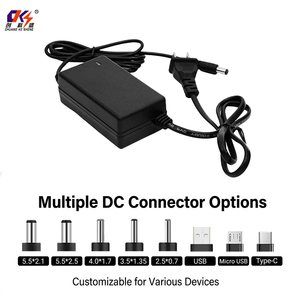
Compact regulated switching power supply engineered for low-noise vision sensors, CCTV cameras, and biomedical instrumentation in Cambridge labs.
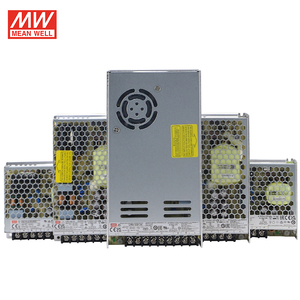
Heavy-duty SMPS voltage regulator delivering tight DC regulation across 5V, 12V, 24V, 36V, and 48V outputs for Route 128 automated equipment.
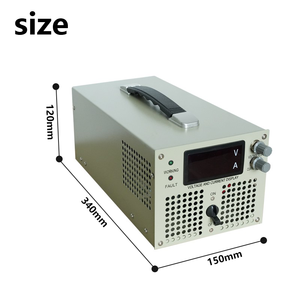
Single-output high-efficiency (88-89%) adjustable DC power supply (12V–600V) built for semiconductor etching and clean energy R&D facilities.
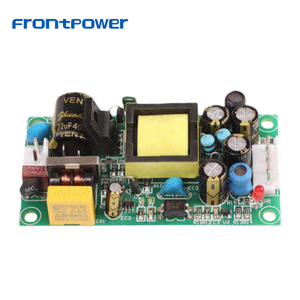
Customizable open-frame voltage regulation circuit boards designed for seamless system integration into robotics and medical electronics chassis.
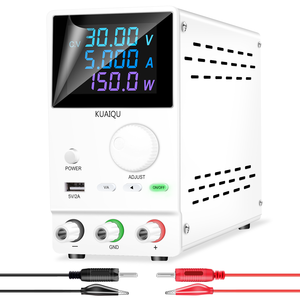
Ultra-stable adjustable DC power source (30V/60V/120V up to 10A) with LED digital readout for MIT laboratory testing and hardware validation.
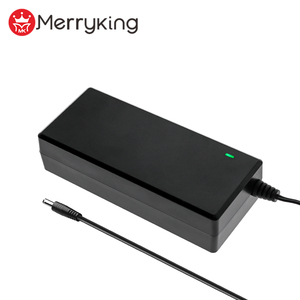
External regulated power adapter supplying stable 12V, 24V, or 48V output for medical displays, communications gear, and industrial controllers.
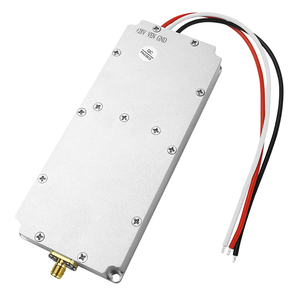
Hardened switching regulator optimized for defense communications, sonar power rails, and rugged vehicle electronics deployed across New England.
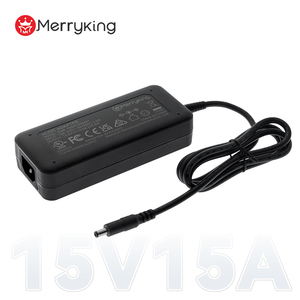
Versatile regulated power supply with broad output options (12V, 18V, 19V, 24V, 36V, 48V) for lab automation and medical device development.
From Cambridge biotech incubators to Route 128 defense contractors and North Shore semiconductor fabs, Boston OEM engineers face unique power quality and environmental challenges.

The Greater Boston electrical infrastructure, serviced predominantly by Eversource and National Grid, operates under extreme seasonal load variances—ranging from severe winter bomb cyclones to summer heatwave peak demands. Industrial operations across Middlesex and Essex counties frequently experience transient voltage sags, switching surges, and harmonic distortion generated by heavy industrial facilities and aging sub-station transformers.
To preserve precision in sensitive applications—such as nuclear magnetic resonance (NMR) imaging, mass spectrometry in Kendall Square, and high-frequency RF etching in Andover—voltage regulators must maintain an ultra-tight regulation band (±0.5% or better) while actively filtering differential and common-mode conducted emissions.
Our engineered voltage regulators and power conversion systems directly match the operational demands of Boston’s core technology sectors.

In Cambridge and Longwood Medical Area laboratories, medical diagnostic imaging, robotic surgical arms, and microfluidic sorters require extreme isolation. Our medical-grade voltage regulators feature 2xMOPP (Means of Patient Protection) insulation, low earth leakage current (<100 µA), and IEC 60601-1 4th Edition EMC compliance to guarantee non-interrupted, safe patient diagnostics.

Wafer processing tools and electrostatic chuck (e-chuck) power networks in Wilmington and Woburn cannot afford process aborts during voltage sags. We export heavy-duty 1500W–2000W adjustable DC voltage regulators equipped with liquid-cooling interfaces and SEMI F47 sag immunity, ensuring 100% tool uptime and preventing wafer scrap.

Defense OEMs operating across Waltham, Bedford, and Natick require MIL-COTS regulated converters hardened against severe vibration, thermal shock, and electromagnetic pulse (EMP). Our encapsulated 24V–28V switching regulators meet MIL-STD-810H and MIL-STD-461G standards for radar, unmanned systems, and tactical communication hubs.

With New Bedford and Boston Harbor serving as major operations bases for Atlantic offshore wind generation, power electronics must resist salt-spray corrosion and extreme line dynamics. We supply IP67-sealed, liquid-cooled DC/DC voltage regulators capable of stabilizing power from erratic renewable sources into shore-side energy storage banks.
Procurement directors and engineering leads must evaluate offshore and domestic voltage regulator manufacturers against stringent technical metrics.
| Evaluation Parameter | Standard Commercial Grade | Astrodyne TDI Export OEM Grade | Boston Engineering Impact |
|---|---|---|---|
| Voltage Regulation Accuracy | ±3% to ±5% line/load variation | ±0.1% to ±0.5% Tight Regulation | Prevents logic errors in sensitive micro-controllers & sensor drift. |
| Voltage Sag Ride-Through | Fails at <80% nominal AC input | SEMI F47 Compliant (>200ms sag tolerance) | Protects semiconductor fabs & continuous lab processes from line dropouts. |
| EMC / Noise Suppression | Basic CISPR 22 Class A | Integrated Multi-Stage Filters (Class B / MIL-STD-461) | Eliminates conducted noise interference in RF & optical measurement instruments. |
| Thermal Management | Air fan cooling (high maintenance) | Conduction, Liquid Cooled (LiquaBlade™ 1U) | Zero fan noise, suitable for ISO Class 5 cleanrooms & sealed IP65 chassis. |
| Quality System Certification | ISO 9001 only | ISO 9001:2015 + ISO 13485:2016 Medical | Full lot traceability & rapid FDA clearance documentation for medical OEMs. |
For Boston-area data centers, supercomputing clusters, and high-power laser systems, traditional forced-air cooling creates unacceptable acoustic noise and thermal gradients. The LiquaBlade™ platform redefines power density by delivering 16.5 kW of regulated DC power within a 1U chassis.
.jpg)
Common technical and supply-chain inquiries addressed by our senior applications engineering team.
Grid sags in the Northeast region can drop line voltage by 20% to 40% for durations up to 300 milliseconds. Unregulated or loosely regulated power supplies pass these voltage dips straight to internal DC buses, causing medical imaging reset errors or digital signal processing aborts. Our custom voltage regulators integrate high-capacity hold-up capacitors and wide-input AC boost stages (85V–264V AC continuous) to guarantee uninterrupted DC output during grid sags.
A Delta topology is configured for 3-wire systems without a neutral conductor, commonly found in heavy industrial machinery and motor drives across Massachusetts manufacturing plants. A WYE topology is designed for 4-wire power distribution systems carrying a neutral line, filtering both line-to-line and line-to-neutral noise. Specifying the wrong regulator topology can result in unattenuated common-mode noise and failed FCC/CISPR conducted emissions tests.
Yes. Over 60% of our production for Greater Boston OEMs consists of modified-standard or fully custom platforms. We can modify output voltage step-downs, PCB pin configurations, wire harnesses, conformal coatings for harsh environments, custom enclosure dimensions, and specialized firmware parameters while keeping regulatory approval lead-times to a minimum.
Every shipment includes a full Certificate of Conformance (CoC), 100% functional automated test reports, burn-in verification data, and compliance statements for RoHS, REACH, and Conflict Minerals. Medical-grade regulators shipped under ISO 13485 also include full component lot traceability documentation to support FDA 510(k) filings.
Forced-air cooling relies on high-RPM fans that recirculate air, creating turbulent particulate movement and introducing potential fan failure points inside ISO Class 5 semiconductor cleanrooms. Liquid cooling removes thermal energy directly via recirculating liquid chillers, allowing 100% sealed IP65/IP67 chassis designs that generate zero fan noise, zero air turbulence, and vastly superior power density.
Six decades of engineering innovation, in-house magnetic design, and global logistics support tailored for high-reliability applications.

Unlike assemblers who purchase off-the-shelf transformers, we engineer custom magnetic cores, inductors, and choke coils in-house. This gives us precise control over thermal dissipation, coupling efficiency, and form factor optimization.

Our engineering facilities feature full EMC pre-compliance testing chambers. We test your power regulation architecture against FCC Part 15, CISPR 11/32, and MIL-STD-461 long before final agency submission, eliminating late-stage design loops.

Every single voltage regulator, DC converter, and EMI filter undergoes 100% automated electrical testing and elevated thermal burn-in under real load conditions before leaving our factory floor, guaranteeing out-of-the-box reliability.
Connect directly with our senior application engineers to review your circuit schematic, thermal constraints, and regulatory requirements for the Boston market.
